
Few brands in the world have fans so loyal that they tattoo its logo on their skin. Harley-Davidson is one of them. For many it is not just a motorcycle, it is a way of life. But it all started very humbly, in a small wooden shed in Milwaukee, USA, in 1903.
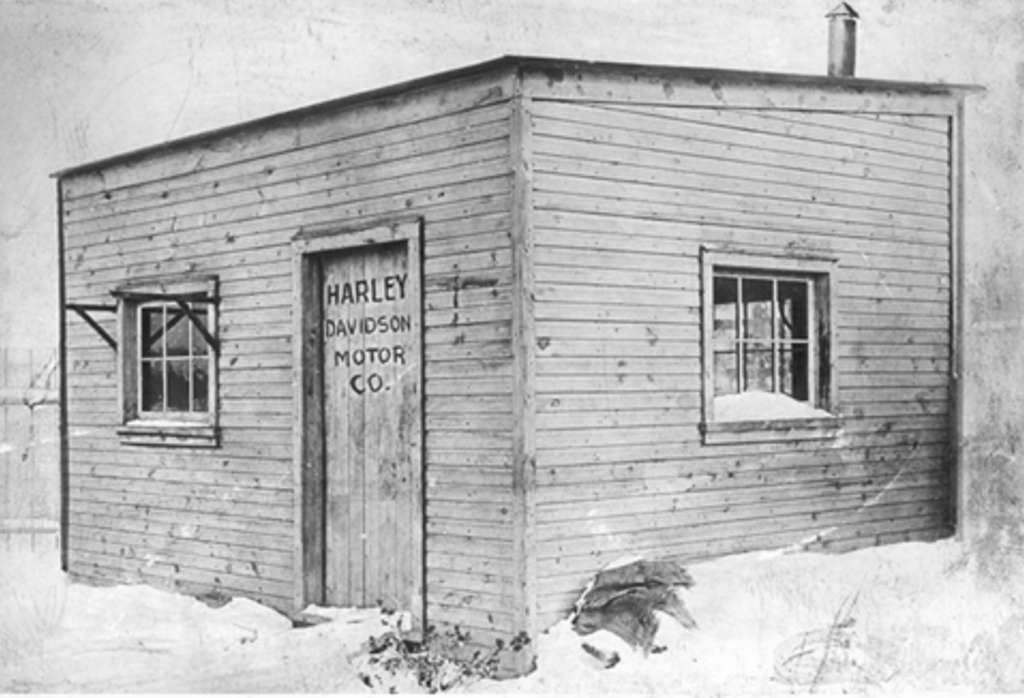
Photo: Unknown photographer / Wikimedia Commons, Public domain
Two friends and a shed
William S. Harley and Arthur Davidson were childhood friends. In the early 20th century, when the first motorcycles were essentially bicycles with engines, they decided to build their own. They worked in a wooden shed in the yard of the Davidson home, and soon Arthur’s brothers, Walter and William, joined the team. The first Harley-Davidson was completed in 1903.
In 1909 the company’s first V-twin engine appeared, the layout with two cylinders in a V shape that has been its trademark ever since. By 1920 Harley-Davidson was the largest motorcycle maker in the world.
Wars and crises
Harley-Davidson survived the Great Depression that began in 1929, something few American manufacturers managed. Together with Indian it was one of the only two major American brands left standing. In both world wars it built motorcycles for the army. In the Second World War the WLA, with its simple, tough 750 cc V-twin, was built in around 90,000 units for the USA and its allies.
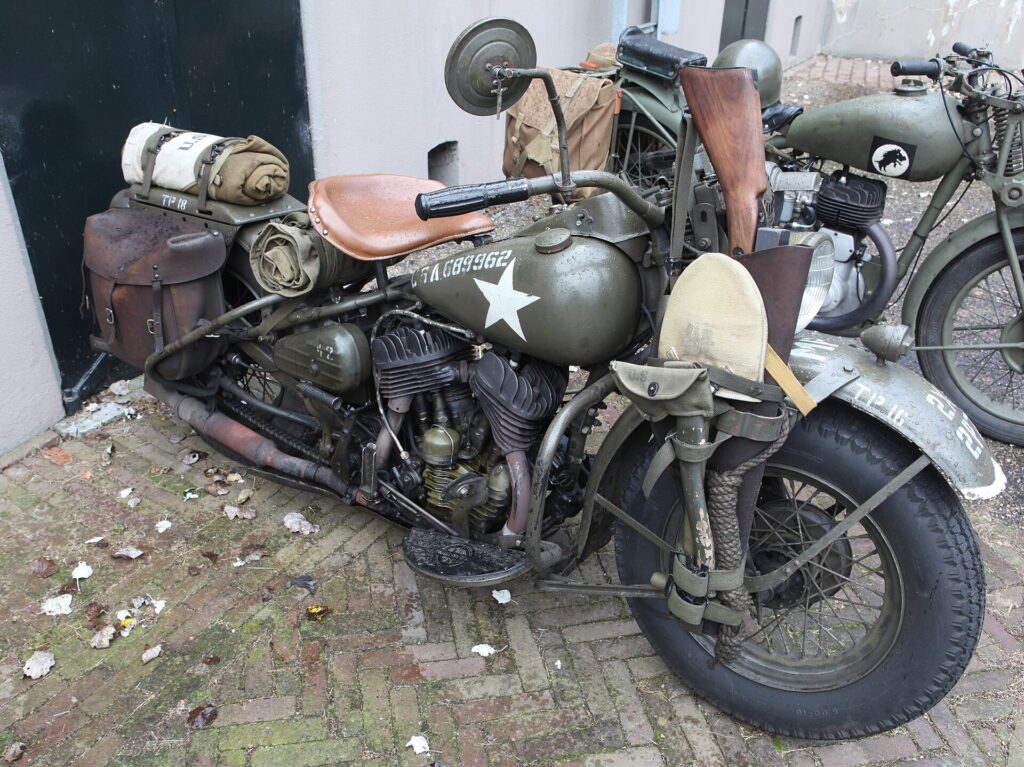
Photo: Joost J. Bakker from IJmuiden / Wikimedia Commons, CC BY 2.0
After the war, thousands of soldiers came home having learned to ride Harleys. Many bought old military bikes, stripped them down, changed them and made them their own. That is where the custom and chopper culture began.
Knucklehead, Panhead, Shovelhead
Fans of the brand tell its eras apart by the engines, which got nicknames from the shape of their rocker covers. The 1936 Knucklehead looked like knuckles. The 1948 Panhead had covers like upturned pans. The 1966 Shovelhead looked like a shovel. And the 1984 Evolution finally brought the reliability that had been missing.
In 1969 the film “Easy Rider”, with Peter Fonda on a Panhead-powered chopper, made the Harley a symbol of freedom for a whole generation.
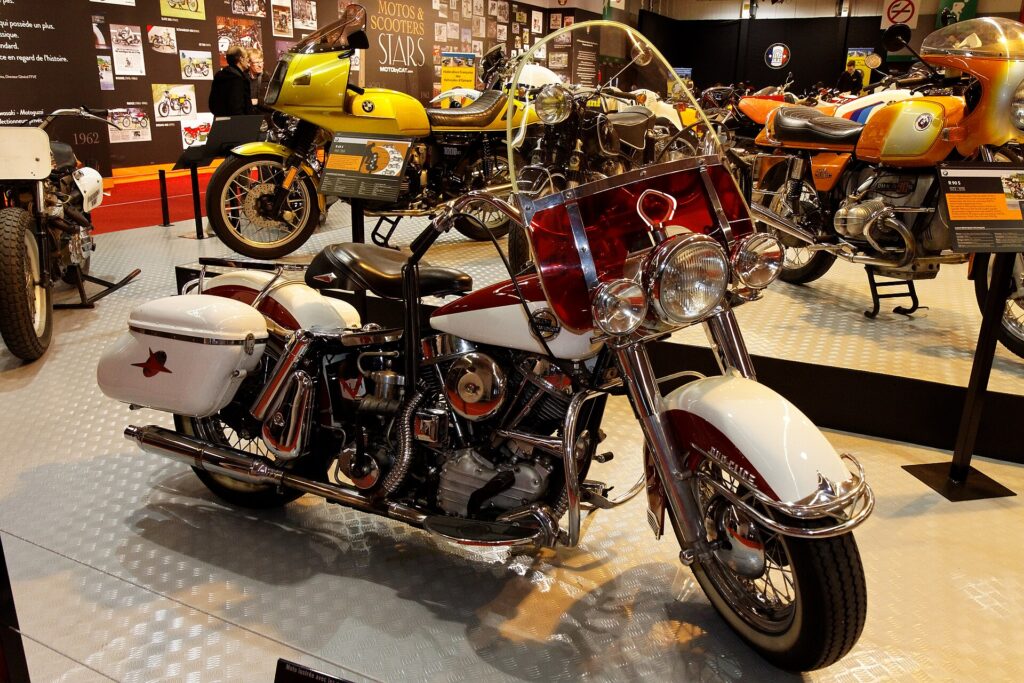
Photo: Thesupermat / Wikimedia Commons, CC BY-SA 3.0
The hard years and the comeback
That same year, 1969, Harley-Davidson was bought by the AMF group. Quality fell, while Japanese motorcycles such as the Honda CB750 were cheaper and more reliable. Many believed Harley would close. In 1981 a group of 13 executives bought the company back from AMF, improved quality and, in 1983, founded the H.O.G. owners’ group, which today has hundreds of thousands of members worldwide.
Today Harley-Davidson remains one of the most recognisable brands on the planet. And the distinctive sound of the V-twin, that deep, uneven “potato-potato”, is perhaps the best-known mechanical song in the world.
P.Kefalas