
Ask a child to draw a motorcycle and the chances are they will draw something that looks like a Triumph Bonneville. A round headlamp, a teardrop tank, a flat seat, two cylinders side by side and two exhausts. The Bonneville was not the first bike with that shape, but it is the one everybody remembers.
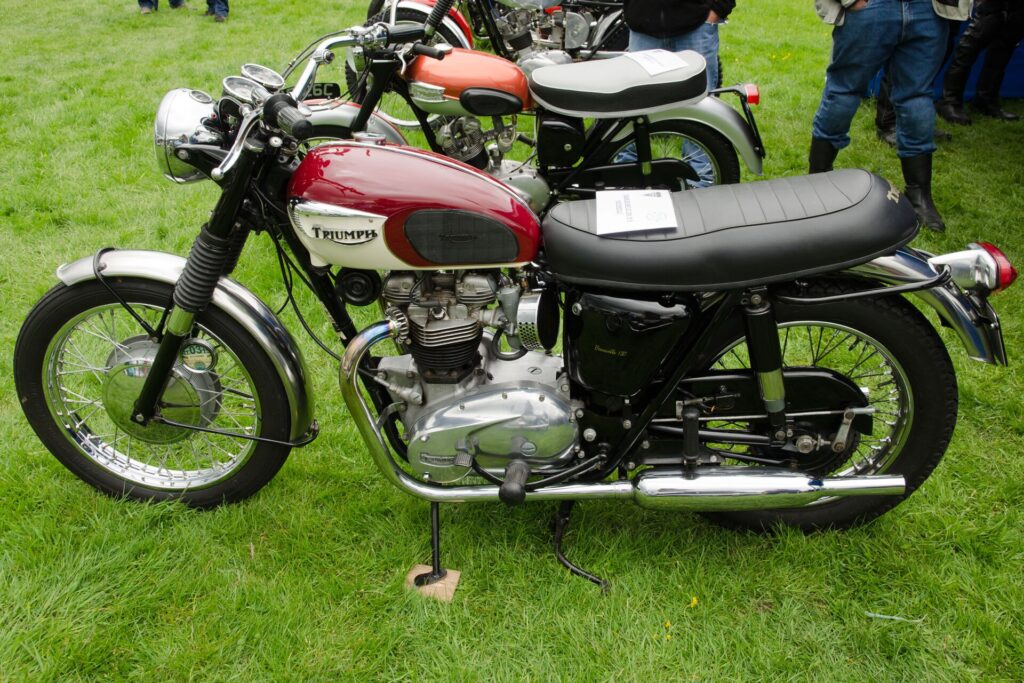
Photo: SG2012 / Wikimedia Commons, CC BY 2.0
A name from the salt flats
The story begins in 1937, when designer Edward Turner launched the Speed Twin, the parallel twin that defined the British motorcycle for thirty years. During the 1950s the engine grew to 650 cc and Americans bought Triumphs in huge numbers.
In 1956 Johnny Allen, riding a streamlined “cigar” powered by a Triumph 650, went over 214 mph on the Bonneville salt flats in Utah. The record was not officially recognised by the international federation for technical reasons, but Triumph did not need the paperwork. It needed a name. When, at the end of 1958, it introduced a faster twin-carburettor version of the 650, it called it the Bonneville.
T120: 120 mph in the name
“T120” meant, in theory, 120 mph. In practice a good T120 would reach around 110 to 115 mph, a superb figure for 1959. The engine made about 46 hp, weight was low, and the handling, especially after the new frames of 1960 and above all 1963, was very good.
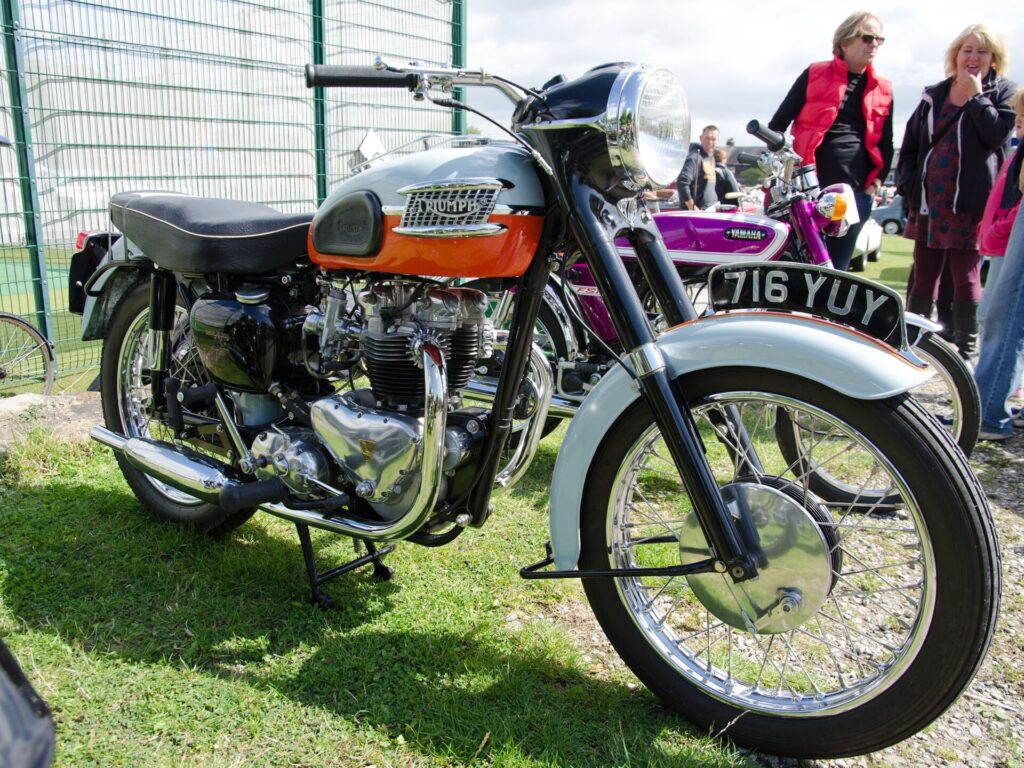
Photo: SG2012 / Wikimedia Commons, CC BY 2.0
In 1963 the Bonneville switched to unit construction, with engine and gearbox in one casing. Purists prefer the older “pre-unit” bikes with their separate gearbox, but most agree that the 1966 to 1970 models are the best to ride: a stiffer frame, better brakes, and still that clean, simple look.
The bike of the sixties
The Bonneville was everywhere. On race tracks, on Californian highways, outside London cafés, in the hands of actors and musicians. It was fast, good-looking, fairly simple to maintain and, above all, it had style. Many people say the Bonneville is the motorcycle that defines the word “classic”.
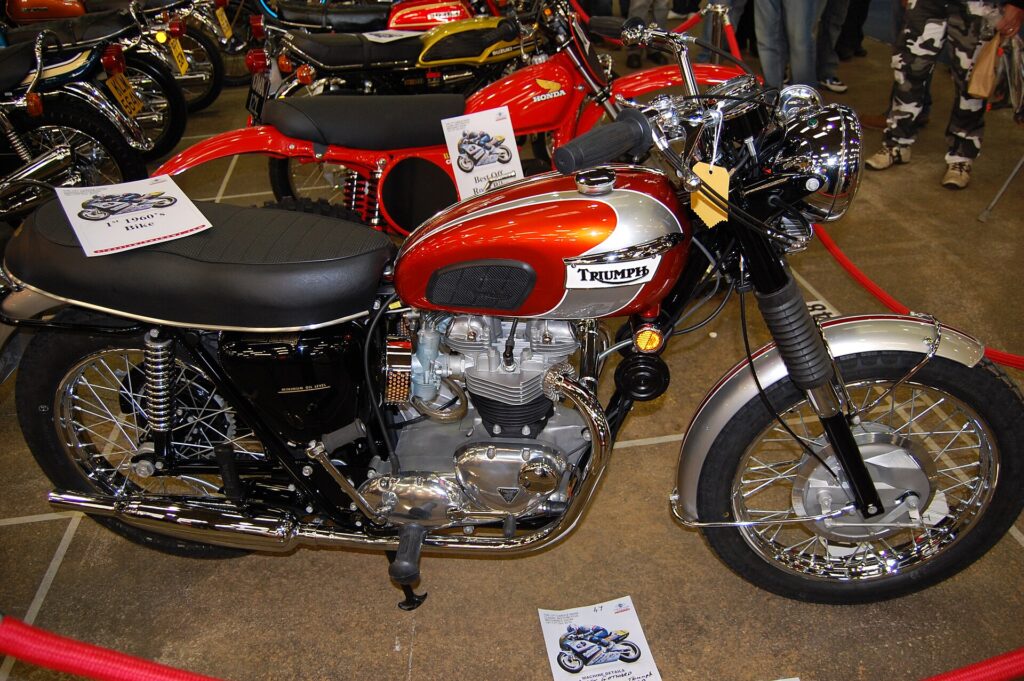
Photo: Ronald Saunders from Warrington, UK / Wikimedia Commons, CC BY-SA 2.0
The end came quickly, though. Japanese bikes of the 1970s were faster, more reliable and did not leak oil. Triumph did not invest enough, workers occupied the Meriden factory in 1973 and later kept production going as a co-operative until 1983. The T120 made way for the 750 cc T140. In 2001 the Bonneville name was revived by the new Triumph company, and it still sells today.
What to check if you are buying
Many Bonnevilles have been “built” from parts of different years. Check that the engine and frame numbers match and that the year fits the details (tank, mudguards, instruments). Listen for crankshaft noise and look for oil leaks, although a drop or two is, as the English say, “part of the character”. Almost every part is still available, which makes the Bonneville one of the easiest classic motorcycles to own today.
P.Kefalas
Photo Credits: SG2012 (Wikimedia Commons, CC BY 2.0) · SG2012 (Wikimedia Commons, CC BY 2.0) · Ronald Saunders from Warrington, UK (Wikimedia Commons, CC BY-SA 2.0)