
In the mid-1960s Norton had a problem. Its parallel twin, which had started at 500 cc and grown step by step to 745 cc, was powerful but vibrated so badly that hands went numb, brackets cracked and headlamps worked loose. The Japanese were coming and there was no money for a new engine. The solution Norton’s engineers found was as simple as it was clever: if you cannot stop the vibration, isolate it from the rider.
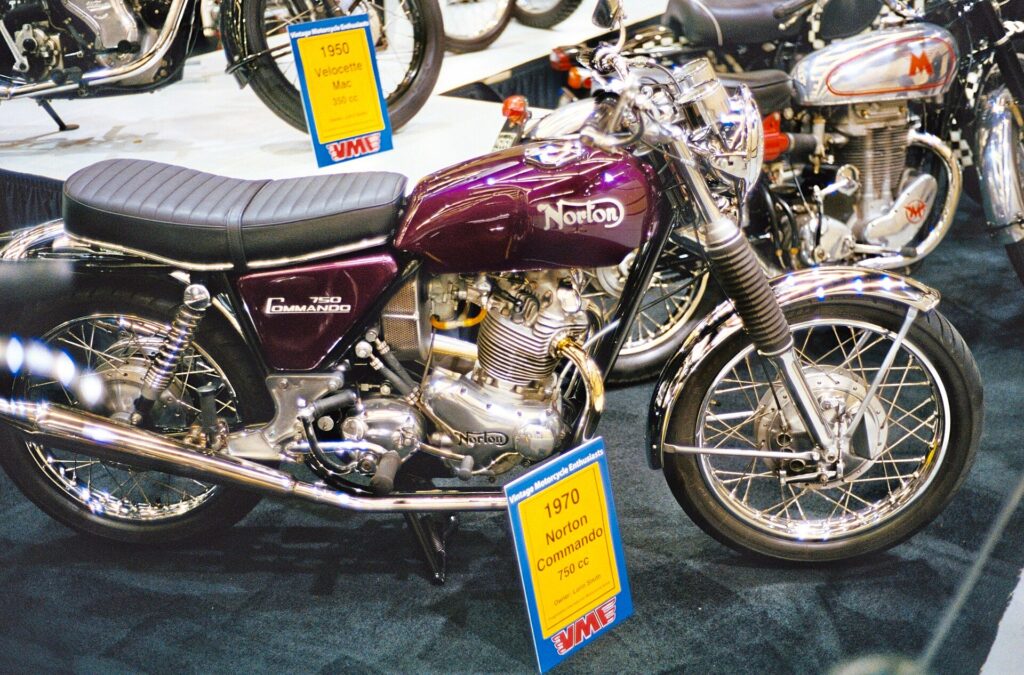
Photo: Dennis Bratland / Wikimedia Commons, CC BY-SA 4.0
Isolastic: an engine on rubber
Three engineers, Stefan Bauer, Bernard Hooper and Bob Trigg, designed a new frame in which the engine, gearbox and swinging arm were bolted together as a single unit. That unit was then hung from the frame on rubber mountings. The vibration stayed in the engine and never reached the seat, the handlebars or the footrests. The system was called Isolastic.
When the Commando was unveiled at the Earls Court show in London in September 1967, journalists could not believe how smooth it was. The engine was the familiar Atlas unit, 745 cc and about 58 hp, but now you could cruise at 85 mph without your hands going numb. Top speed was around 115 mph.
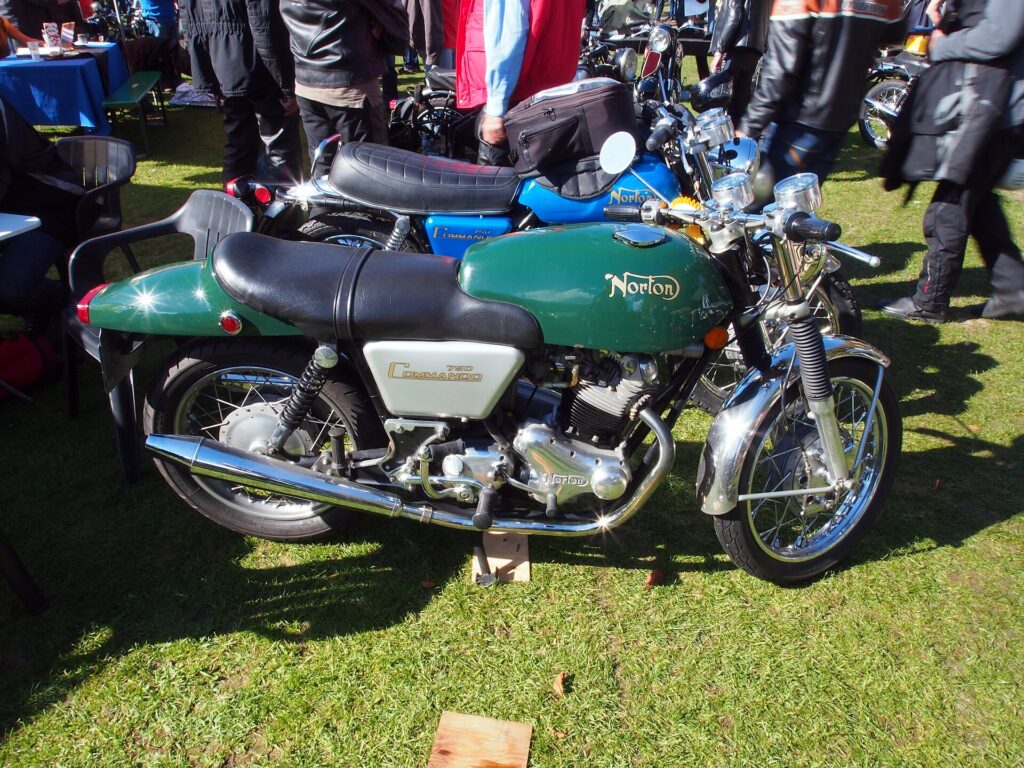
Photo: Alf van Beem / Wikimedia Commons, CC0
Five years as Machine of the Year
Readers of Britain’s Motor Cycle News voted the Commando “Machine of the Year” five years running, from 1968 to 1972. It was light, handled beautifully, pulled hard from low revs and, unlike the Bonnevilles, BSAs and other British bikes of the time, you could take it on long trips.
The first version had a distinctive fibreglass tail that blended into the seat and swept upwards. The public called it the “Fastback” and the name became official. Later came the Roadster with a conventional tail, the Interstate tourer with a big tank, and racing versions.
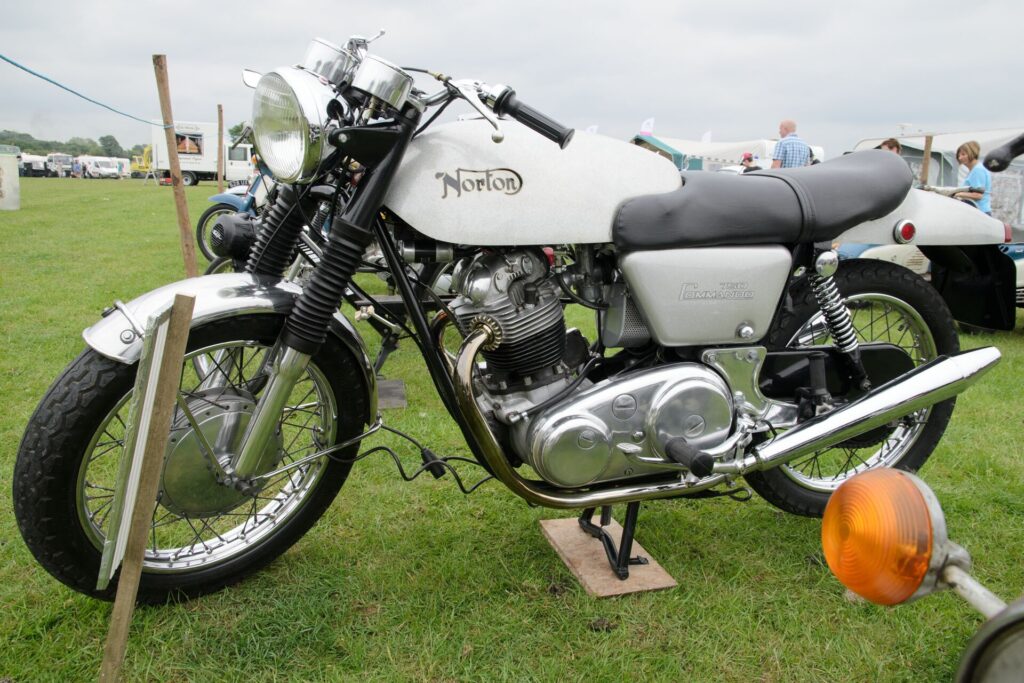
Photo: SG2012 / Wikimedia Commons, CC BY 2.0
The 850 and the end
In 1973 the engine grew to 828 cc (the “850”), with more torque and better reliability. In 1975 came the Mk III with electric start and a left-foot gear change to meet new American rules. But it was too late. The Norton Villiers Triumph group was in deep financial trouble and Commando production ended in 1977.
If you own or want a Commando
Isolastic has a secret: it needs correct adjustment. The mounts use shims to set the clearance. Too tight and the vibration comes back to the rider. Too loose and the rear of the bike weaves in corners, what the English call the “Norton wobble”. Many Commandos with poor handling simply have worn rubbers or wrong adjustment. Modern kits with adjustable (Vernier) mounts make life much easier.
Other things to check: the chain and primary drive, the Lucas electrics (which have their own reputation) and oil draining into the crankcase when the bike stands for a long time. With proper care, though, the Commando is one of the most enjoyable and practical British classics for regular use.
P.Kefalas
Photo Credits: Dennis Bratland (Wikimedia Commons, CC BY-SA 4.0) · Alf van Beem (Wikimedia Commons, CC0) · SG2012 (Wikimedia Commons, CC BY 2.0)