Ford Mustang 1964½: The Car That Created a Whole New Class
on
I admire American cars of the ’50s, but I would never call them practical. Huge, heavy, with fins like rockets. And then, in 1964, Ford comes out with something that is American to the bone, yet has dimensions that fit a European street, a long bonnet, a short tail and a price a young office worker could actually pay. The Mustang. And with it came a class of car that simply didn’t exist before: the “pony car”.
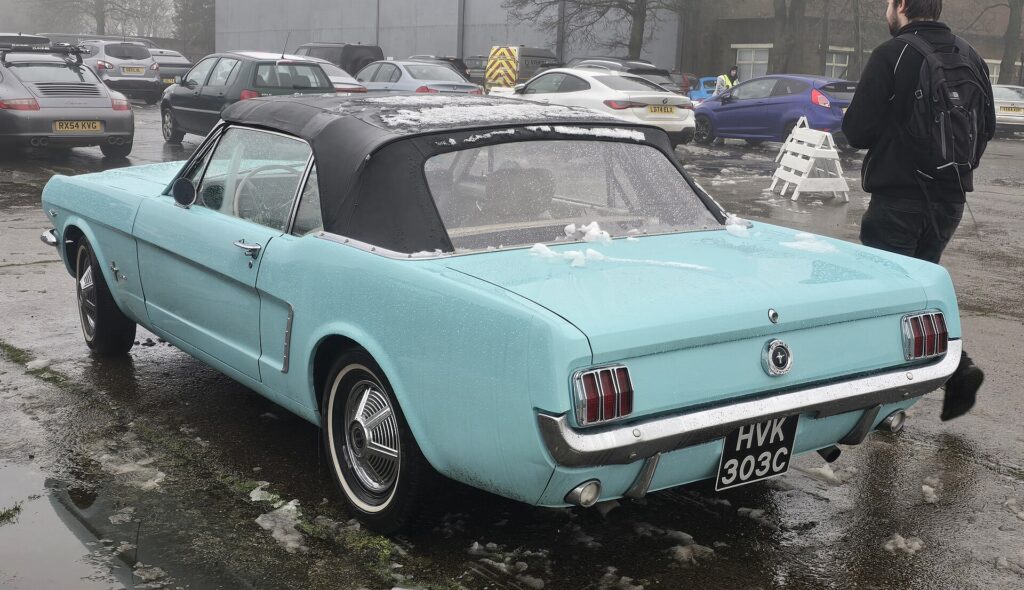
A 1965 Ford Mustang convertible, from the very first year.
Photo: Calreyn88 / Wikimedia Commons, CC BY-SA 4.0
An idea for a generation coming of age
In the early ’60s the baby boomers were getting their driving licences. They wanted something sporty and good-looking, not their father’s sedan, but they couldn’t afford a Corvette or a European sports car. Lee Iacocca, then general manager of the Ford Division, saw it before anyone else. He pushed for a small, cheap, sporty four-seater, and chief engineer Donald Frey oversaw its development in record time, roughly 18 months.
The secret to keeping it cheap was simple: underneath, it was largely a Ford Falcon, a plain family car. Platform, suspension, mechanicals, all straight off the company shelf. What was new was the body. The design won an internal competition for Joe Oros’s team, with Gale Halderman, David Ash and others. Iacocca later talked as if it were “his” car. The designers saw it differently, and they were probably right: a car like this is made by a team, not by one man.
17 April 1964
The Mustang was unveiled at the New York World’s Fair on 17 April 1964, as a hardtop coupé and a convertible, with the fastback following in August. Ford took 22,000 orders on the first day. In the first two years, three factories built almost 1.3 million Mustangs. It is one of the most successful launches in automotive history, and many say none has ever beaten it for speed.
Because it arrived four months before the normal start of the 1965 model year, enthusiasts call the earliest cars “1964½”. Officially, though, they all carry 1965 VINs. So if someone tries to sell you a “genuine 1964 Mustang”, you now know what to ask.
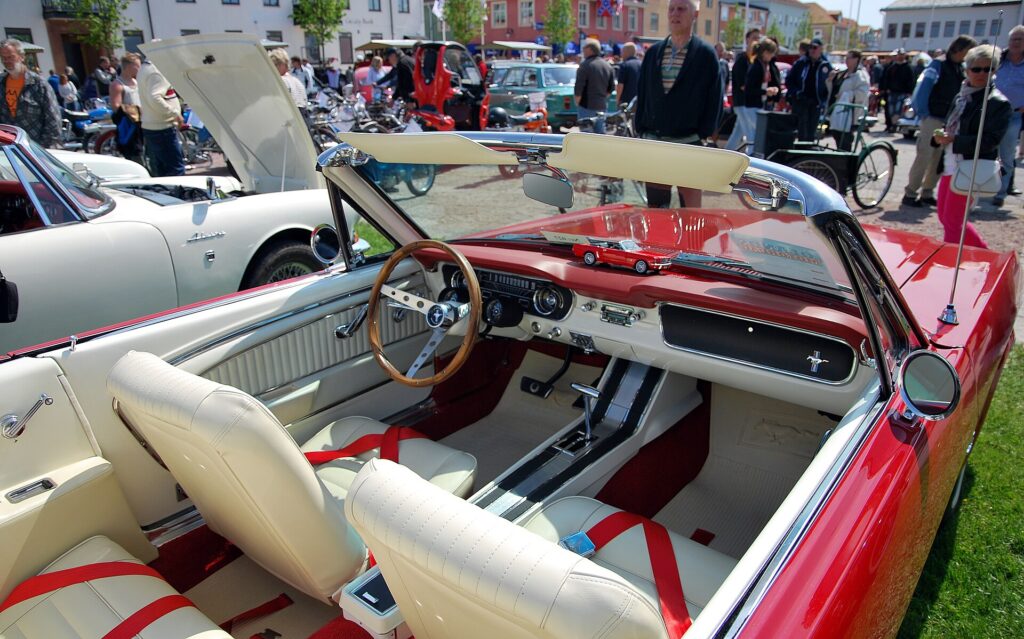
The interior of a 1965 Mustang convertible.
Photo: Alex Nordstrom / Wikimedia Commons, CC BY-SA 3.0
The magic of the options list
Ford’s clever trick was the catalogue. The base Mustang had a six-cylinder engine and was, to put it politely, relaxed. But then you could choose a V8, automatic or manual gearbox, GT package, console, radio, colours, trims. Everyone built their own Mustang, from a shopping car to something that needed respect on the throttle. That “build it the way you want” idea was copied by everyone afterwards.
Carroll Shelby, about whom I’ve written a separate article, took the Mustang and turned it into the GT350 and GT500. And the competition didn’t sit still: Chevrolet Camaro, Pontiac Firebird, Plymouth Barracuda, Dodge Challenger. A whole class of car took its name from a little horse.
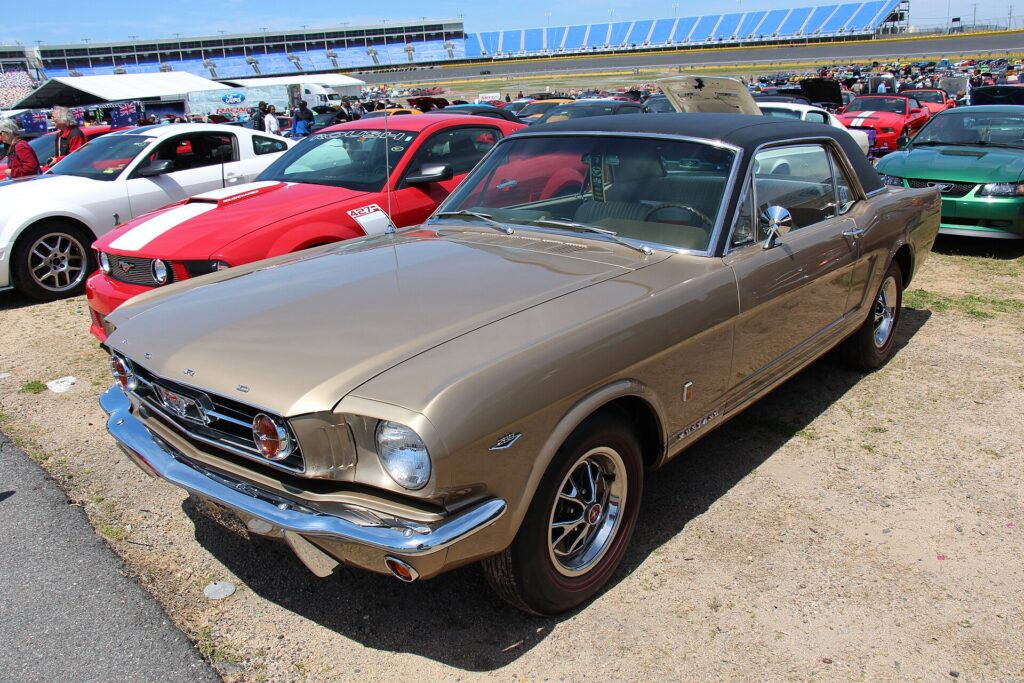
A first-generation Mustang GT hardtop.
Photo: Sicnag / Wikimedia Commons, CC BY 2.0
Steve McQueen and 1968
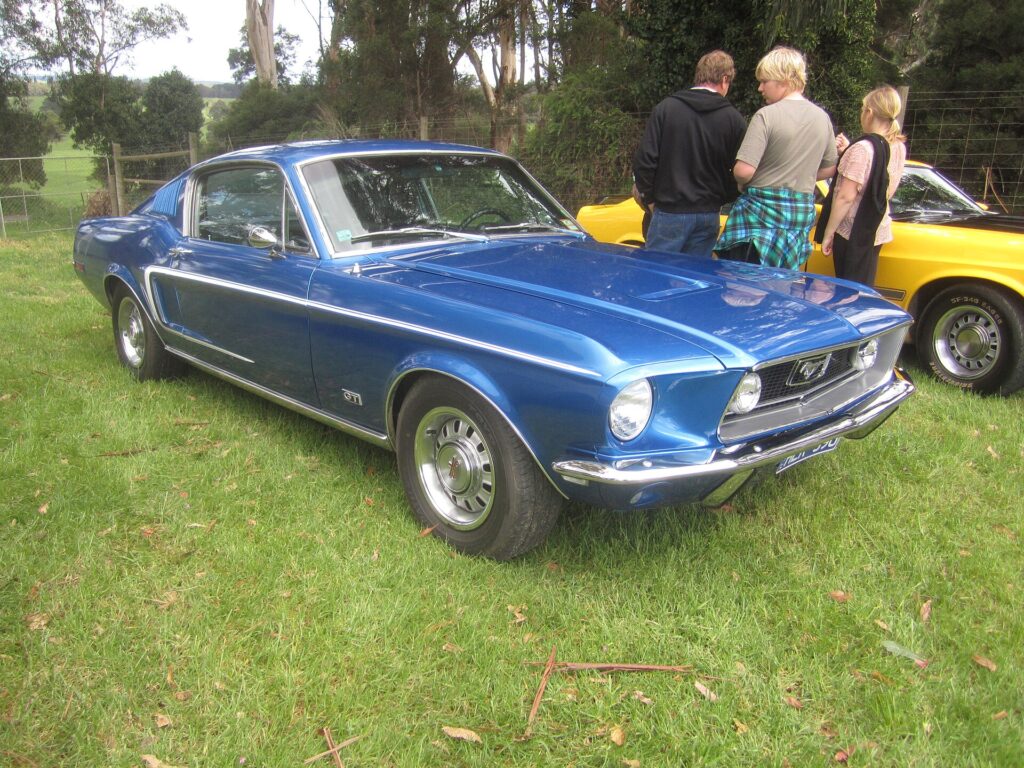
If I had to pick one Mustang, I’d pick the 1968 fastback. And I’m not alone. In the film Bullitt, Steve McQueen drives a green Mustang GT fastback chasing a Dodge Charger over the hills of San Francisco, in one of the most famous chase scenes in cinema. The car from the film disappeared for decades, resurfaced, and in 2020 sold at auction for 3.7 million dollars. Not a bad price for a used Mustang.
A 1968 Mustang GT Fastback, the version made famous by the film Bullitt.
Photo: Sicnag / Wikimedia Commons, CC BY 2.0
The first generation grew every year, in size and in cubic inches, up to the big 1971 model. With the 1973 oil crisis Ford switched to the small Mustang II, which is another, less glorious, story.
If you’re looking for one
The good news is that they built a great many, and parts are still made new, almost down to a complete body shell. The bad news is that rust loves them, especially in the floors, the wheel arches and the cowl under the windscreen, where water gets into the cabin. And many “GTs” and “Shelbys” didn’t leave the factory that way. Check the engine code in the VIN and the Door Data Plate before you believe the advert.
For me, the Mustang is a reminder that a car doesn’t have to be exotic to become a legend. It just has to arrive at the right moment, at the right price, with the right shape. The people who drive it do the rest.
P.Kefalas
Photo Credits: Calreyn88 (Wikimedia Commons, CC BY-SA 4.0) · Sicnag (Wikimedia Commons, CC BY 2.0) · Alex Nordstrom (Wikimedia Commons, CC BY-SA 3.0) · Sicnag (Wikimedia Commons, CC BY 2.0)