
Before the Model T, the car was a toy for the rich. After the Model T, it became something a farmer, a factory worker or a teacher could own. Few products in history have changed the way people live so deeply. Behind it was a man with an almost obsessive idea: Henry Ford.
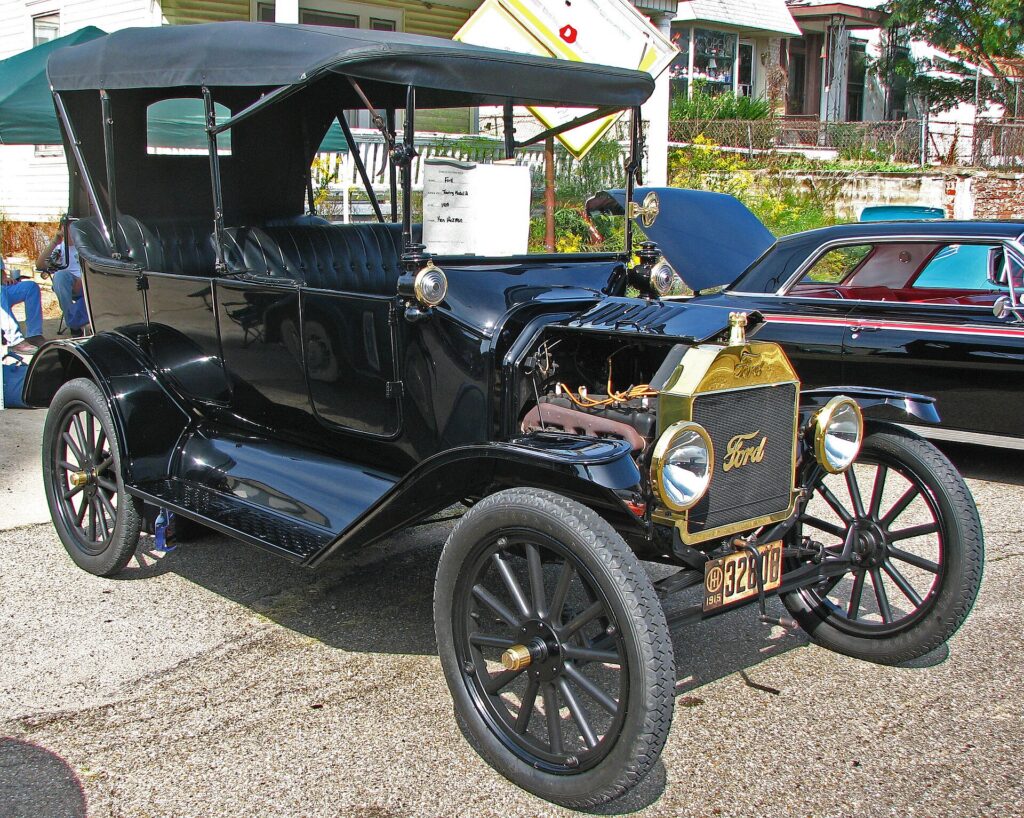
Photo: Don O’Brien from Piketon, Ohio, United States / Wikimedia Commons, CC BY 2.0
A car for the many
Henry Ford was born in 1863 on a farm in Michigan. From childhood he loved machines. He worked as an engineer for Thomas Edison’s company and in his spare time built his first car. After two failed attempts, in 1903 he founded the Ford Motor Company.
His goal was clear: a car that was simple, tough and cheap enough for every family to buy. The Model T was launched in October 1908. It had a 2.9-litre four-cylinder engine with 20 horsepower, high ground clearance for the dirt roads of rural America, and a two-speed gearbox operated by pedals. Americans affectionately called it the “Tin Lizzie”.
The moving line
The Model T sold so well that Ford could not build it fast enough. The solution came in 1913, at the Highland Park plant. Instead of workers moving around the car, the car moved along a line, and each worker did a single job. The idea was partly inspired by the meat-packing plants of Chicago.
The results were remarkable. The time to assemble a chassis fell from over 12 hours to about an hour and a half. The price fell with it: from 850 dollars in 1908 to under 300 by the mid-1920s.
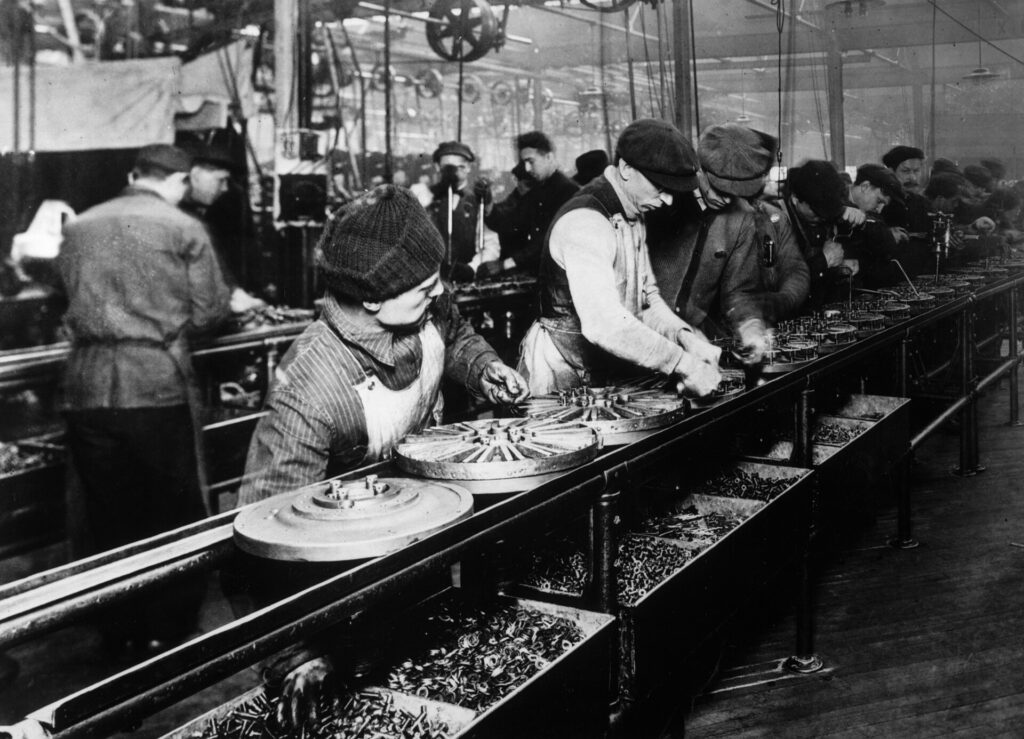
Photo: Unknown photographer / Wikimedia Commons, Public domain
Five dollars a day
Work on the line was monotonous and tiring, and many workers quit. In 1914 Ford did something that shocked other industrialists: he almost doubled wages, to five dollars a day, and cut the shift to eight hours. The workers stayed, and many of them could now afford the car they were building.
From that era also comes Ford’s famous line: “Any customer can have a car painted any colour that he wants, so long as it is black.” It was not a whim. The black paint of the time dried faster, and the line could not wait.
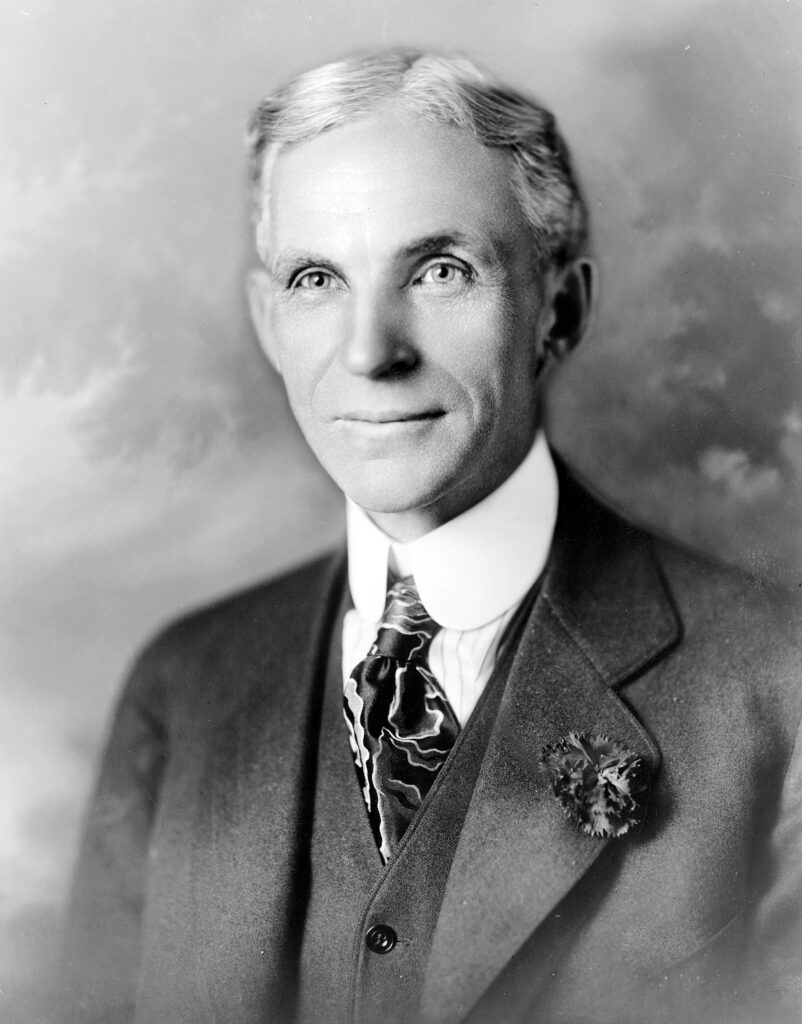
Photo: Fred Hartsook / Wikimedia Commons, Public domain
15 million and the end
By 1927, when production stopped, more than 15 million Model Ts had been built in the USA, Canada, England and other countries. At one point, roughly one in every two cars on American roads was a Model T. Its record stood for almost half a century, until the Volkswagen Beetle beat it in 1972.
In the end, though, Ford found it hard to let go of his beloved car, while competitors now offered more colours, more comfort and new models every year. In 1927 the Model A arrived. But the Model T had already done its job: it had turned the car from a luxury into a necessity. And the assembly line, in one form or another, still builds almost everything we use today.
P.Kefalas