Rust: Where to Look Before You Hand Over Money for a Classic Car
on
In the article on the ten things you should know before buying a classic, I wrote that classics need research. But if I had to choose just one thing worth all your attention, it would be rust. An engine can be fixed. A gearbox can be swapped. Parts can be found. Rust, however, is what turns a “bargain” into a two-year project and a bill nobody had planned for. Because missing metal has to be cut out, made from scratch and welded in, and that means hours, many hours, of a craftsman’s time.
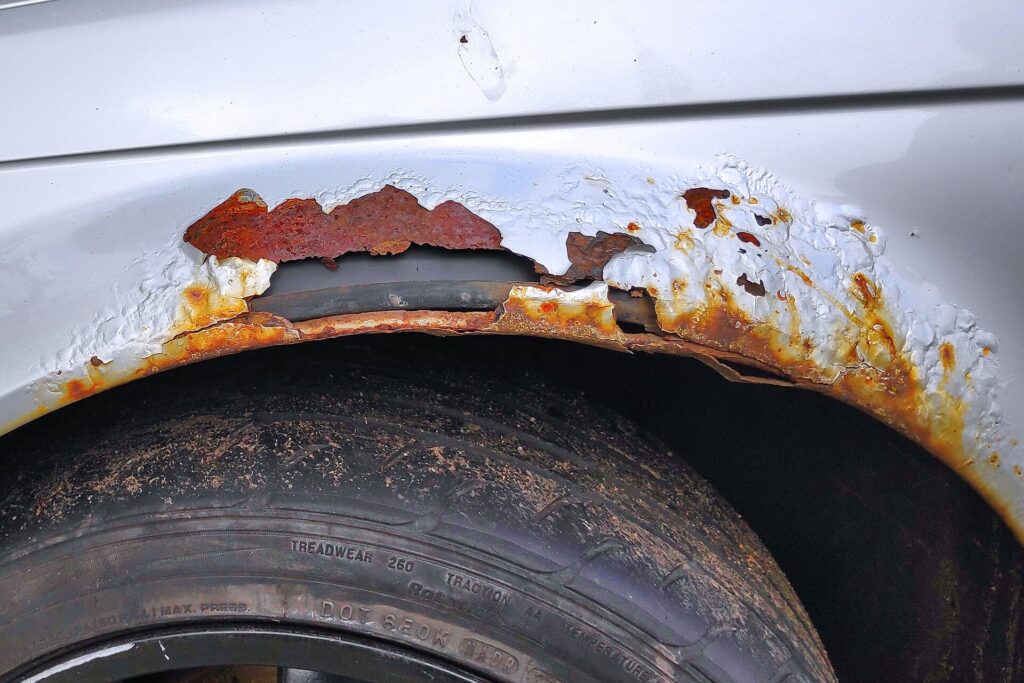
Rust bubbles in the wheel arch: what you see is only the beginning.
Photo: Marek Ślusarczyk (Tupungato) Photo portfolio / Wikimedia Commons, CC BY 3.0
The rust you can see is the small part
The first rule is simple: a bubble in the paint is the tip of the iceberg. Rust usually starts from the inside, in closed box sections and places where water collects, and by the time it lifts the paint on the outside, it has already eaten a lot of metal behind it. A coin-sized bubble can hide a palm-sized hole. So don’t listen to “it’s just a little bubble, a touch of paint will do”.
The places I always check
Every model has its own weak spots, and it’s worth searching the forums for that specific car before you go and see it. But some apply almost everywhere:
Sills. They are box sections that hold the car together structurally, especially on cars without a separate chassis. If they’re rotten, the body “bends”. Look underneath, at the front and rear ends, and near the jacking points.
Floor. Lift the mats and the carpet. Especially under the driver’s and passenger’s feet, where water collects from wet shoes and windscreen leaks.
Wheel arches. The wheel has been throwing water and mud in there for decades. Check the lip of the arch and the inner wall, front and rear.
Bottoms of doors, bonnet and boot lid. If the drain holes are blocked, water sits inside and eats the metal from the inside out.
Boot and spare wheel well. Lift the spare and see what’s underneath. Its well collects water from the rear light and boot lid seals.
Around the glass. The windscreen and rear screen frames are classic spots, and repairing them is difficult because the glass has to come out.
Suspension mounts and support points. Strut towers, spring mounts, subframes. Here rust isn’t only about looks. It’s about safety.
The battery tray. Acid that leaks over the years eats the metal underneath.
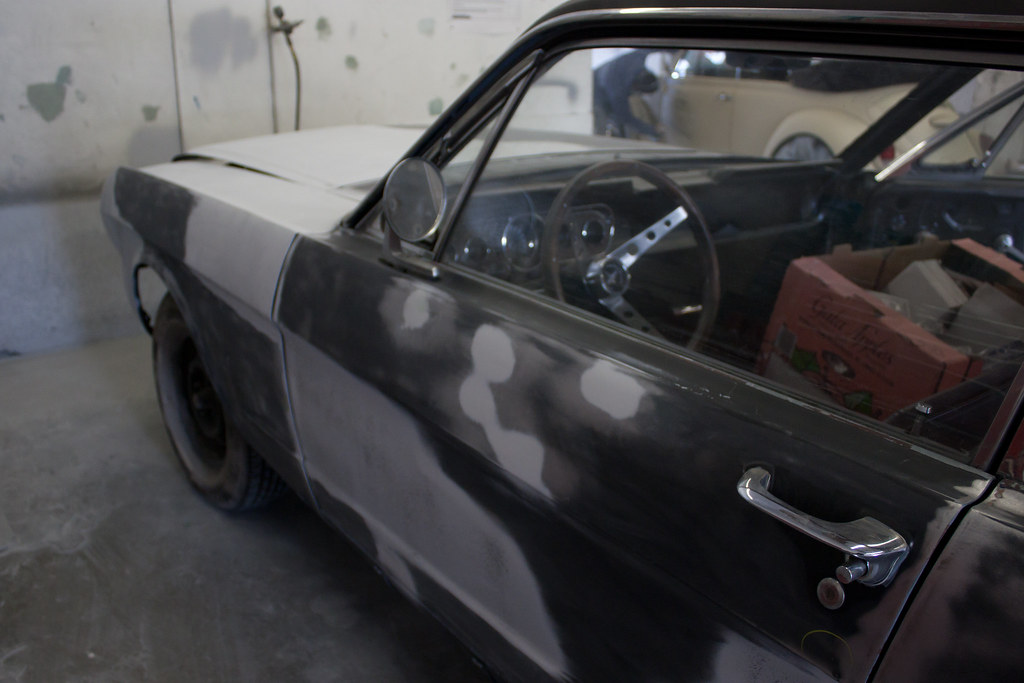
A body under repair: metal, primer and many hours of work.
Photo: aresauburn™ / Flickr, CC BY-SA 2.0
What to take with you
You don’t need a workshop to check properly. You need a good torch, a small mirror (or your phone for photos where your eye can’t reach), a mat to lie on under the car, and a magnet wrapped in cloth so it doesn’t scratch. The magnet is the best tool there is: where there’s a thick layer of filler, it won’t stick, or sticks very weakly. Run it slowly along the lower parts of the wings, the arches and the sills.
Tap gently with a knuckle. Metal has a clear sound. Filler sounds “hollow” and duller. Also look at the car in sunlight, from an angle: ripples and differences in shade reveal repairs. If you want to test a suspicious spot underneath with a screwdriver, ask the seller’s permission first. An honest seller won’t mind.
The signs that should worry you
Fresh, thick underseal, only in certain places? It may be maintenance, or it may be “make-up”. Fresh paint only on the lower parts, with the upper parts old? Ask. A musty smell in the cabin? Water is getting in somewhere. Overspray on rubbers and plastics? The car has been painted, and you need to find out why.
And remember that a car that has spent decades by the sea, on an island or in a coastal town, has taken far more salt than one that lived inland, however good it looks from the outside.
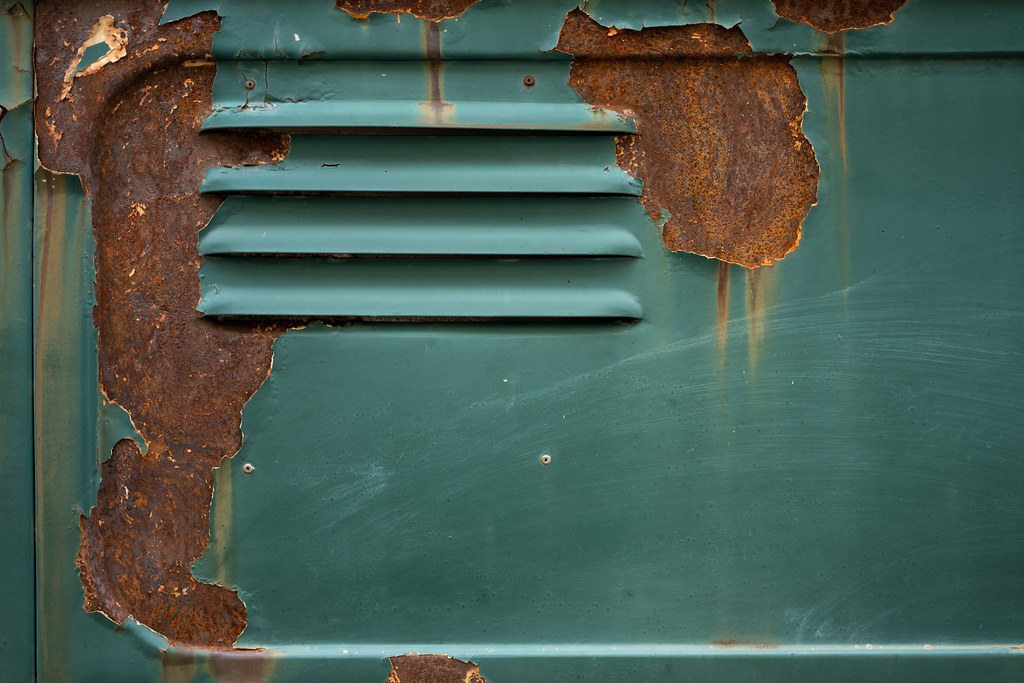
When rust goes far enough, the metal simply disappears.
Photo: Henry Söderlund / Flickr, CC BY 2.0
And if it does have rust?
Almost every classic has a little rust somewhere, and that doesn’t mean you should walk away. It means you have to factor it into the price. If possible, have a body repairer who knows old cars look at it before you pay. Ask whether repair panels are available for that model. For popular cars such as the Beetle, Mini or Mercedes, they’re easy to find. For rare ones, they often have to be made by hand.
My own rule is simple: I’d rather have a car with a tired engine and a solid body than the other way round. An engine needs money. Rust needs money, time and patience. And of the three, patience is the one that runs out first.
P.Kefalas
Photo Credits: Marek Ślusarczyk (Tupungato) Photo portfolio (Wikimedia Commons, CC BY 3.0) · aresauburn™ (Flickr, CC BY-SA 2.0) · Henry Söderlund (Flickr, CC BY 2.0)