Winter and Your Classic: How to Put It to Sleep Properly Until Spring
on
In our part of the world we don’t have the snow and road salt of Northern Europe, so many people believe a classic can simply sit in the garage over winter and be found exactly as it was left. Unfortunately that’s not how it works. Our enemy isn’t the cold. It’s humidity. Especially on islands, in seaside areas, and in garages with concrete floors that “sweat”. Three or four months of standing without preparation can cost you a battery, a set of tyres, a seized caliper and, in the worst case, a mouse nest inside the dashboard.
You don’t need to be a mechanic to do it properly. You need an afternoon and a bit of order. Here’s what I do, in sequence.
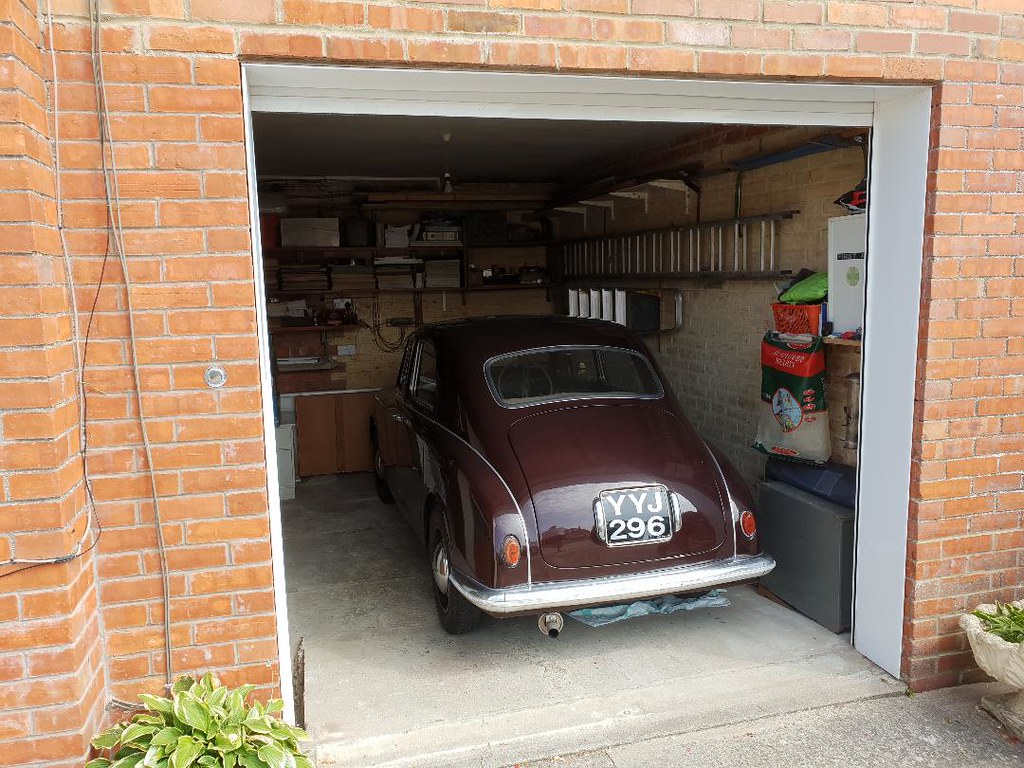
A classic tucked safely away in its garage for the winter.
Photo: andreboeni / Flickr, CC BY 2.0
Wash first, then sleep
Never store a dirty car. Mud in the arches and under the chassis holds moisture against the metal for months, and bird droppings or tree sap eat the lacquer. Wash it well, especially underneath, the sills and inside the arches. Then let it dry completely, with the doors and bonnet open, before closing it up. A coat of wax on the paint doesn’t hurt. And clean the interior: crumbs and wrappers are an invitation to mice.
Oil and fuel
If an oil change is nearly due, do it before storage, not after. Old oil contains moisture and acids from combustion, and you don’t want them sitting inside the engine for months.
The tank is best left full. A half-empty tank holds air, air holds moisture, and moisture condenses on the walls and rusts the inside, especially in old steel tanks. If the layup will last many months, a fuel stabiliser is cheap insurance, because petrol goes stale and leaves deposits in the carburettors. Add it, then drive a few kilometres so it reaches everywhere.
Battery: the most common casualty
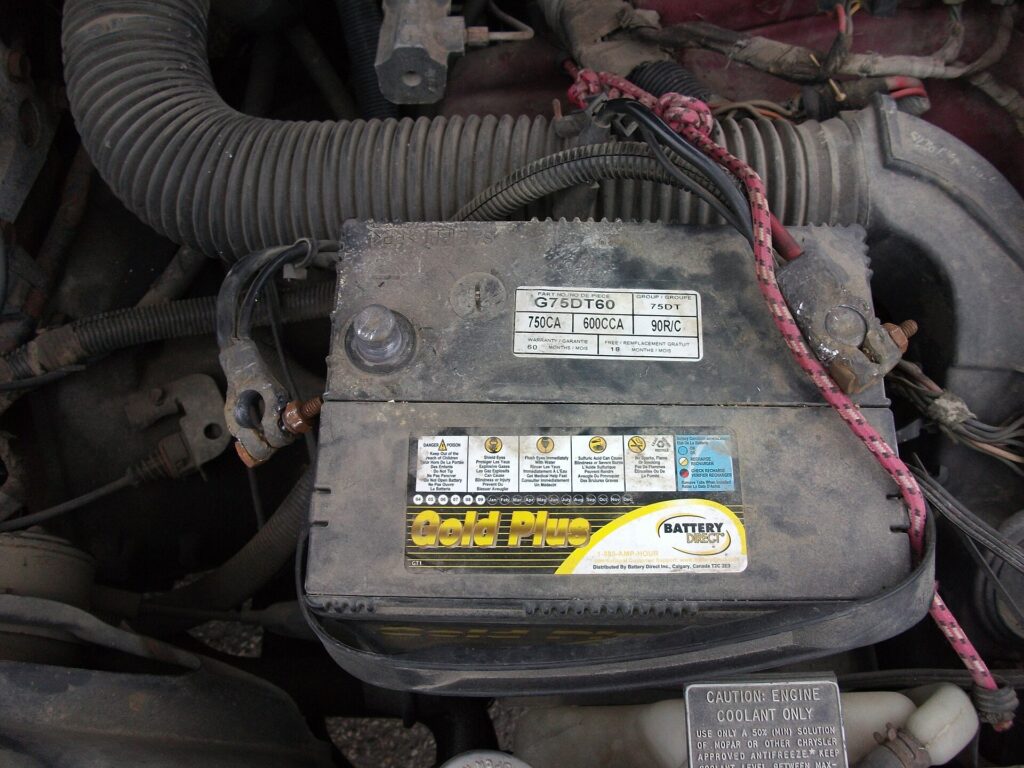
A battery left for months without charging goes flat, and a battery that goes completely flat often never recovers. You have two options. The best is a smart battery maintainer, the kind that stays permanently connected and only charges when needed. If there’s no power in the garage, disconnect the negative terminal. On old cars, with clocks, radios and some tired wiring, something is always drawing a little current.
A car battery: the negative terminal is disconnected first.
Photo: dave_7 from Lethbridge, Canada / Wikimedia Commons, CC BY 2.0
Tyres and brakes
A car that stands for months in the same spot can develop flat spots on its tyres. Raise the pressure a little above normal (don’t exceed the maximum on the sidewall) or, if the layup will be long, put the car on axle stands under proper support points. And don’t forget a note on the steering wheel to reset the pressures in spring.
Don’t pull the handbrake. With humidity, the shoes stick to the drums and in spring you’ll find yourself with a car that won’t move. Leave it in gear (or P on automatics) and chock the wheels.
The cover: where the most common mistake is made
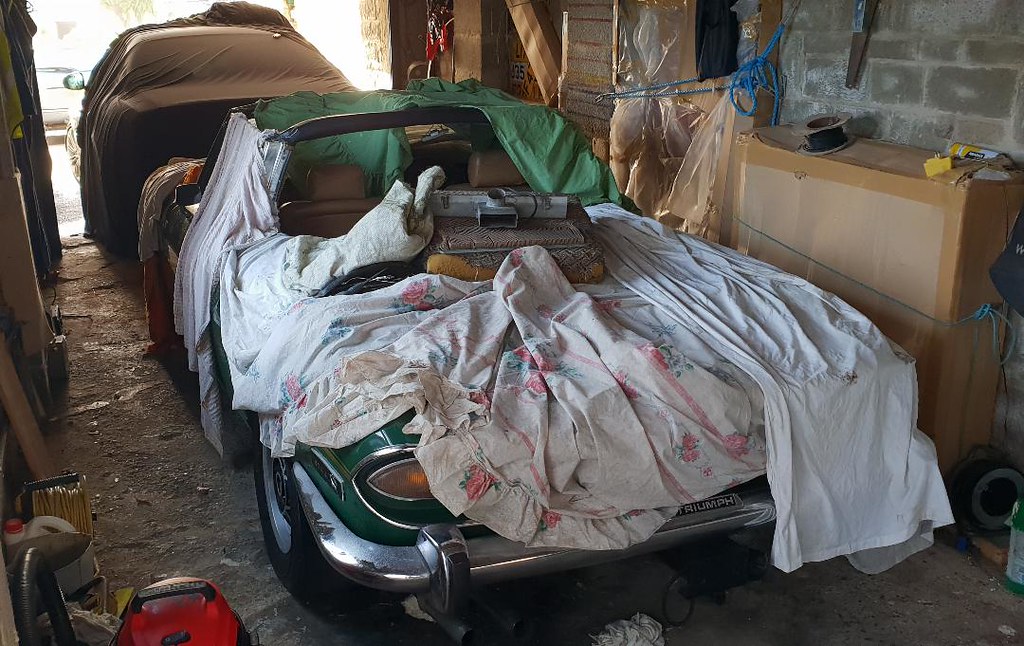
Never put a builder’s tarpaulin or plastic sheet over a classic. They don’t breathe, they trap moisture against the paint and chrome, and the result is worse than having nothing at all. You need a breathable indoor cover, soft on the inside. If the garage is very damp, put a few moisture absorber tubs inside the car, and leave a window very slightly open if the space is secure. If you can, a small dehumidifier in the garage works wonders.
A Triumph Stag under cover for its layup.
Photo: andreboeni / Flickr, CC BY 2.0
Mice: don’t underestimate them
A quiet, dark car is the ideal home for mice, and mice love insulation and wiring. Block the exhaust and the air intake with steel wool or a rag, but tie a red ribbon to it and stick a note on the steering wheel so you remember before starting. Some people also use repellents. The most important thing, though, is that there’s no food in the car, and that you check on it now and then.
Should I start it every week?
Many will disagree here, but I say no, if it’s only for five minutes at idle. The engine doesn’t get warm, moisture from combustion condenses in the exhaust and the oil, and in the end you do more harm than good. If you can take it out for a proper drive, twenty or thirty minutes until it’s fully warm, then yes, do it whenever you can on a dry day. If not, let it sleep in peace.
And one last thing: if the car won’t move at all for months, ask your insurer and the relevant authority about the options available (laying the car up officially, fire-and-theft-only cover and so on). You may save some money.
In spring, when you wake it up, do everything in reverse: check fluids, pressures and brakes, look for leaks and remove (I’ll say it again) whatever you put in the exhaust. Then take the first sunny road. It’s worth the wait.
P.Kefalas
Photo Credits: andreboeni (Flickr, CC BY 2.0) · andreboeni (Flickr, CC BY 2.0) · dave_7 from Lethbridge, Canada (Wikimedia Commons, CC BY 2.0)