
Today SUVs are everywhere. In the early 1980s, though, a four-wheel drive was still a heavy, awkward vehicle on a truck chassis. The Jeep Cherokee XJ changed that picture. It was smaller, lighter and more comfortable than its rivals, yet it went wherever a Jeep was expected to go. Many car historians consider it the first modern SUV.
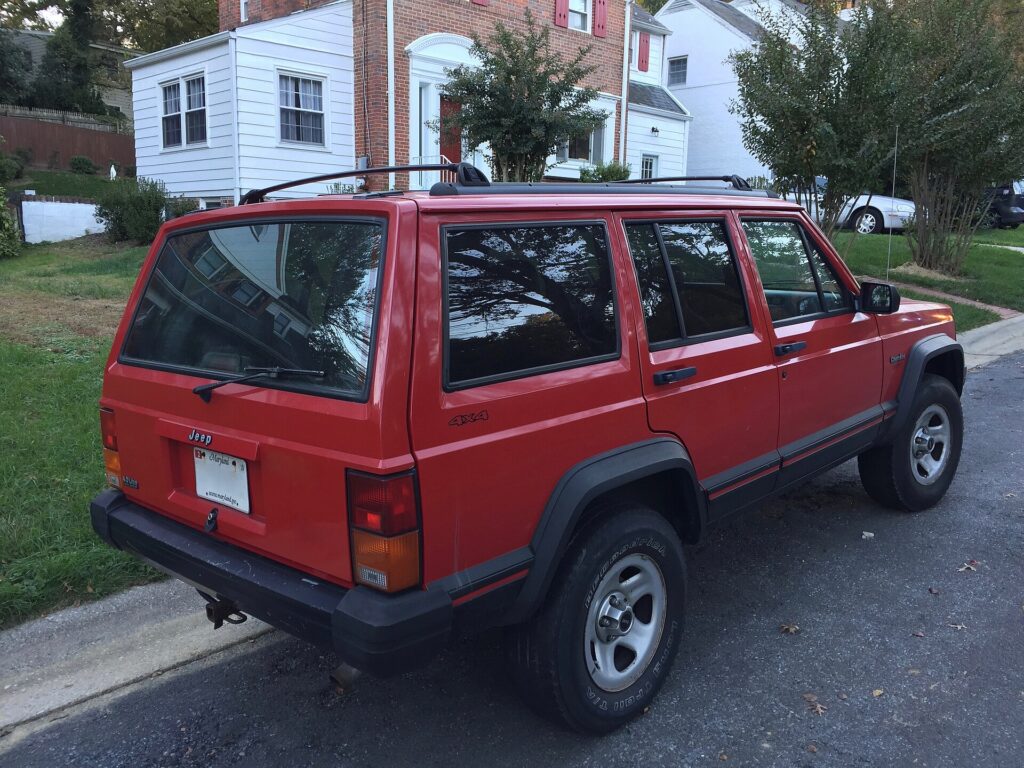
Photo: CZmarlin — Christopher Ziemnowicz — a photo credit is required if this image is used anywhere other than Wikipedia. / Wikimedia Commons, CC BY-SA 4.0
An American company with a French boss
The XJ was designed by American Motors Corporation (AMC), which owned the Jeep brand at the time. AMC was in financial trouble and Renault had bought a large share of it. French money and know-how helped create a genuinely new vehicle, not just a facelift of the old Cherokee.
The big innovation was the body. Instead of a separate frame with a body on top, the XJ had a unibody, like a passenger car. AMC called it “Uniframe”. The result was much lighter, with better handling and fuel economy, without losing the toughness people expected from a Jeep. It was launched at the end of 1983 as a 1984 model, in two-door and four-door form.
The six-cylinder that made the difference
In the early years the engines were an AMC 2.5 four-cylinder and a 2.8 V6 from General Motors that left no fond memories. In Europe there was also a Renault diesel. In 1987, however, the 4.0 straight-six arrived, and the XJ gained the character people loved. That engine is one of the toughest ever built by the American industry. It is not unusual to find XJs with over 400,000 kilometres still running perfectly.
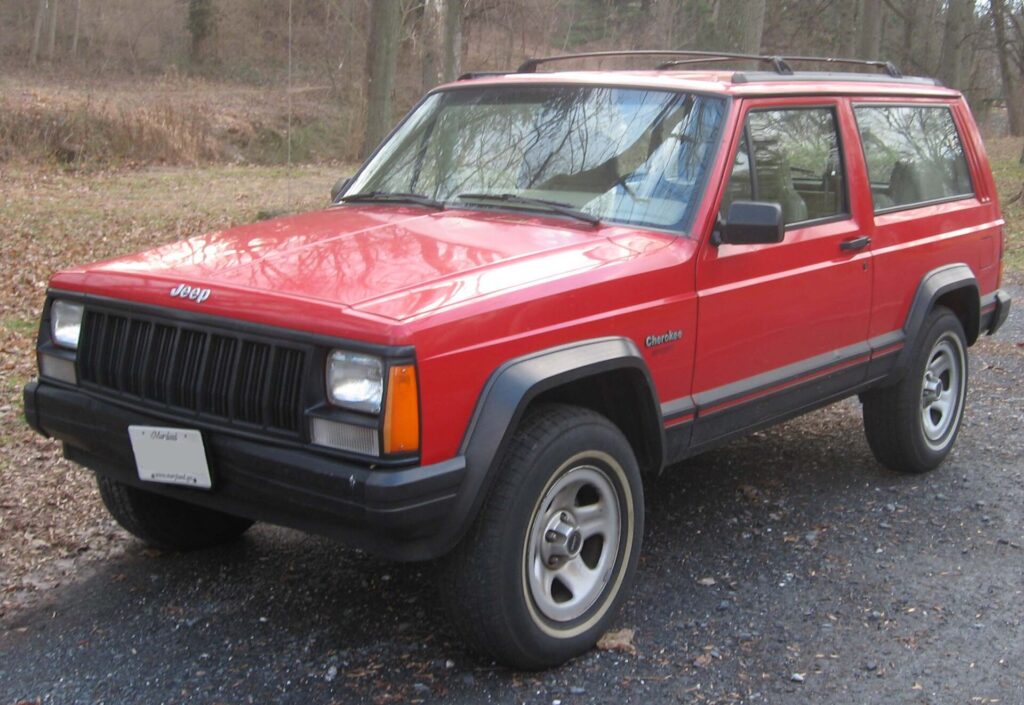
Photo: IFCAR / Wikimedia Commons, Public domain
That same year, 1987, Chrysler bought AMC, mainly for the Jeep brand. The XJ continued with small improvements, and in 1997 it received a new interior and rounder front and rear ends. The basic design, however, stayed the same until the end.
A favourite of off-roaders
The XJ had two simple, strong solid axles, short overhangs front and rear and Command-Trac and Selec-Trac four-wheel-drive systems. With a few modifications, a lift and bigger tyres, it becomes one of the most capable off-road vehicles around, for far less money than a Land Cruiser or a Wrangler. That is why it is still so popular with off-road clubs all over the world.
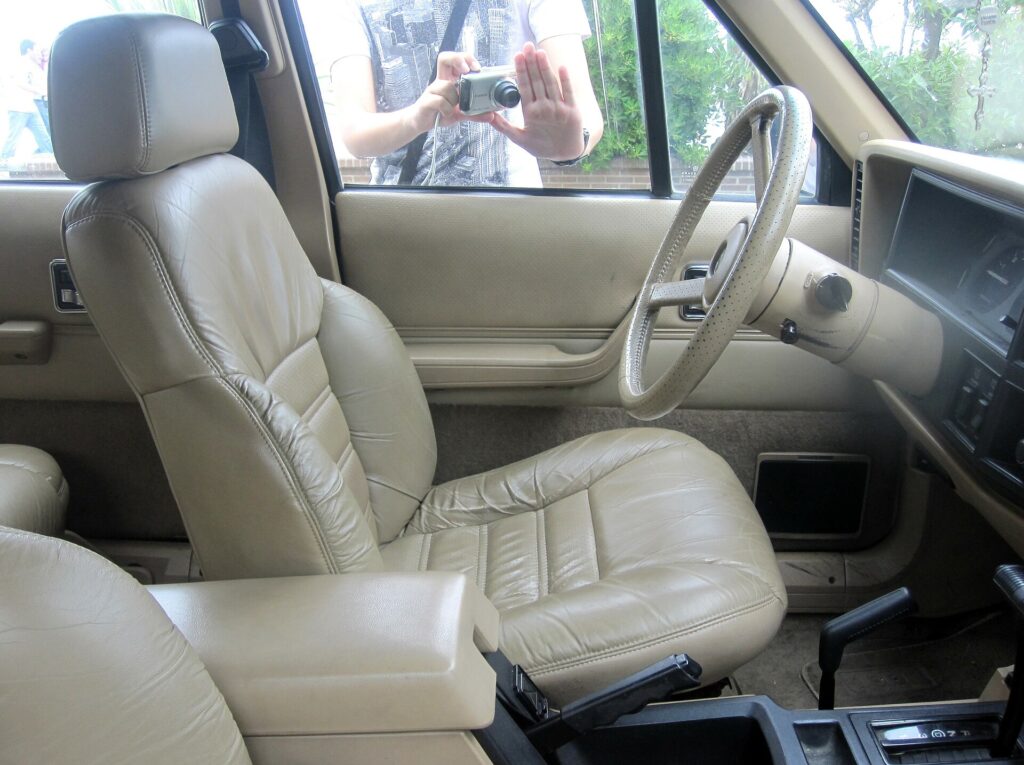
Photo: Spanish Coches / Wikimedia Commons, CC BY 2.0
The end and the legacy
US production stopped in 2001, after almost three million vehicles. In China it continued to be built for a few more years. Its successor, the Liberty, was more modern but never won the same affection.
If you are thinking of buying an XJ, look for the 4.0 six, check carefully for rust in the floor and the rocker panels, and look at the service history. A good XJ is one of the smartest classic four-wheel drives you can buy today. Simple, tough and, most importantly, still great fun.
P.Kefalas