Land Rover Series I: A Sketch in the Sand and a ‘Temporary’ Vehicle That’s Still Alive
on
If you grew up in Cyprus, the Land Rover isn’t an exotic British car to you. It’s part of the landscape. We saw them in fields, in army camps, in villages, green, faded, with the canvas torn and the engine audible from two bends away. But it all started with a vehicle that was only supposed to last two or three years. The 1948 Land Rover Series I.
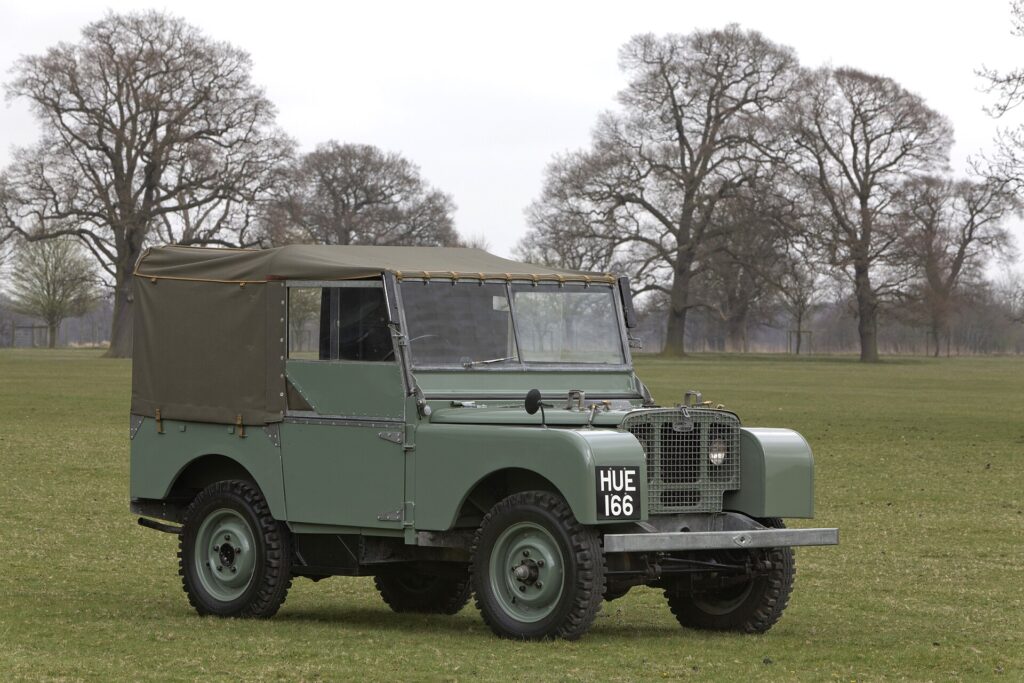
One of the first 1948 Land Rover Series Is, with the 80-inch wheelbase.
Photo: Land Rover MENA / Wikimedia Commons, CC BY 2.0
A Jeep on the farm and an idea on the beach
After the war Britain was poor. Steel was rationed, and companies got raw materials according to how much they exported. Rover, which built respectable cars for doctors and lawyers, had nothing to sell abroad. Maurice Wilks, its chief designer, had on his farm in Anglesey, Wales, an army Willys Jeep left over from the war. And he thought: why not build something like this, but for farmers?
The story goes that he drew the first design with his finger in the sand at Red Wharf Bay, in front of his brother Spencer, who was the company’s managing director. Whether it happened exactly like that, I don’t know. But it’s one of those stories you want to be true.
The first prototype was strange. It had the steering wheel in the middle, so there was no need for separate right- and left-hand-drive versions, and it sat on a Jeep chassis with the engine and gearbox from the Rover P3 saloon. It also had a power take-off to drive farm machinery, like a tractor. The central steering didn’t stay. The idea of a useful tool did.
Aluminium, out of necessity
The cleverest part of the Land Rover was born of shortage. Since steel was hard to get, the body was made of Birmabright, an aluminium-magnesium alloy that was plentiful from the wartime aircraft industry. The panels were flat, with no complex tooling, bolted onto a strong steel box-section chassis. And the colour? It was green because there was plenty of surplus green aircraft paint. Nobody sat down to choose a colour. They used what they had.
The result, anyway, was a body that doesn’t rust. That’s why so many old Land Rovers are still alive. The chassis, of course, is another story, but we’ll get to that.
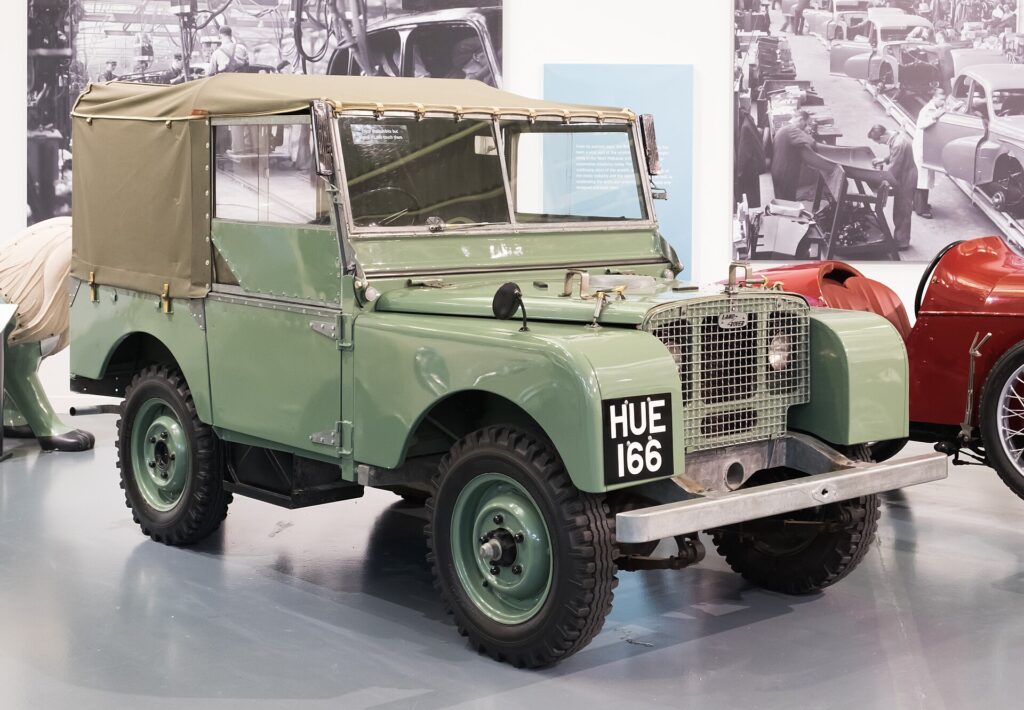
HUE 166, the first pre-production Land Rover, on display in a museum.
Photo: DeFacto / Wikimedia Commons, CC BY-SA 4.0
Amsterdam, 30 April 1948
The Land Rover was launched at the Amsterdam Motor Show. An 80-inch wheelbase (about 2.03 metres), a 1.6-litre petrol engine with around 50 hp, the four-speed gearbox from the P3 and a transfer box with low range. In the early years four-wheel drive was permanent, using a freewheel mechanism, which was later replaced by the classic selectable two- or four-wheel drive.
Rover saw it as a stopgap, to get some cash in until car production picked up again. Except the stopgap outsold all the cars put together. The British Army tested it almost immediately, and within a few years the Land Rover was in every corner of the Commonwealth: Australia, Africa, the Middle East. And of course Cyprus.
In 1954 the wheelbase grew to 86 inches and a long 107-inch version arrived. The Series II (1958) and Series III (1971) followed, and the same basic recipe lasted until the Defender, which ended in 2016.
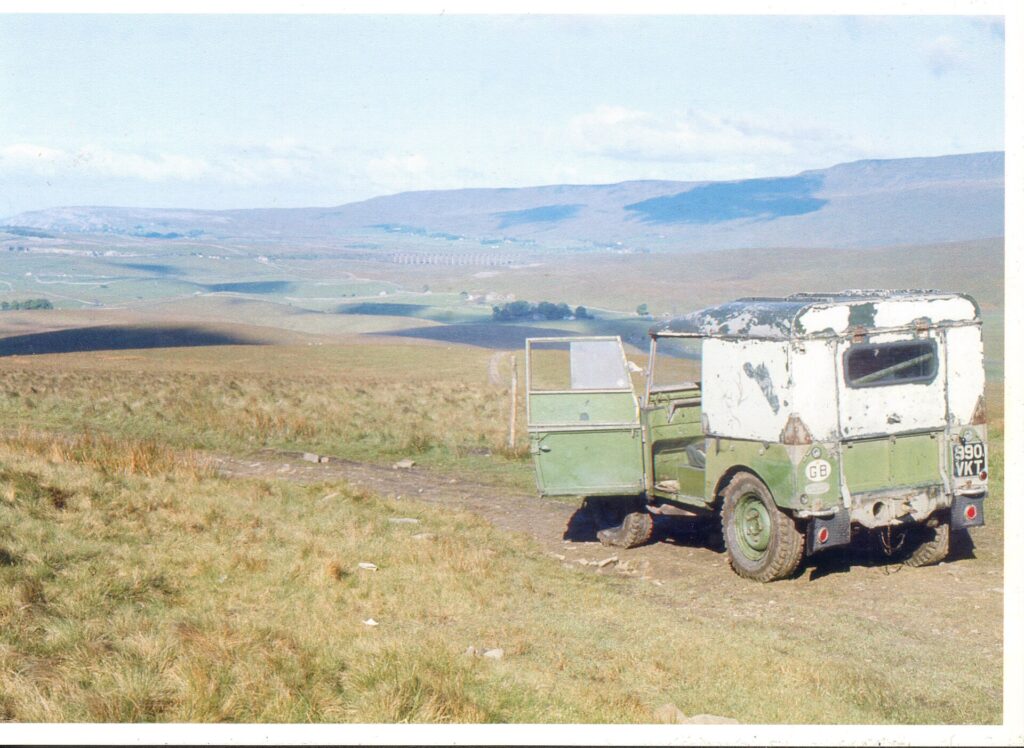
An 80-inch Series I where it belongs: on a dirt track in the English countryside.
Photo: Kognos / Wikimedia Commons, CC BY 4.0
If you’re thinking of buying one
A Series I today is a collector’s item, especially the early 80-inch ones. Don’t let the aluminium fool you: the chassis rusts, especially at the rear, at the spring mounts and the crossmember. The aluminium, on the other hand, suffers galvanic corrosion where it touches steel brackets, producing a white powder and holes around the bolts. Check whether the chassis and engine numbers match, because on a vehicle that worked hard, everything has been changed at least once.
And know that you’re not buying comfort. You’re buying noise, cold in winter, heat in summer, and a smile that doesn’t go away. For me, a vehicle born from a sketch in the sand and the leftovers of a war, that ended up travelling all over the world, is worth every minute.
P.Kefalas
Photo Credits: Land Rover MENA (Wikimedia Commons, CC BY 2.0) · DeFacto (Wikimedia Commons, CC BY-SA 4.0) · Kognos (Wikimedia Commons, CC BY 4.0)