
In the late 1950s Enzo Ferrari sold road cars mainly to pay for racing. But he knew there was a small circle of customers, wealthy industrialists, princes and stars, who wanted something more than an ordinary Ferrari. For them he built the America and Superamerica series. The 400 Superamerica, unveiled in 1959, was perhaps the most beautiful of them all.
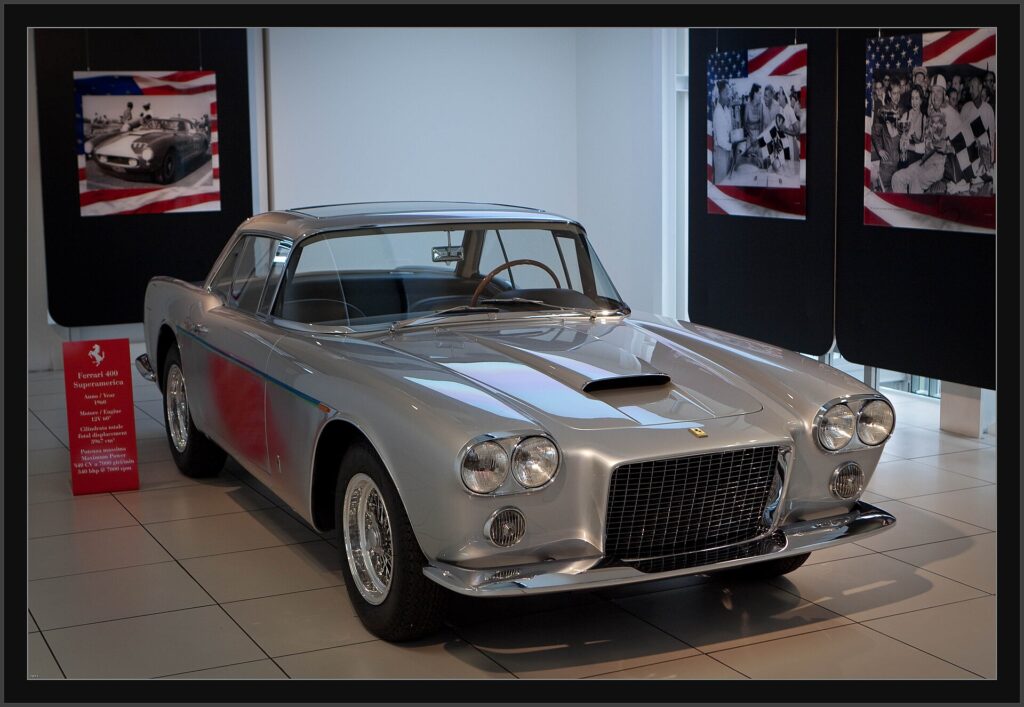
Photo: ravas51 / Wikimedia Commons, CC BY-SA 2.0
What the “400” means
On most Ferraris of the period, the number in the name showed the capacity of a single cylinder in cubic centimetres. The 400 is an exception. Its V12 displaced 3,967 cc in total, about 330 cc per cylinder, and Ferrari named it “400” to evoke its four litres. It was Gioachino Colombo’s famous V12, enlarged, with about 340 horsepower.
That was an important change. Earlier Superamericas used Aurelio Lampredi’s larger, heavier V12. The Colombo engine was smaller, lighter and keener to rev. The 400 was also one of the first Ferrari road cars with disc brakes on all four wheels.
Tailored to the customer
No two 400 Superamericas were the same. Most bodies were built by Pininfarina, as coupés and cabriolets, but every customer asked for their own details: colours, lights, interior, even the roofline. The best-known version is the “Coupé Aerodinamico”, with a long, low nose and a roof that slopes gently down to the tail.
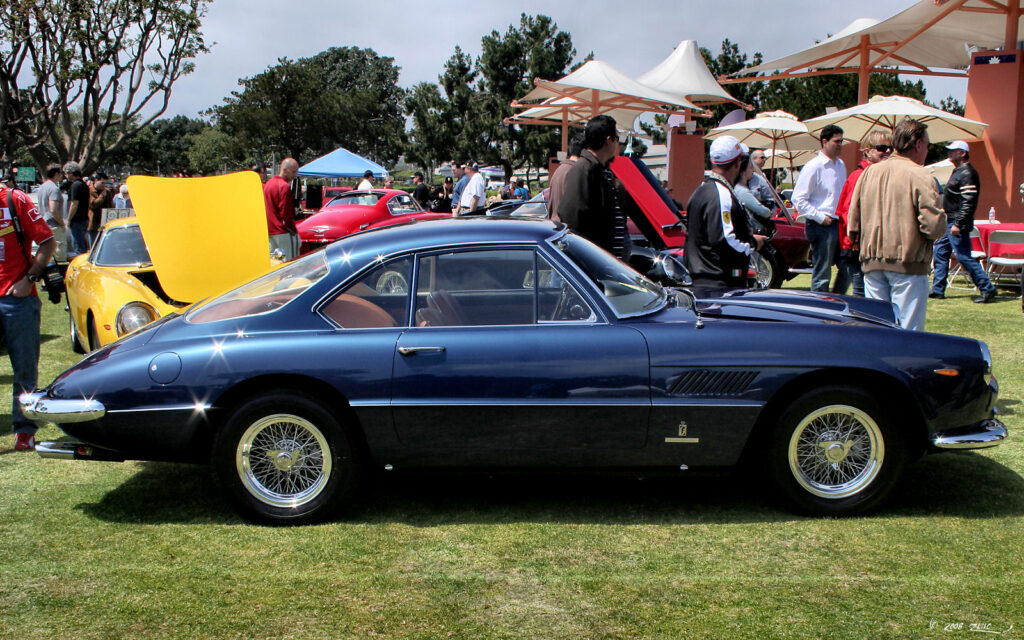
Photo: Rex Gray / Wikimedia Commons, CC BY 2.0
Gianni Agnelli, the boss of Fiat and one of the most elegant men in Italy, owned one of the first. Other owners included industrialists, aristocrats and wealthy American collectors. In 1962 the wheelbase was lengthened to give a little more room inside, making the car even more comfortable for long journeys.
A car for travelling, not for the track
The 400 Superamerica was not designed for racing. It was a fast, luxurious car for crossing Europe at 200 km/h, from Milan to Monaco and on to Paris. Ferrari quoted top speeds of over 250 km/h, exceptional for the time. It was also extremely expensive, costing far more than an ordinary Ferrari 250 GT.
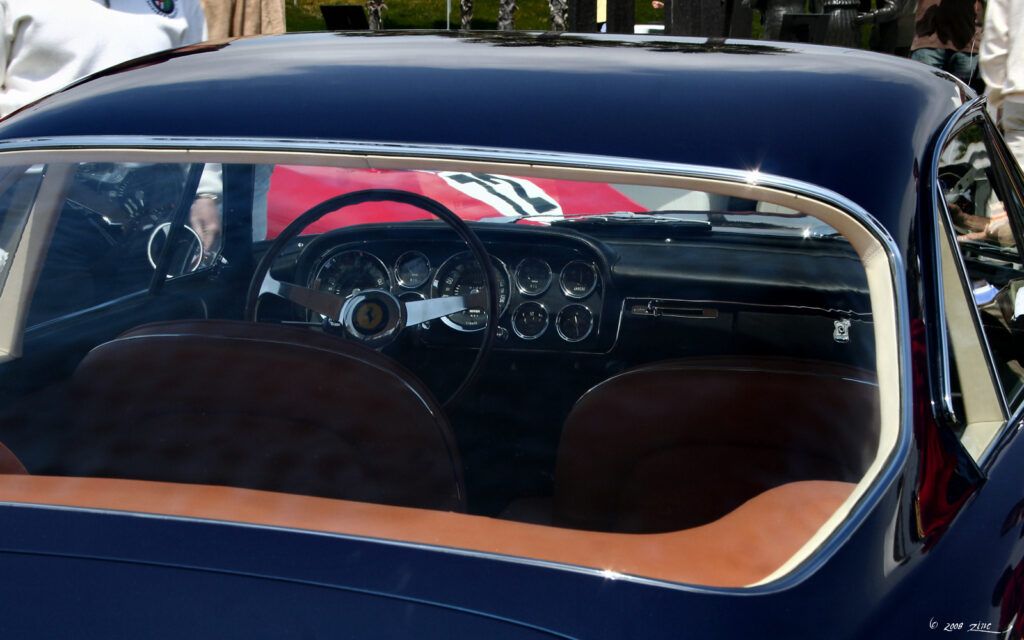
Photo: Rex Gray / Wikimedia Commons, CC BY 2.0
Rarer than the 250 GTO
By 1964, when it was replaced by the 500 Superfast, only about 47 400 Superamericas had been built. That makes it roughly as rare as the legendary 250 GTO. Today they rarely appear at auction and sell for many millions.
The 400 Superamerica shows a side of Ferrari we often forget. Before it became a symbol of speed and red racing cars, Ferrari was also a tailor of luxury. Few cars show it more clearly.
P.Kefalas