
Ask an old Formula 1 fan which was the most beautiful single-seater of the 1950s and many will answer without hesitation: the Maserati 250F. Low, long, painted Italian red, with its six-cylinder engine singing in front of the driver. It was not always the fastest. But it was the car drivers loved, from Juan Manuel Fangio to Stirling Moss.
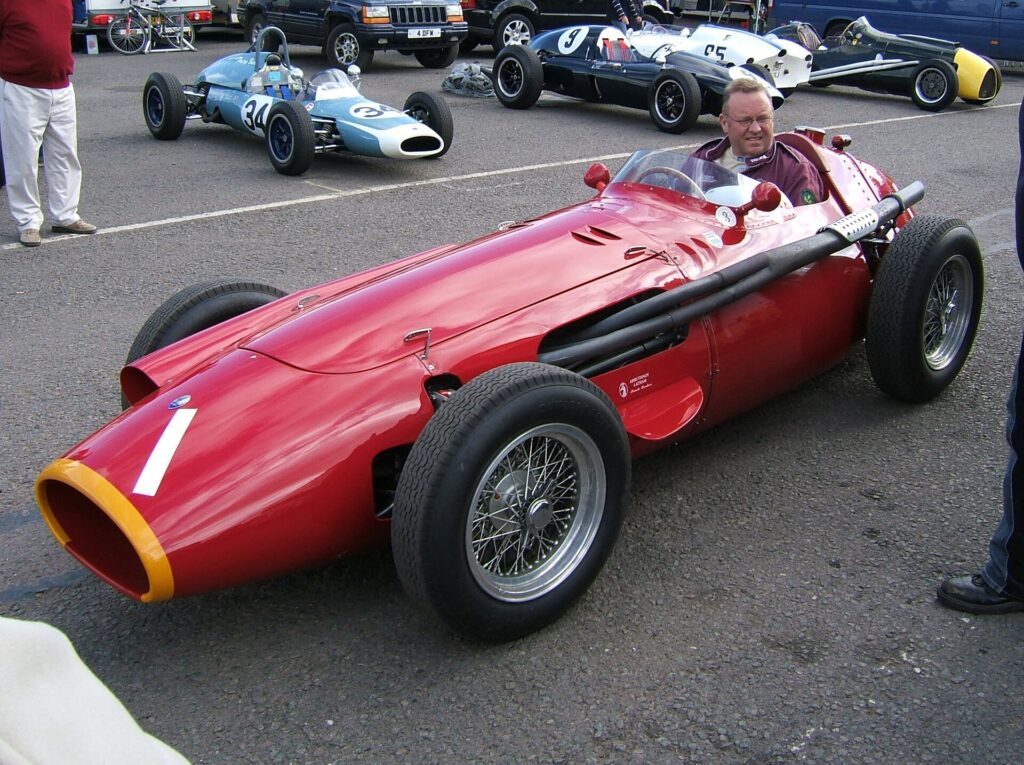
Photo: John Chapman (Pyrope) / Wikimedia Commons, CC BY-SA 3.0
A car for the new rules
In 1954 Formula 1 changed its rules. Naturally aspirated engines were limited to 2.5 litres. Maserati, from Modena, prepared a new car with engineers Gioachino Colombo, Valerio Colotti and later Giulio Alfieri. It was named 250F: 250 for the 2.5 litres, F for Formula.
The engine was a twin-cam straight-six that first produced about 240 horsepower and later over 270. The chassis was tubular and the body aluminium. It was not revolutionary, but it was balanced, predictable and reliable, and that made the difference.
A winner from day one
The 250F won its first race, the Argentine Grand Prix in January 1954, with Fangio at the wheel. Fangio also won the next Grand Prix, in Belgium, before moving to Mercedes, which was returning to racing with the W196. His two Maserati wins counted towards his second world title, which he completed with Mercedes that year.
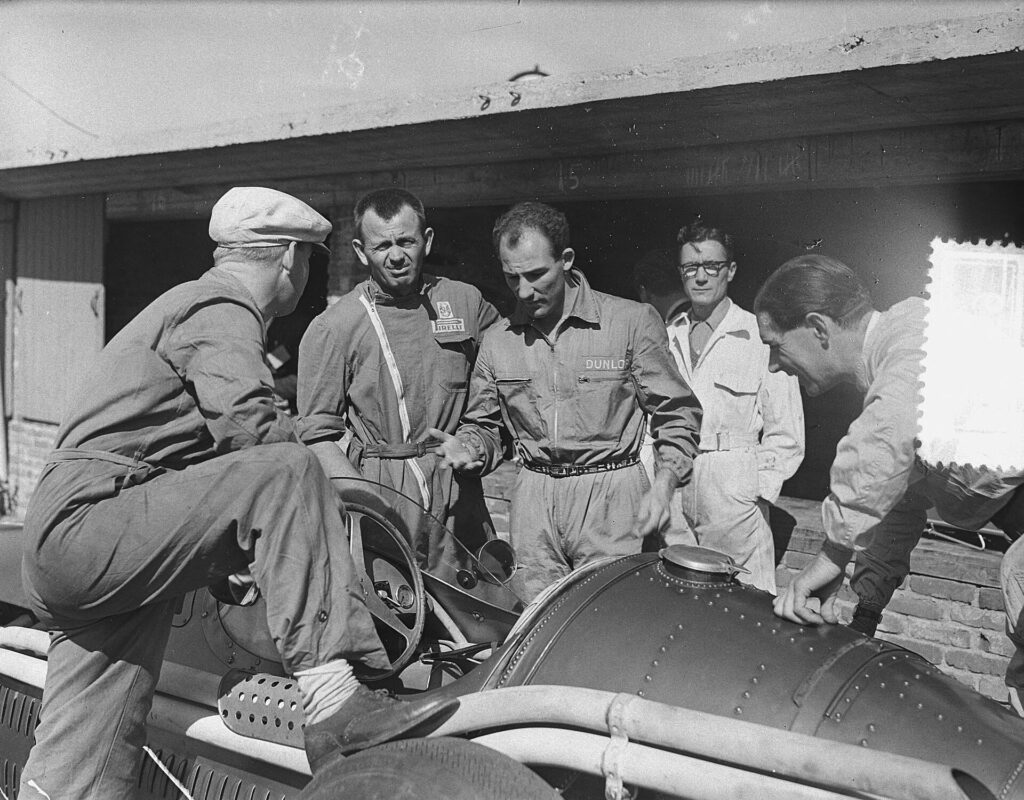
Photo: Joop van Bilsen / Wikimedia Commons, CC0
Stirling Moss and his own Maserati
The young Briton Stirling Moss did something unusual. Instead of waiting for a works drive, he bought a 250F with his own money in 1954. He drove so well that Maserati soon made him a works driver. In 1956, in a works 250F, he won the Monaco Grand Prix, starting from pole and leading almost the whole race.
The 250F was also the favourite of privateers. Dozens of drivers and small teams bought 250Fs and raced them for years. By 1960 the 250F had appeared in more than 40 World Championship races.
1957: the last triumph
In 1957 Fangio returned to Maserati. Driving a lighter version of the 250F, he won four Grands Prix and his fifth world title. Among them was the legendary race at the Nürburgring, where he broke the lap record again and again to catch the two Ferraris after a bad pit stop. Many consider it the greatest drive in Formula 1 history.
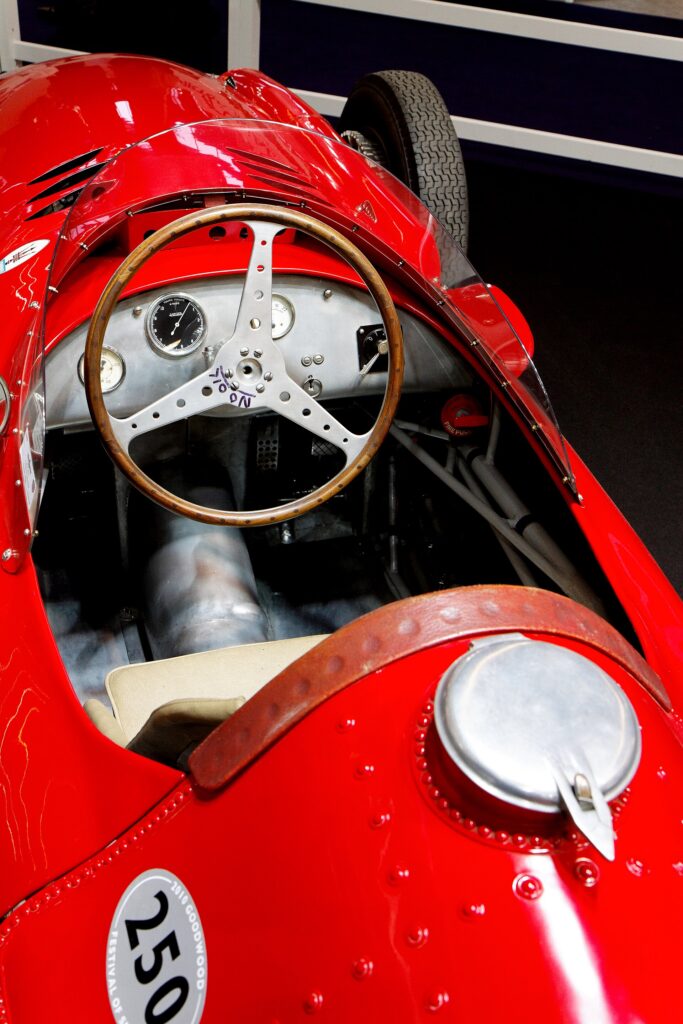
Photo: Thesupermat / Wikimedia Commons, CC BY-SA 3.0
At the end of 1957 Maserati withdrew from racing because of financial problems. The era of front-engined cars was ending, as the small British rear-engined Coopers showed the future. But the 250F went down in history as one of the most beautiful and successful single-seaters of the classic era. Today we see it at historic races at Goodwood, Monaco and elsewhere, and its sound still stops people in their tracks.
P.Kefalas