
Look at a BMW R 1300 GS today, one of the most popular big motorcycles in Europe, and you will notice two cylinders sticking out left and right of the engine and, instead of a chain, a shaft driving the rear wheel. That layout is not new. It is exactly the same as on the very first motorcycle BMW ever built, the R32 of 1923. Very few engineering designs in the world have lived so long.
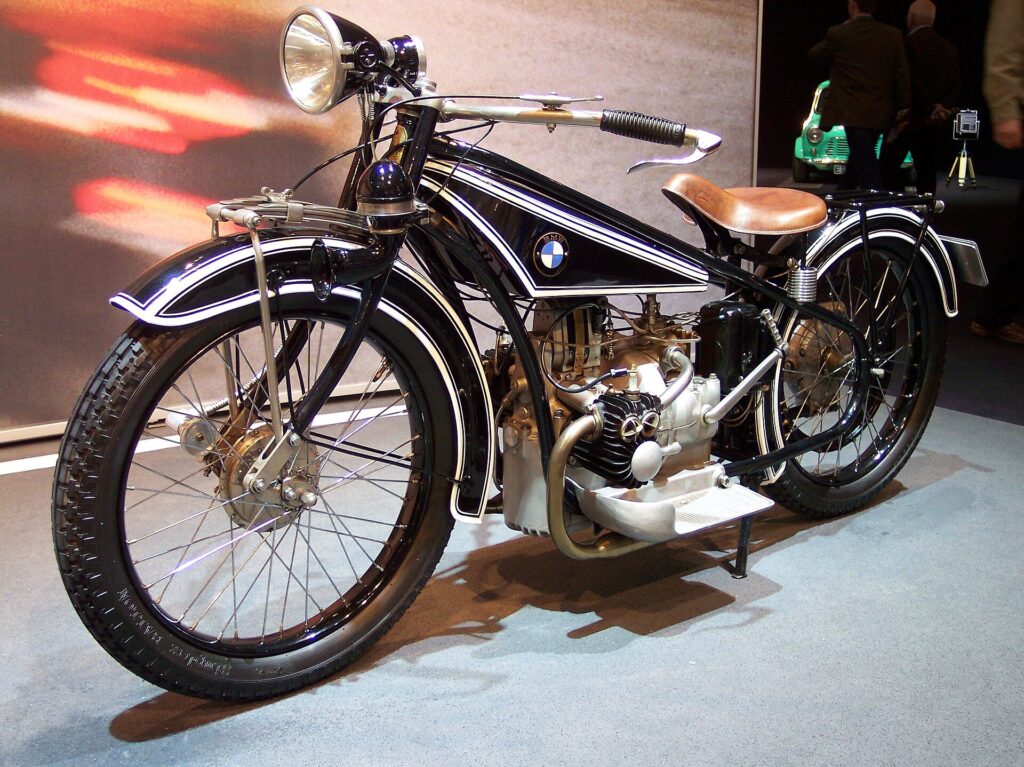
Photo: Stahlkocher / Wikimedia Commons, CC BY-SA 3.0
From aircraft to motorcycles
BMW (Bayerische Motoren Werke) began in Munich as a maker of aircraft engines. During the First World War its engines were among the best. After Germany’s defeat, however, the Treaty of Versailles banned the country from making aircraft engines. BMW had to find something else to survive. It made brakes for trains, engines for lorries and boats, and a small boxer engine it sold to other motorcycle makers.
The problem was that those makers mounted it lengthways, with one cylinder in front and the other behind, and the rear cylinder overheated. BMW’s chief engineer Max Friz, who had also designed its aircraft engines, proposed something different.
Max Friz’s idea
Friz turned the engine through 90 degrees. The two cylinders now stuck out left and right, into the airflow, and both were cooled equally well. The crankshaft now pointed backwards, so the drive could go to the rear wheel through a shaft, without oily chains. Legend has it that he designed the whole motorcycle in just a few weeks.
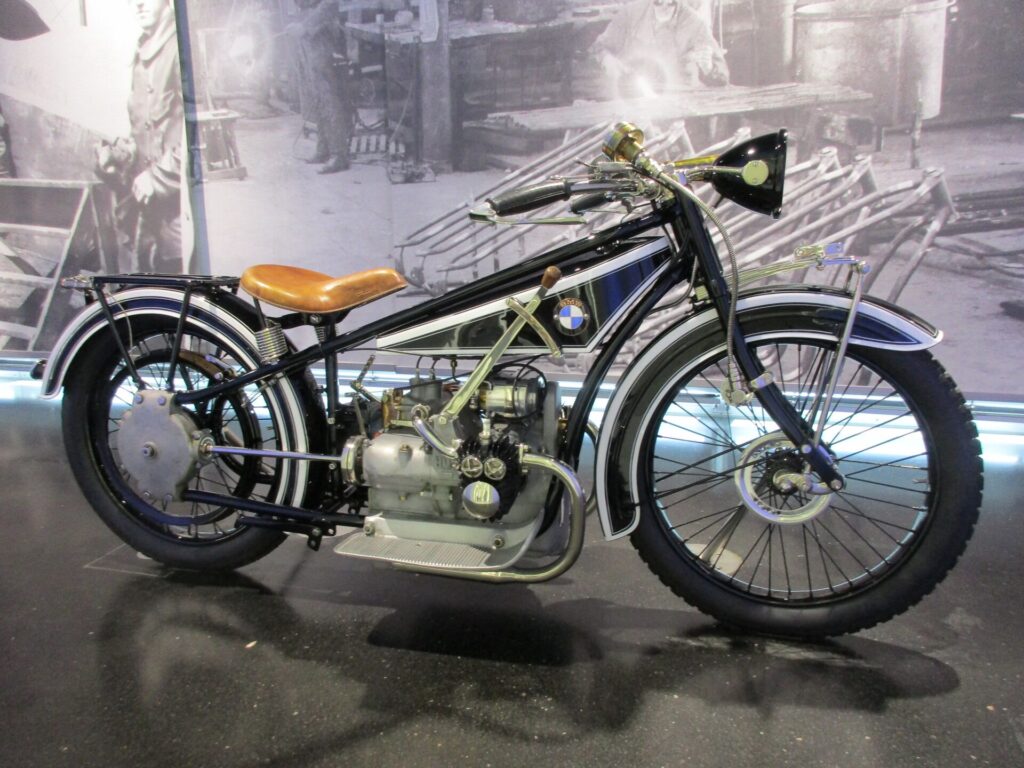
Photo: Arnaud 25 / Wikimedia Commons, CC BY-SA 4.0
The R32 was unveiled at the Paris Motor Show in October 1923. The 494 cc boxer produced 8.5 hp, the gearbox had three speeds and top speed was about 60 mph. It was not the fastest motorcycle of its day. But it was clean, quiet, reliable and well built, with a double-triangle frame painted black with fine white lines. From day one, it was a BMW.
Few made, a huge legacy
Around 3,100 R32s were built between 1923 and 1926. Few have survived, and today they are among the rarest and most valuable German classic motorcycles. BMW itself has built replicas for its museum and for exhibitions.
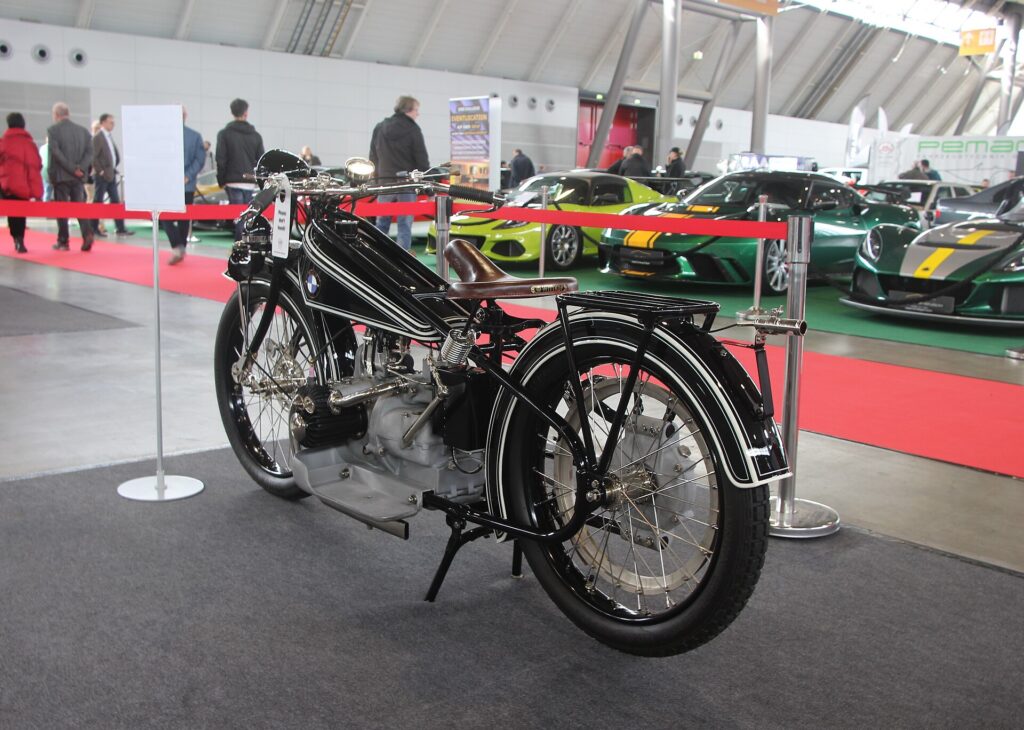
Photo: Wikisympathisant / Wikimedia Commons, CC BY-SA 4.0
The R32’s real value, though, is not measured in money. It is measured in the fact that, a hundred years later, BMW still sells motorcycles built on the same basic idea: a transverse boxer engine, shaft drive and a reputation for taking you anywhere without leaving you stranded. The blue and white BMW roundel, which recalls the colours of Bavaria, appeared on a motorcycle for the first time on the R32’s fuel tank.
If you are ever in Munich, the BMW Museum is worth a visit just to see up close how small and simple the motorcycle that started it all really is.
P.Kefalas
Photo Credits: Stahlkocher (Wikimedia Commons, CC BY-SA 3.0) · Arnaud 25 (Wikimedia Commons, CC BY-SA 4.0) · Wikisympathisant (Wikimedia Commons, CC BY-SA 4.0)