
Every Porsche you see on the road today, from the 911 to the Cayenne, has one ancestor. It was not born in a shiny factory in Stuttgart. It was born in a former sawmill, in a village in Carinthia, Austria, shortly after the war. It is called the 356, and it was the first car sold with the name Porsche on the bonnet.
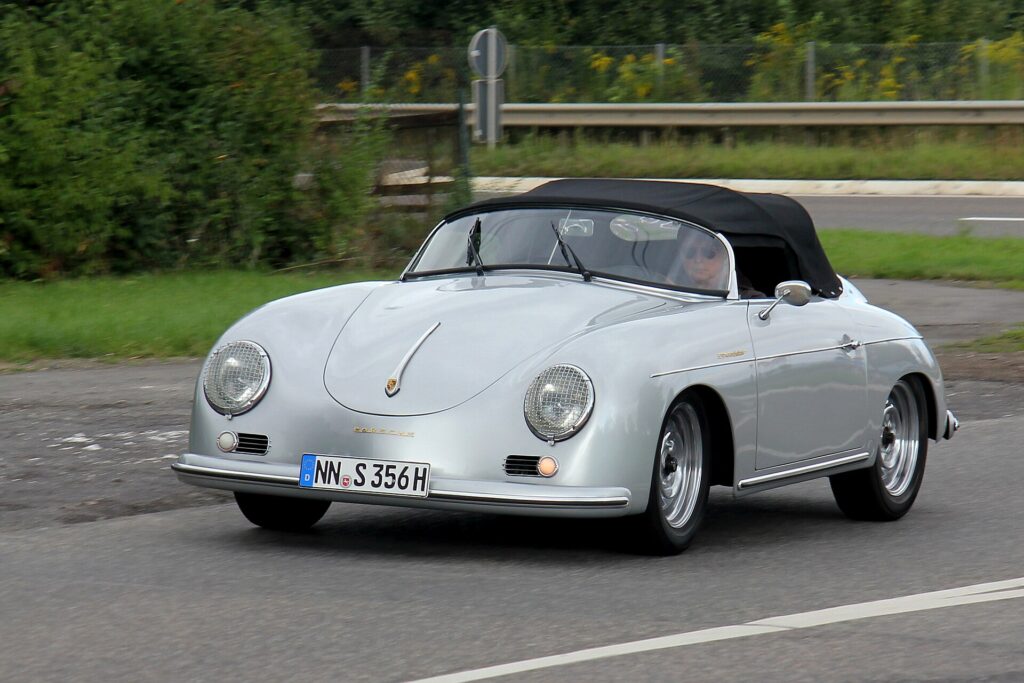
Photo: Lothar Spurzem / Wikimedia Commons, CC BY-SA 2.0 de
“I couldn’t find the car I dreamed of, so I built it myself”
Those words belong to Ferry Porsche, son of Ferdinand Porsche, the man who designed the Volkswagen Beetle. In 1947 his father was still held prisoner in France, and the family had moved the design office to Gmünd, far from the bombing. There Ferry, together with designer Erwin Komenda and a small team, decided to build a small, light sports car.
They used whatever they could find. The engine, suspension and many mechanical parts came from the Beetle. The first prototype, the 356 “No. 1” Roadster, was registered in June 1948. It had a mid-mounted engine and a tubular frame. But it was hard and expensive to build in series, so the production cars put the engine behind the rear axle, just like the Beetle.
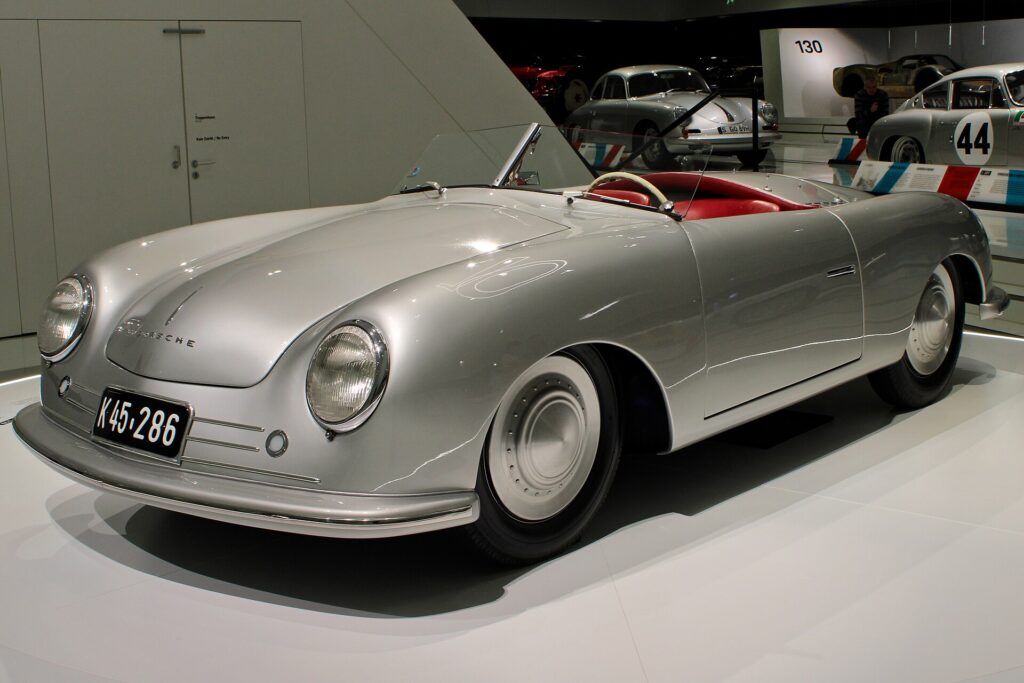
Photo: Alexander Migl / Wikimedia Commons, CC BY-SA 4.0
Aluminium shaped by hand
About fifty cars, coupés and cabriolets, were built in Gmünd. The bodies were aluminium, beaten with hammers over wooden bucks. No two are the same. Today these “Gmünd Coupés” are among the rarest and most valuable Porsches in the world.
In 1950 the company moved back to Stuttgart, to Zuffenhausen. The bodies, now steel, were made by the neighbouring firm Reutter. The engine was an air-cooled flat-four of 1,100 cc with 40 horsepower. That sounds modest, but the car was light and its aerodynamics were far better than anything the Beetle could manage. In 1951 a 356 won the up-to-1,100 cc class at the Le Mans 24 Hours. It was Porsche’s first time there and the start of a relationship that continues to this day.
The Speedster and Max Hoffman
Porsche owes a lot to America, and especially to one man: Max Hoffman, the New York importer of European cars. Hoffman asked for a cheaper, sportier car for Americans who raced at weekends. So in 1954 the 356 Speedster was born: a low windscreen, a simple hood, less chrome and a price under 3,000 dollars.
The Speedster became the favourite car of young Californians. One of them was James Dean, who raced his own Speedster before moving on to the 550 Spyder. Today a good Speedster costs as much as a house.
From A to C
The 356 never changed radically. It improved step by step, the way Porsche still works today. In 1955 came the 356 A, with a one-piece curved windscreen. In 1959 the 356 B, with higher headlights and bumpers. In 1963 the 356 C, with disc brakes on all four wheels. There was also the Carrera, with a complex four-camshaft engine designed for racing by engineer Ernst Fuhrmann.
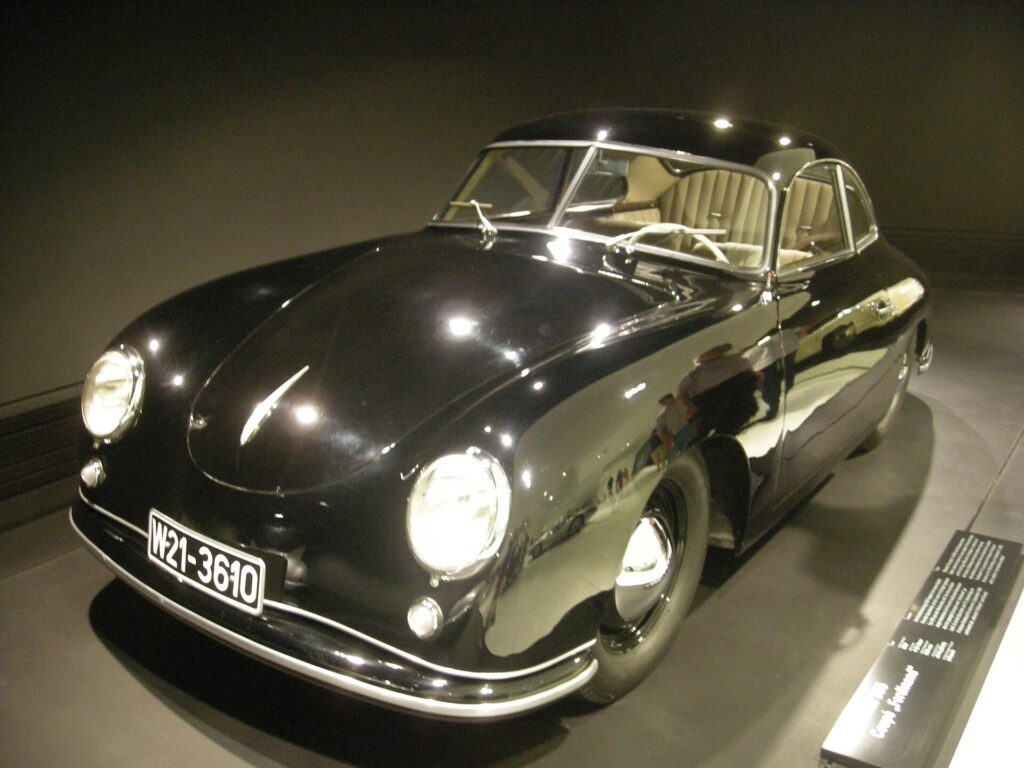
Photo: Michael Barera / Wikimedia Commons, CC BY-SA 4.0
The end and the legacy
Production ended in 1965. About 76,000 cars had been built, almost all by hand. Its successor was a larger, six-cylinder Porsche first called the 901 and finally named the 911. But everything that makes a 911 a 911 was already there in the 356: the flat engine in the back, the shape that slopes softly to the rear, the obsession with weight, and the idea that a sports car can be driven every day.
If you ever find yourself in Gmünd, there is a small private museum for the 356 in the same village where the story began. It is the humblest place for a legend to start. And that is probably exactly what makes it so beautiful.
P.Kefalas