
If you own a classic car in Greece, historic plates are probably the most important practical issue of recent years. Law 4850/2021 changed the whole system: plates are no longer issued by clubs but by the state, cars can be driven freely, and the old club plates have an expiry date. In this guide we have gathered what you need to know, as it stands in October 2026.

Photo: Vissarion at English Wikipedia / Wikimedia Commons, CC BY 3.0
The deadline to remember
The old historic-vehicle plates issued by clubs, such as the well-known yellow ones, are being abolished. According to ΕΟ ΦΙΛΠΑ, their use ends from 1 January 2027, except for military vehicles. This means anyone still on old plates must have switched to state plates by 31 December 2026. The deadline has been extended several times before, but reports in October 2026 present it as final, with fines for driving without a valid registration.
What changes with state plates
With the old club plates, use was restricted: events, trips to the garage and a few maintenance drives. With state historic plates, which have a white background and blue characters, the car can be driven freely like any other, provided it is insured and has passed KTEO (the Greek roadworthiness test).
Which cars qualify
To be classed as historic, a vehicle must be at least 30 years old, keep its original characteristics and be in very good condition. It also needs a Greek registration, a customs clearance certificate or a certificate from ΟΔΔΥ (the state disposals agency).
Historic status is certified by three bodies: ΕΟ ΦΙΛΠΑ, the Greek representative of the international federation FIVA, ΟΜΑΕ and, for motorcycles, ΑΜΟΤΟΕ.

Photo: Charlie from United Kingdom / Wikimedia Commons, CC BY 2.0
The procedure step by step
The law distinguishes two cases, depending on whether the vehicle was classed as historic before or after 3 April 2023, when the new system came into force.
If the vehicle was already classed before 3/4/2023, for example with a FIVA card and old club plates, no new certification is needed. The steps, as described by the clubs, are:
- KTEO inspection as a historic vehicle.
- A certificate from the tax office that no fees are owed.
- Transfer of the vehicle to the ministry’s new Historic Vehicles Register.
- Issue of a registration valid for 2 years. After that, a new inspection by the certifying body, a Certificate of Compliance and a 5-year registration.
If the vehicle is being classed for the first time now, the steps are:
- A Certificate of Classification from ΕΟ ΦΙΛΠΑ, ΟΜΑΕ or ΑΜΟΤΟΕ, after an inspection of the vehicle.
- KTEO inspection as a historic vehicle.
- Transfer to the Historic Vehicles Register and issue of a 5-year registration.
The clubs say that when the paperwork is in order, the process takes about three to four weeks. They also advise choosing a KTEO station experienced with historic vehicles, as not all are familiar with the procedure.
Road tax
Under article 36 of Law 4850/2021, historic vehicles pay special, low road tax:
- Cars aged 30 to 44: €50 up to 999 cc, €100 from 1,000 to 1,999 cc, €200 from 2,000 cc upwards.
- Motorcycles over 250 cc: €50.
- Vehicles over 45 years old: fully exempt.
The clubs stress that the tax must be paid immediately after the new registration is issued, via mycar.gr, to avoid a fine.
Insurance and taxation
Insurance is compulsory. Many clubs have agreements with insurers offering good terms for historic vehicles, so it is worth asking. One point that surprises many people: according to the clubs, historic cars still count towards the tax office’s presumed living-standard rules (τεκμήρια). Discuss it with your accountant before you buy.
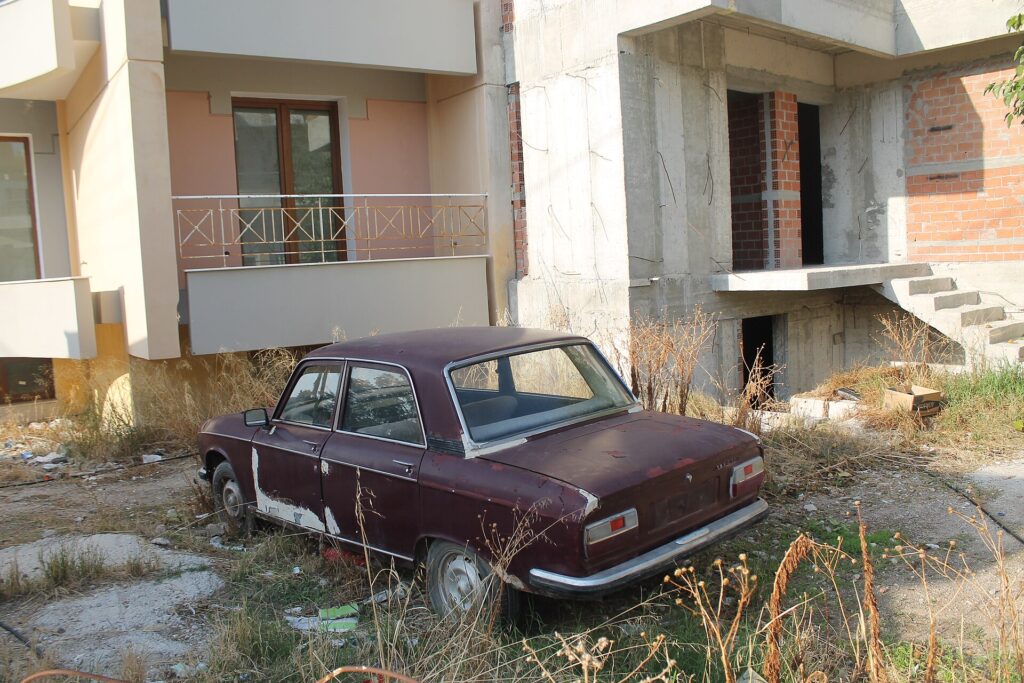
Photo: Charlie from United Kingdom / Wikimedia Commons, CC BY 2.0
What about youngtimers?
For cars aged 20 to 29 in very good condition, clubs issue a “youngtimer” certificate. It does not give historic plates, but it helps document the car and its value, and often its insurance.
Our practical conclusions
If you have a classic on old club plates, do not leave the switch until December. Contact your club or the certifying body now, prepare the paperwork and book a KTEO appointment. If you are thinking of buying a classic, ask from the start whether it has already been classed as historic and with what documents.
The rules have changed several times in recent years and may change again. This guide is based on Law 4850/2021 and the guidance of the certifying bodies as it stood in October 2026. For your own case, the safest source is always ΕΟ ΦΙΛΠΑ, ΟΜΑΕ or your model’s club.
P.Kefalas