
You know a Lamborghini before you see it. The scream of a V12 revving hard is as much part of the brand’s identity as the wedge shapes and scissor doors. Behind that sound lies a story that begins in 1963 and reaches today’s hybrid supercars.
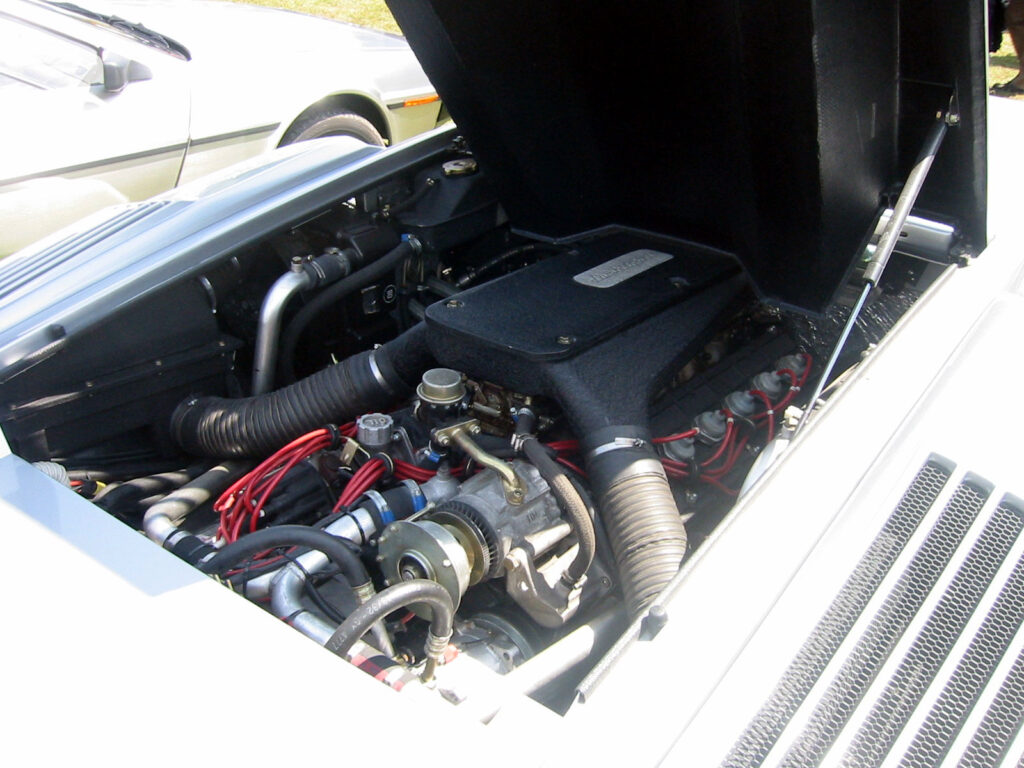
Photo: LSDSL / Wikimedia Commons, CC BY-SA 3.0
Bizzarrini’s V12
When Ferruccio Lamborghini decided to build sports cars, he wanted his engine to be better than Ferrari’s. He gave the job to Giotto Bizzarrini, who had just left Maranello. Bizzarrini designed a 3.5-litre aluminium V12 with four overhead camshafts, something Ferrari did not have in its road cars at the time.
That engine proved extremely tough and adaptable. It grew to 3.9 litres for the 400 GT and the Miura, where it was mounted transversely, and then lengthwise again for the Countach. In the 1985 Countach 5000 Quattrovalvole it reached 5.2 litres with four valves per cylinder. In the Diablo it became 5.7 and 6.0 litres, and in the Murciélago 6.5 litres. The same basic design powered Lamborghini’s flagships for almost 50 years, something rare in car history.
The forgotten V8
In the 1970s Lamborghini also tried to build a smaller, more affordable car, the Urraco, with a V8 engine. The Silhouette and the Jalpa followed. They were interesting cars, but did not sell as well as the company hoped, and the V8 was dropped at the end of the 1980s.
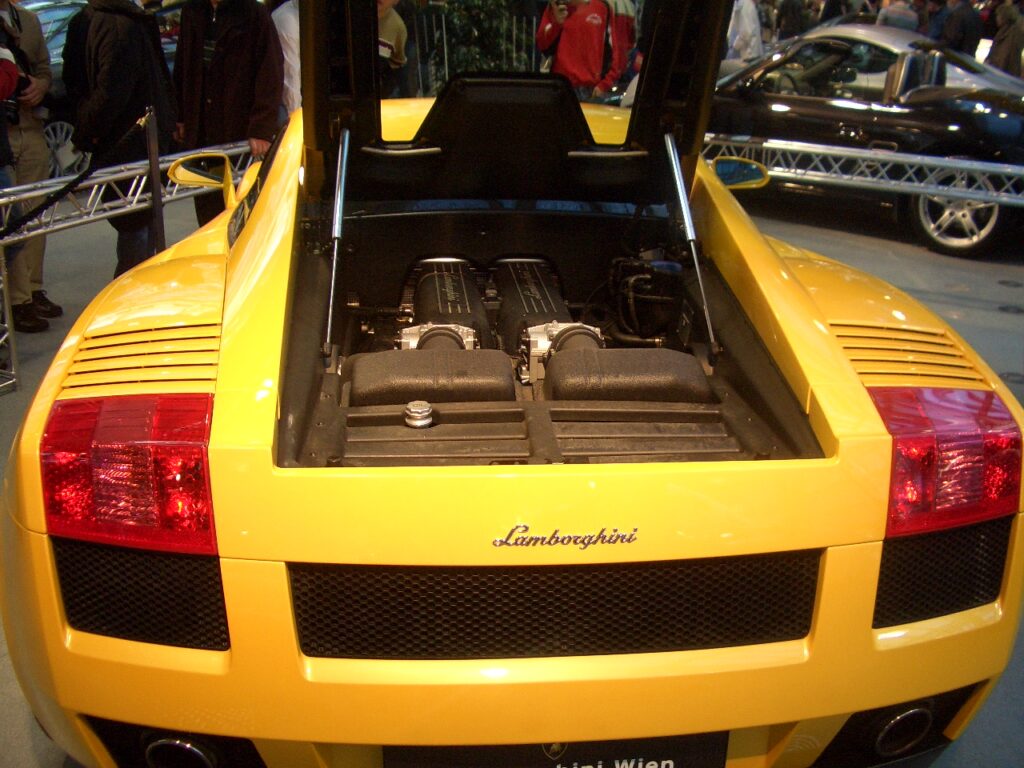
Photo: Valentin Unger / Wikimedia Commons, CC BY-SA 3.0
The V10 and the Gallardo
When Audi bought Lamborghini in 1998, the company gained stability and money. In 2003 it launched the Gallardo, with a new 5.0-litre V10. The Gallardo became the best-selling Lamborghini up to that time, with more than 14,000 cars, and the V10 later passed to its successor, the Huracán. Many consider the V10’s sound at high revs one of the finest of its era.
A new V12
In 2011 the Aventador brought Lamborghini’s first all-new V12 in almost half a century. It displaced 6.5 litres, produced 700 horsepower in its first version and revved past 8,000 rpm. Lamborghini kept it naturally aspirated, without turbos, when almost all its rivals had switched to forced induction.
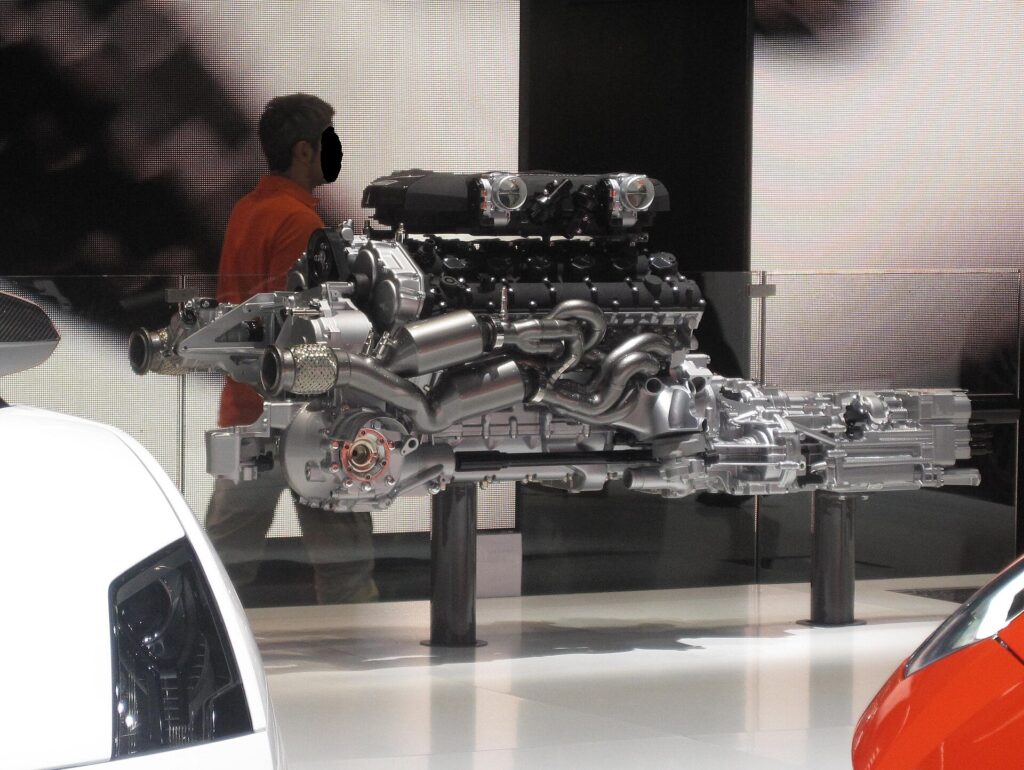
Photo: Aiace90 / Wikimedia Commons, CC0
The hybrid era
In 2023 the Revuelto opened a new chapter: a new V12 combined with three electric motors, for a total of more than 1,000 horsepower. The V10 was replaced by a twin-turbo hybrid V8 in the Temerario. The sound is changing, as the times are.
For lovers of classics, though, the heart of the bull will always be Bizzarrini’s V12. An engine born from a quarrel with Enzo Ferrari that stayed alive for half a century. Few engines in the world have such a story.
P.Kefalas