Porsche 959: The Supercar That Came From the Future via the Sahara
on
I’ve written about the 911 twice on this site, and I could write a third time. But there’s one Porsche that looks like a 911 and is actually something completely different. A technology lab with number plates that, in the mid-’80s, had things other cars wouldn’t get for another ten or twenty years. The 959.
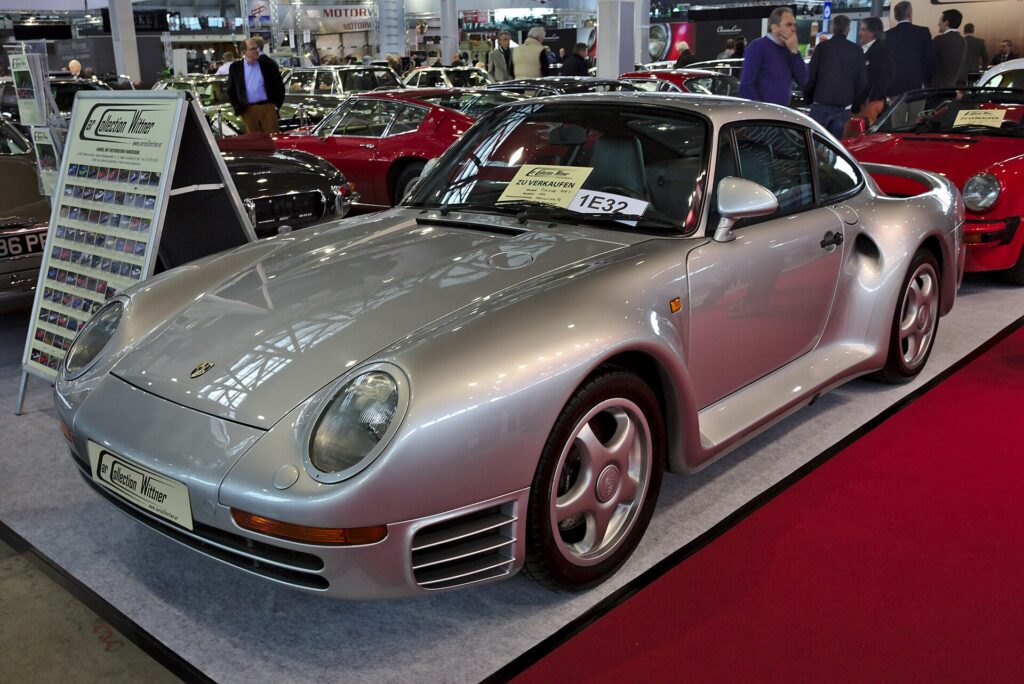
Porsche 959 S at a classic car show.
Photo: Alexander Migl / Wikimedia Commons, CC BY-SA 4.0
Group B and a new boss
In 1981 Porsche got an American chief executive, Peter Schutz. Chief engineer Helmuth Bott proposed something ambitious: a 911 that would show what the company could do in the future, and that would compete in the new Group B rally category, where the rules demanded at least 200 road cars. The Audi Quattro had already shown that four-wheel drive was the future. Porsche wanted to go one step further.
The prototype, simply called “Gruppe B”, was shown at the 1983 Frankfurt Motor Show. The final road-going 959 appeared at the same show in 1985, but development problems delayed deliveries until 1987. By then Group B had been cancelled, after the tragic accidents of 1986. The 959 never raced in the championship it was built for.
The Sahara instead of Monte Carlo
Porsche found another event to prove the idea worked: the Paris–Dakar Rally. In 1984 it sent four-wheel-drive 911s, known internally as the 953, and René Metge won at the first attempt. In 1986, with proper 959s in Rothmans colours, Porsche took first and second, with Metge winning and Jacky Ickx second. A low-roofed sports car winning in the desert. I still think about it and smile.
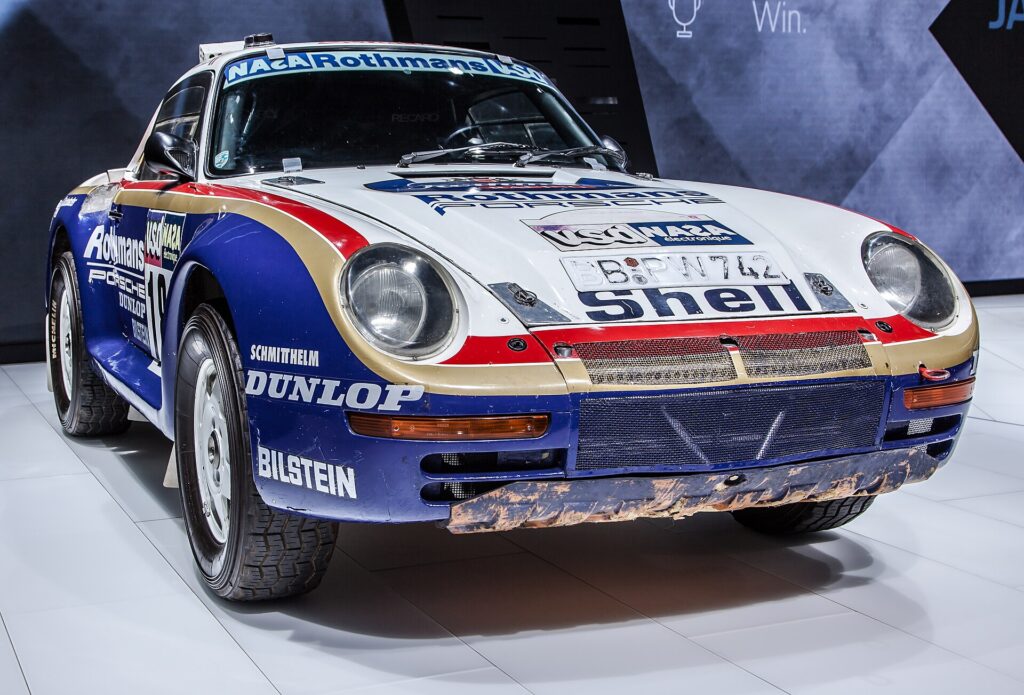
The 959 in Rothmans colours, as it raced in the Paris–Dakar.
Photo: Alexander Migl / Wikimedia Commons, CC BY-SA 4.0
There was also a circuit racing version, the 961, which finished seventh overall and first in class at Le Mans in 1986.
What was under the skin
This is where the 959 starts to look like science fiction for 1986. The engine was a 2.85-litre flat-six with air-cooled cylinders and water-cooled heads, and two turbochargers working sequentially: one at low revs, both together at high revs, to avoid the big “hole” of older turbos. It produced 450 hp and the top speed was 317 km/h. When it came out, it was the fastest production car in the world.
The PSK four-wheel-drive system varied by itself how much torque went front and rear, depending on grip and load. The suspension had adjustable ride height and damping. The body used aluminium and aramid (Kevlar) panels, and the floor was Nomex. The wheels were hollow magnesium, with tyre pressure sensors, something every family car has today but was unheard of then.
And the most impressive thing: it wasn’t hard to drive. You could drive it in the rain, in the snow, in town, with air conditioning and leather seats in the Komfort version. Much of what was tested on the 959 later went into the 911 Carrera 4 and the four-wheel-drive 911 Turbos.
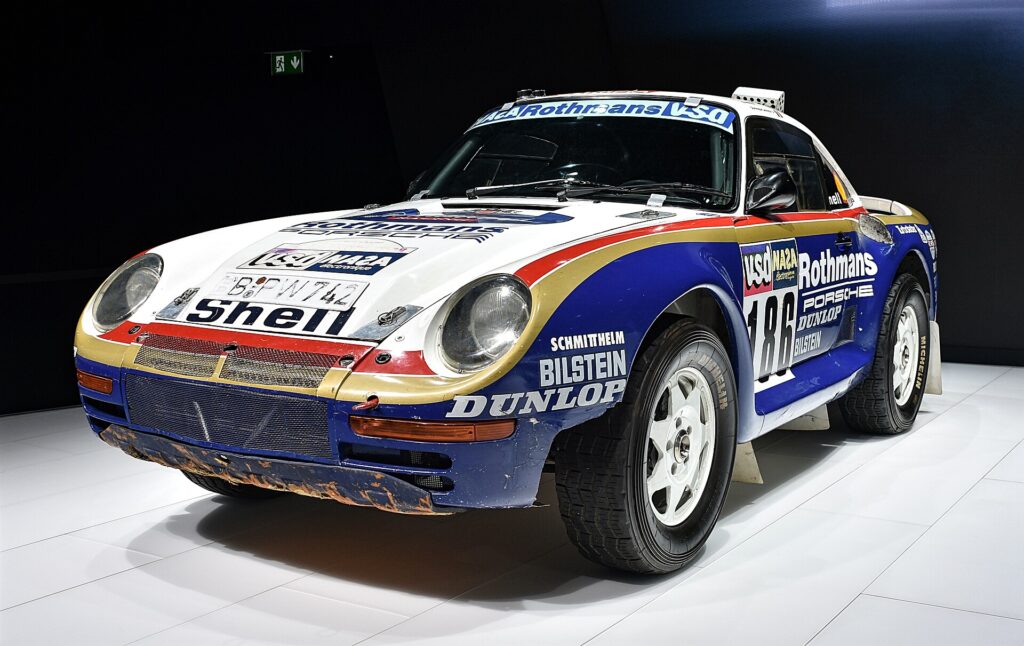
Porsche 959 Dakar at the 2017 Frankfurt Motor Show.
Photo: Nicolas Völcker / Wikimedia Commons, CC BY-SA 4.0
Bill Gates’s 959
A story I really like. The 959 was never approved for American roads. Bill Gates bought one in 1988, and US customs would not let it into the country. The car sat in a customs warehouse for thirteen years. In 1999, after pressure from Gates and other collectors, the “Show or Display” law was passed, which allows rare cars of historical or technological importance to be imported with limited yearly mileage. A car that changed the law of an entire country.
Today
A few hundred 959s were built, and Porsche, so they say, lost money on every one. Today it’s one of the most sought-after Porsches there is, and maintaining one, with the complex hydraulics and electronics of the period, is a job only for specialist workshops.
For me the 959 is the car that showed speed and ease could live together. The F40, which I’ve also written about, was Ferrari’s answer: raw, light, no assistance. Two completely different philosophies, at the same time. You tell me which one you prefer.
P.Kefalas
Photo Credits: Alexander Migl (Wikimedia Commons, CC BY-SA 4.0) · Alexander Migl (Wikimedia Commons, CC BY-SA 4.0) · Nicolas Völcker (Wikimedia Commons, CC BY-SA 4.0)