
Picture the 1960s in Greece: a couple on a Vespa, her headscarf flying, on a seaside road. The image feels so much our own that we forget the Vespa was born in a bombed factory in Italy, from an aircraft engineer who, in his own words, did not like motorcycles at all.
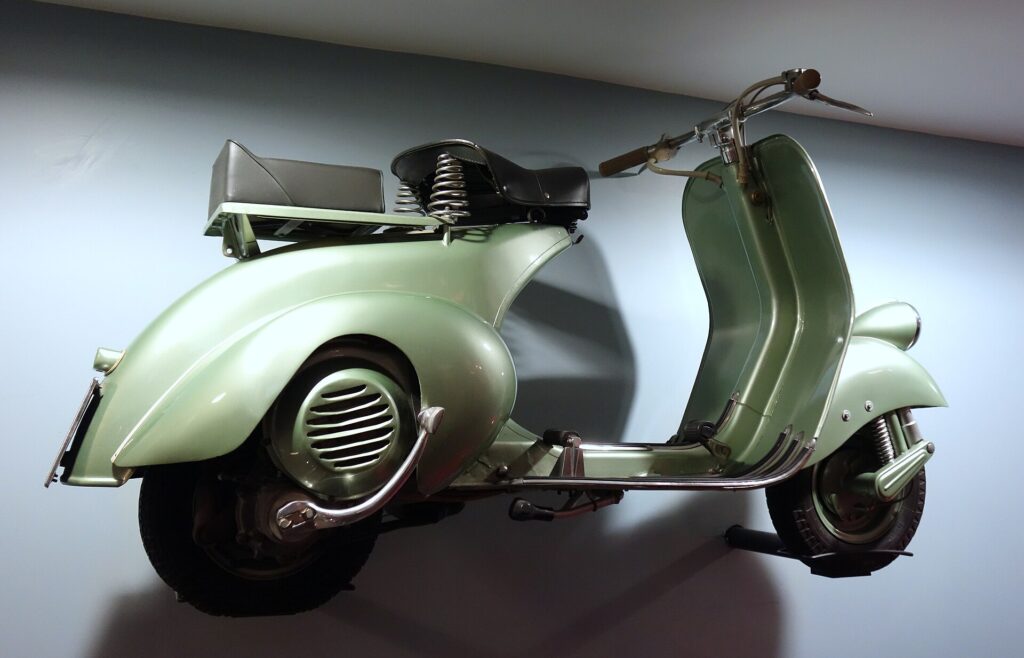
Photo: Daderot / Wikimedia Commons, CC0
An aircraft factory without aircraft
Before the war, Piaggio made aeroplanes, trains and ships. In 1945 its factory in Pontedera, Tuscany, had been bombed and Italy no longer needed warplanes. It needed something else: a cheap way for people to get to work, on roads full of potholes.
Enrico Piaggio, son of the founder, wanted a simple, cheap two-wheeler. He did not like the first prototype his team built. So he gave the job to the best engineer he had: Corradino D’Ascanio, a designer of aeroplanes and helicopters.
Why D’Ascanio disliked motorcycles
D’Ascanio had never ridden motorcycles much and found many things about them annoying. They were hard to get on, you had to swing a leg over the saddle. The chain covered your clothes in oil. If you got a puncture, changing the tyre was a whole saga. And the engine sat between your legs, hot and dirty.
So he designed something that solved these problems one by one. A pressed-steel body that was also the frame, like an aircraft. A low floor so you could step on easily, even in a skirt. An engine hidden at the back, next to the rear wheel, with no chain. And a front fork on one side only, like an aircraft’s landing gear, so you could change the wheel in minutes, with a spare always on board.
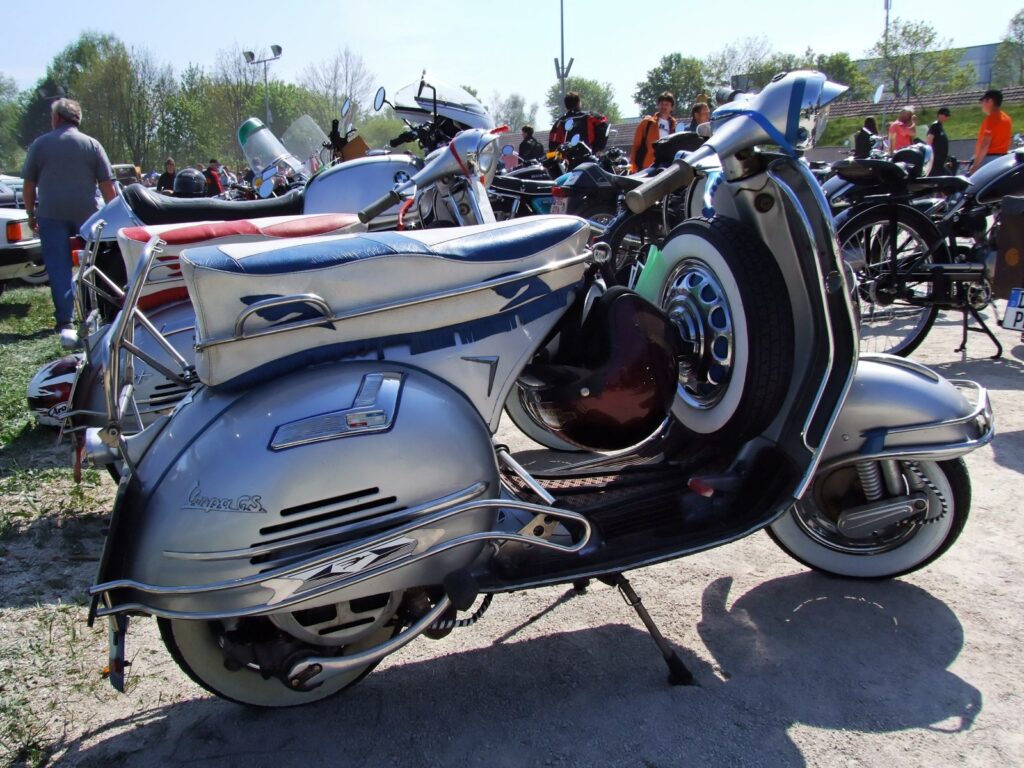
Photo: Späth Chr. / Wikimedia Commons, Public domain
“It looks like a wasp!”
When Enrico Piaggio saw the prototype, with its wide rear and narrow “waist”, he is said to have exclaimed: “Sembra una vespa!”, it looks like a wasp. The name stuck. The patent was filed in April 1946 and the same year the first Vespa 98 appeared, with a 98 cc engine.
At first sales were slow. People did not know what this strange vehicle was. But little by little the Italians fell in love with it. By 1956 the millionth Vespa had been built. By then it was also built under licence in other countries, from Germany and France to Spain and India.
Audrey Hepburn and Gregory Peck
In 1953 the film “Roman Holiday” came out. Audrey Hepburn and Gregory Peck tour Rome on a Vespa, laughing and causing small disasters. The scene became one of the most famous in cinema and made the Vespa a symbol of freedom, romance and Italian style all over the world. After the film, sales took off.
In the 1960s the Vespa became the favourite machine of the “Mods” in England, who covered it with mirrors and lamps. In Greece it appeared in dozens of films of the period and became the first motor vehicle for many families.
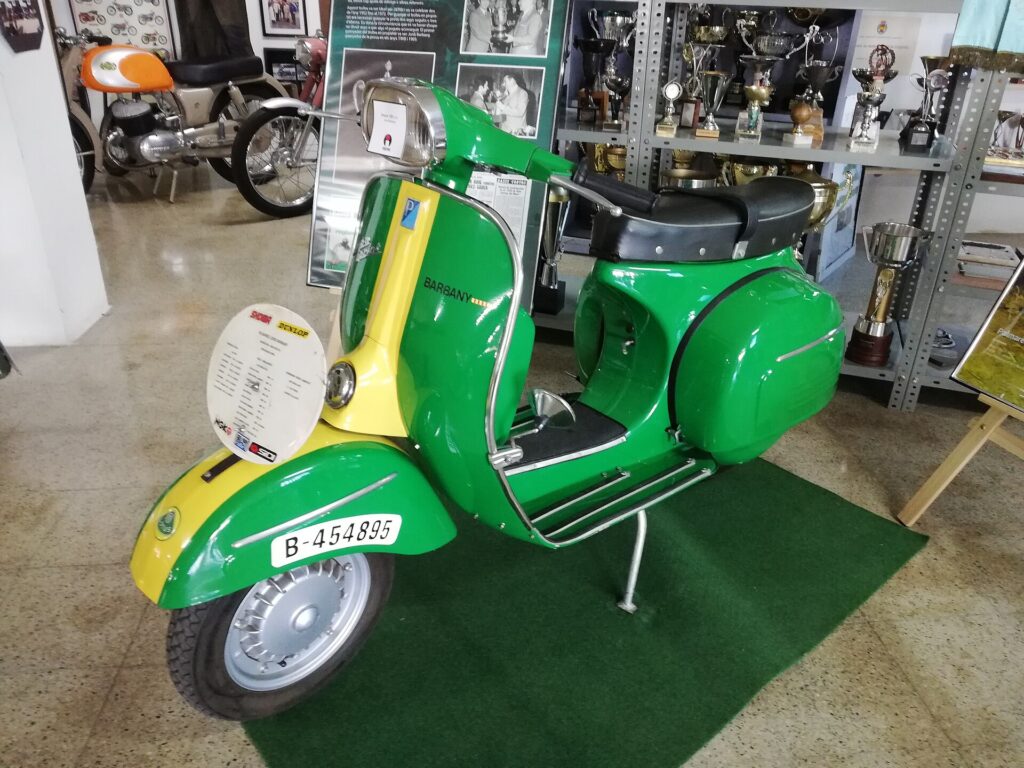
Photo: Montesita / Wikimedia Commons, CC BY-SA 4.0
GS, Sprint, Primavera
The models collectors love most are the 1955 Vespa 150 GS, the first truly fast Vespa, the 150 Sprint of the 1960s and the small, charming Primavera. Its big rival was Innocenti’s Lambretta, and Italians split into “Vespisti” and “Lambrettisti”, the way they split over football.
Since 1946 more than 19 million Vespas have been built, and Piaggio still makes it in Pontedera. If you are looking for a classic two-wheeler to start with, an old Vespa may be the easiest choice: simple mechanics, a huge community and parts everywhere. And, just as D’Ascanio wanted, you will never get oil on your trousers.
P.Kefalas