Ford GT40: How an Angry Henry Ford II Beat Ferrari at Le Mans
on
Many cars were born from an idea, a need or a market waiting for them. The Ford GT40 was born from anger. And if you consider that the anger belonged to Henry Ford II, grandson of the man who gave us the Model T, and that he had Ford’s budget at his disposal, you understand that the result was going to be something big.
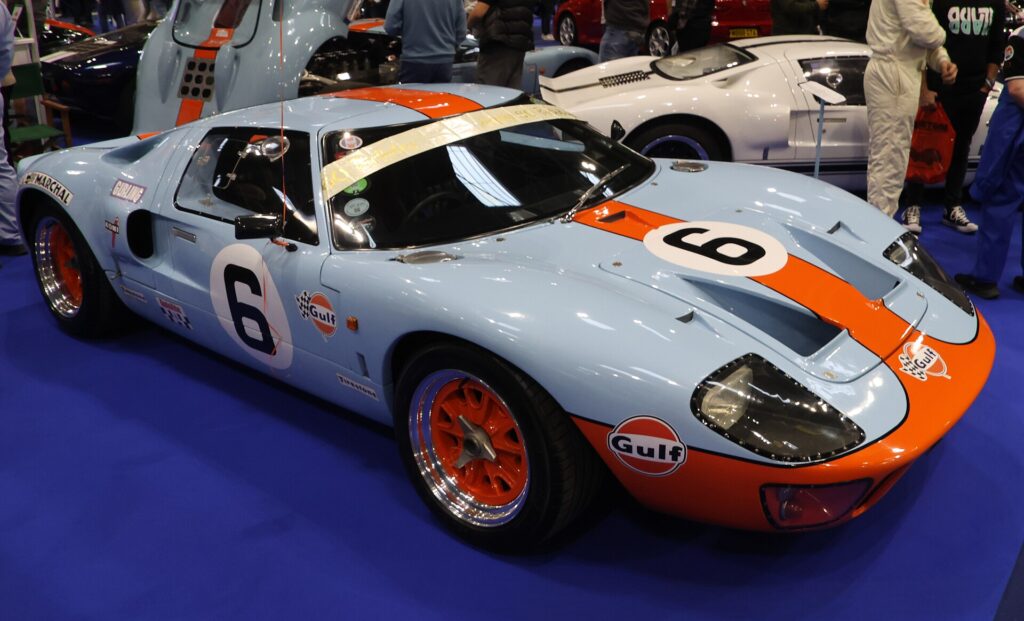
Ford GT40 in the legendary Gulf colours.
Photo: Tony Hisgett from Birmingham, UK / Wikimedia Commons, CC BY 2.0
The deal that never happened
In the early ’60s Henry Ford II wanted to see Ford in European endurance racing, and especially at the 24 Hours of Le Mans. In 1963 he heard that Enzo Ferrari might want to sell. Ford spent months and millions on audits and negotiations. In the end Ferrari, realising he would lose control of the racing team, walked away from the table. Ford took it personally and gave one order: beat Ferrari in its own backyard.
At that point Ferrari had won Le Mans six times in a row. Ford didn’t have a single endurance racing car. It had to start from zero.
A British base, an American V8
To save time, Ford looked to England. Eric Broadley’s small Lola company already had a mid-engined racer with a Ford V8, the Lola Mk6. Ford teamed up with Broadley, hired John Wyer, former Aston Martin team manager, and set up a subsidiary, Ford Advanced Vehicles, in Slough near Heathrow. The first GT40s came from there.
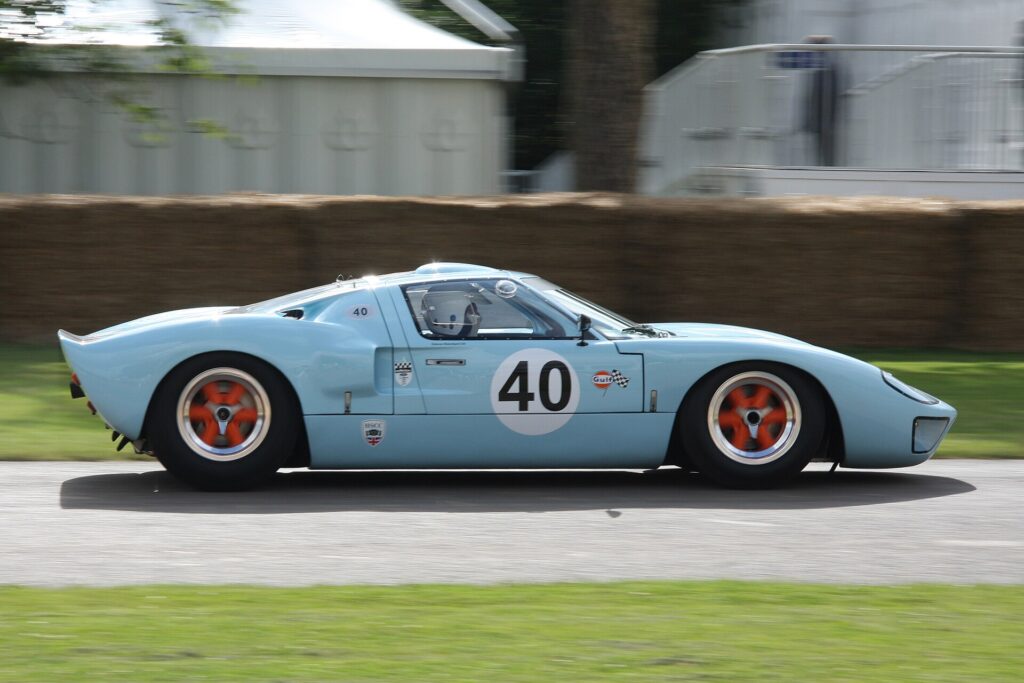
The name is much simpler than many think: “GT” for Grand Touring, and “40” for the car’s height, 40 inches, about 1.02 metres, measured at the top of the windscreen. It was so low that, to make room for the driver’s helmet, the doors cut into the roof.
The first years were hard. In 1964, at the first Le Mans, all three GT40s retired, although one of them led for a while. From 1965 Ford handed the programme to Carroll Shelby in America, who won straight away at Daytona. At Le Mans, though, the year was another failure. Something bigger was needed.
A 1965 GT40 at full speed: just 40 inches tall.
Photo: Brian Snelson from Hockley, Essex, England / Wikimedia Commons, CC BY 2.0
1966: the photo that became a headache
For 1966 Ford put the huge 7-litre V8 (427 cubic inches) into the GT40 Mk II. The year started perfectly: first, second and third at the first Daytona 24 Hours and at the Sebring 12 Hours. At Le Mans Ford arrived with an army of cars, and the Ferraris dropped out one by one.
In the final hours the GT40 of Ken Miles and Denny Hulme was leading, followed by that of New Zealanders Bruce McLaren and Chris Amon. Ford management wanted a photo for history: three cars crossing the finish line together. Miles was asked to slow down. He did. But the officials decided that, since McLaren’s car had started further back on the grid, it had covered a greater distance, and gave it the win. Miles, who would have won Daytona, Sebring and Le Mans in the same year, was classified second. Two months later he was killed in testing. Those of you who have seen the film Le Mans ’66 (Ford v Ferrari) know the story, with a little cinematic licence.
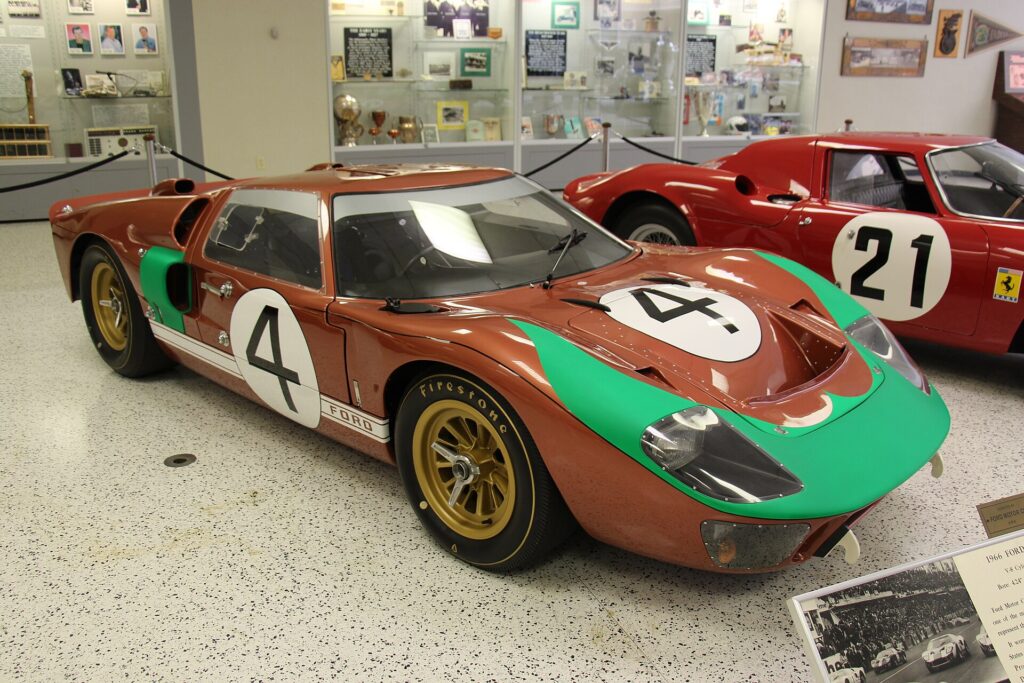
Ford GT40 Mk II of 1966, with the 7-litre V8.
Photo: Sicnag / Wikimedia Commons, CC BY 2.0
Four in a row
In 1967 Ford won again with the Mk IV, a car built entirely in America, driven by Dan Gurney and A. J. Foyt. Then the rules changed and 7-litre engines were banned from prototypes. Ford officially withdrew, but John Wyer carried on with the older GT40 Mk Is with 4.9-litre engines and the famous light blue and orange Gulf colours. They won in 1968, and again in 1969, with Jacky Ickx in one of the closest finishes in the race’s history, and with exactly the same chassis, 1075, that had won the year before.
Original or replica?
Very few genuine GT40s were built, and today they cost millions. If you see one at a show or a meeting, it’s very likely a replica or a “continuation” car, and some of them are excellent. That’s not a bad thing. It means that, sixty years on, people still want to sit in that low cabin with the V8 roaring behind their back.
The GT40 reminds me that sometimes stubbornness is the best engineer. One man got angry, a company got stubborn, and the result was one of the most beautiful racing cars ever built.
P.Kefalas
Photo Credits: Tony Hisgett from Birmingham, UK (Wikimedia Commons, CC BY 2.0) · Sicnag (Wikimedia Commons, CC BY 2.0) · Brian Snelson from Hockley, Essex, England (Wikimedia Commons, CC BY 2.0)