
In the late 1960s, a sports car with a six-cylinder engine and a beautiful shape was an expensive affair. British roadsters were cheap but often broke down. Porsches and Jaguars were excellent but expensive. In 1969 Nissan, using the Datsun name for exports, brought something in between: a beautiful, fast and reliable coupé at a price a young person could afford. It was called the 240Z, and it changed the image of Japanese cars for ever.
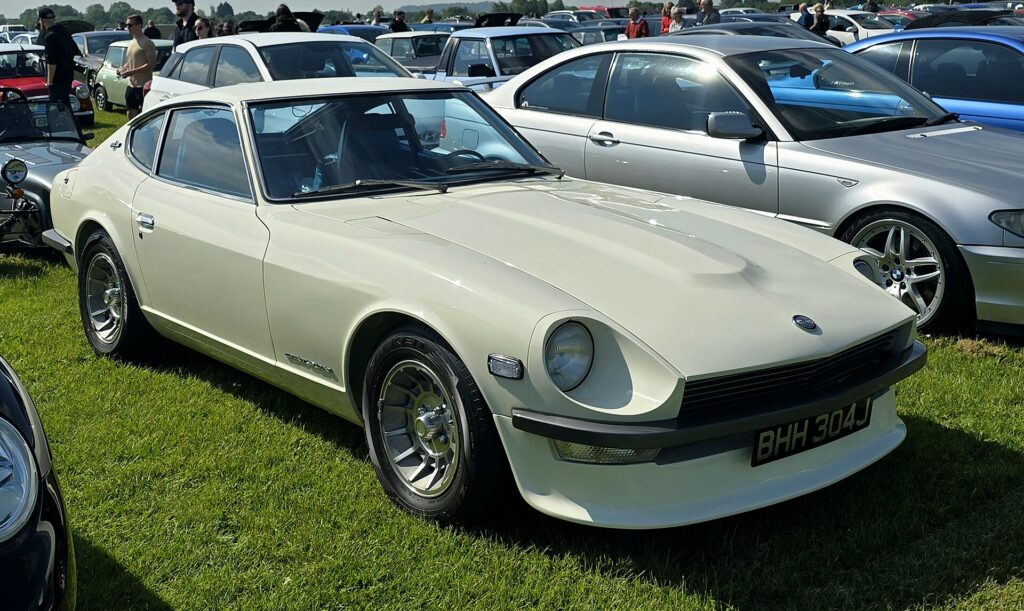
Photo: Calreyn88 / Wikimedia Commons, CC BY-SA 4.0
“Mr. K”
The man behind the 240Z’s success was Yutaka Katayama, head of Nissan in America, whom Americans simply called “Mr. K”. Katayama knew what American drivers wanted and pushed management in Japan to build a real sports car, not a small roadster. He wanted power, comfort and reliability, at a price that would scare nobody.
The design team led by Yoshihiko Matsuo created a coupé with a long bonnet and short tail, which many compared to the Jaguar E-Type. At the back it had a large hatchback, which made it practical too.
The right recipe
Under the bonnet was a 2.4-litre straight-six with about 150 horsepower, enough for a top speed of over 200 km/h. The suspension was independent on all four wheels, with disc brakes at the front. Most important of all was the price: in America it cost just over 3,500 dollars, far less than a Porsche 911 or an E-Type.
The result was remarkable. Dealers had waiting lists and some customers paid extra to get one sooner. For years the 240Z was the best-selling sports car in the world.
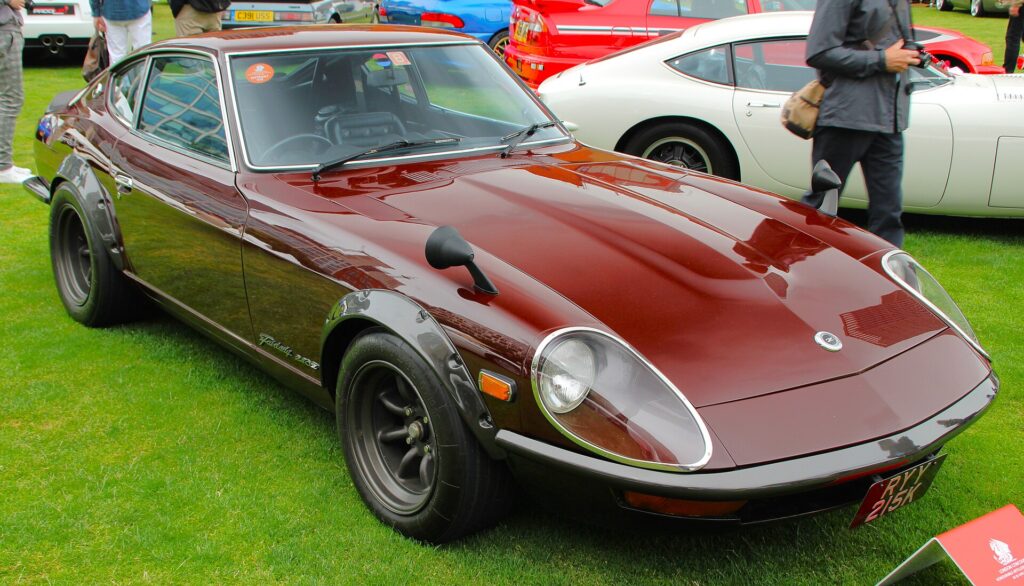
Photo: MrWalkr / Wikimedia Commons, CC BY-SA 4.0
Victories in the African dust
The 240Z also proved its toughness in competition. In 1971 it won the East African Safari Rally, one of the hardest events in the world, with Edgar Herrmann and Hans Schüller. In 1973 it won again with Shekhar Mehta. In America it won many SCCA titles, and actor Paul Newman raced Datsun Zs in the 1970s.
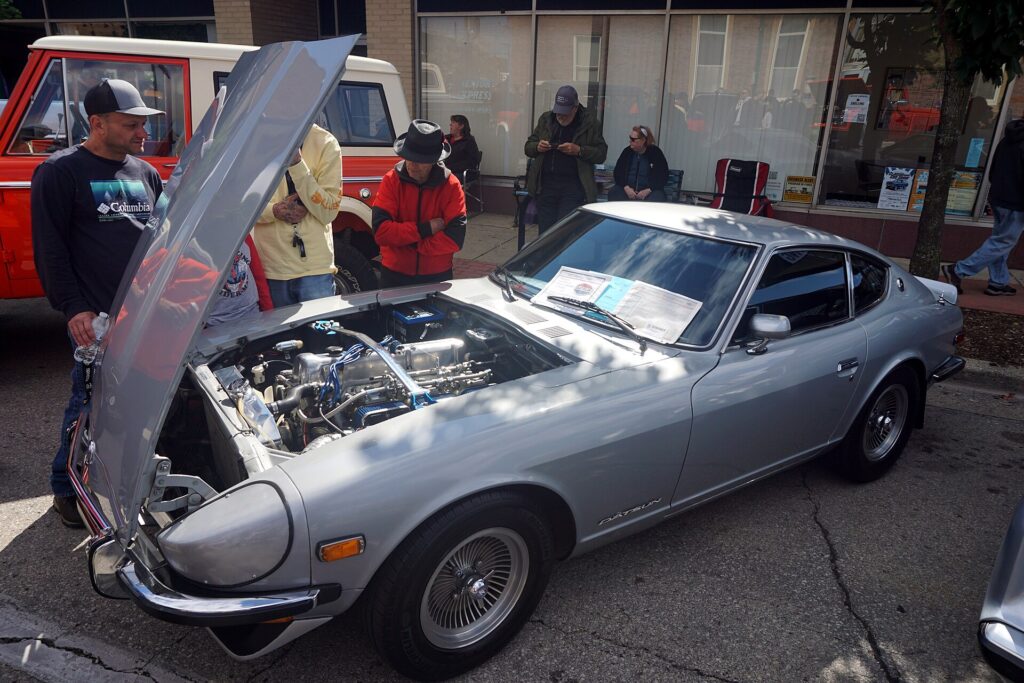
Photo: Michael Barera / Wikimedia Commons, CC BY-SA 4.0
260Z, 280Z and legacy
In 1974 came the 260Z and in 1975 the 280Z, with bigger engines and more equipment to meet new American rules. In total the first generation, known as the S30, passed half a million cars. The Z family continues to this day with the Nissan Z.
Today a good 240Z is one of the most sought-after Japanese classics. Its biggest enemy is rust, especially in the floor, the sills and around the rear wings, so look underneath before you pay. If you find a solid one, you have a classic that will not disappoint.
P.Kefalas