
In the 1950s, on the roads around London, there was a game. You put a record on the café jukebox, ran outside, jumped on your bike and had to reach a certain point and get back before the song ended. They called it “record racing”. And if you wanted to win, there was one motorcycle to have: the BSA Gold Star.
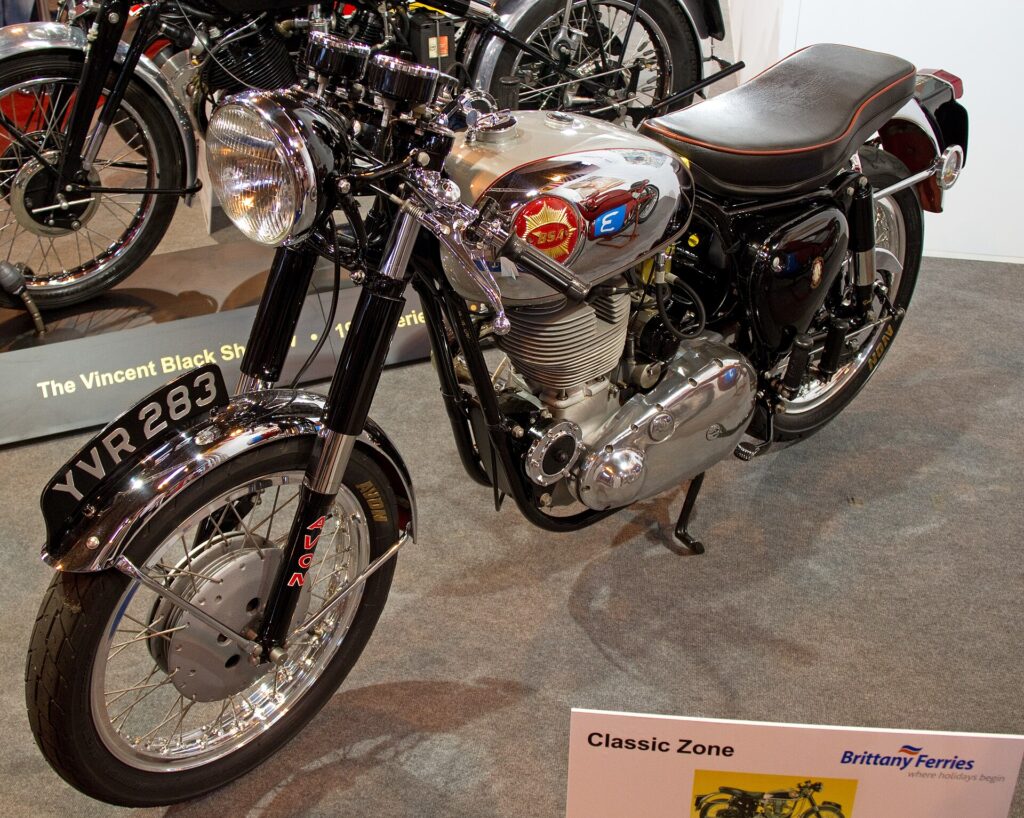
Photo: Tony Hisgett from Birmingham, UK / Wikimedia Commons, CC BY 2.0
A gold star on the lapel
The name has a nice story behind it. At the Brooklands circuit in England, any rider who lapped at an average of over 100 mph in a race received a small gold star lapel pin. In 1937 rider Wal Handley earned one on a BSA Empire Star 500. BSA, which understood marketing, launched a sports model the following year and called it the Gold Star.
The war interrupted the story for a while. After 1945 BSA, at the time the largest motorcycle maker in the world, produced new generations of Gold Star, coded ZB, BB, CB, DB and finally the most famous of all, the DBD34 of 1956.
So good it killed a race
On the Isle of Man, alongside the main TT races, there was the Clubman’s TT, a race for road bikes anyone could buy. In the 1950s the Gold Star dominated so completely that almost the whole grid was BSA. In the 350 cc race of 1955, 33 of the 37 starters rode Gold Stars. The organisers realised the race had lost its point, and after 1956 the Clubman’s TT was dropped.
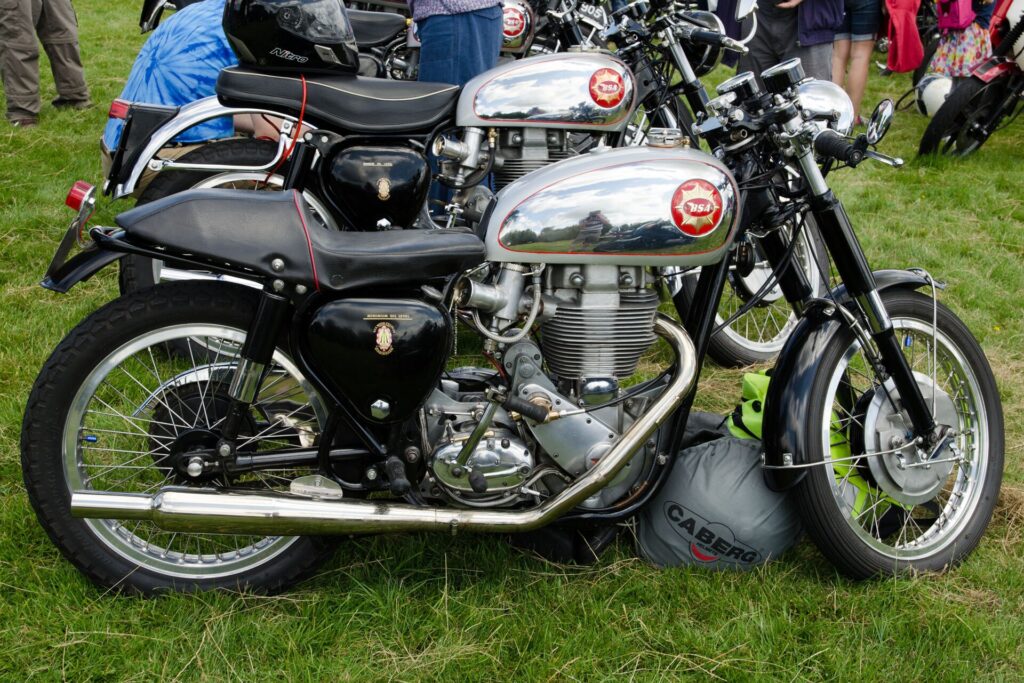
Photo: SG2012 / Wikimedia Commons, CC BY 2.0
The DBD34 had a 500 cc single making around 40 hp, an Amal GP carburettor with no air filter, a close-ratio gearbox, clip-on handlebars mounted low on the forks and a swept-back exhaust. It also had something a photograph cannot show: the sound. At idle the exhaust and intake make a distinctive chirping noise the English call the “Goldie twitter”. Hear it once and you will always recognise it.
The symbol of the café racers
The Gold Star was not comfortable. In town it was almost impossible: the racing gearbox gave a very tall first gear, the carburettor needed a skilled hand on the throttle and the low bars were tiring. But that is exactly what the young riders of the Ace Cafe and the other cafés on London’s arterial roads loved. It was a racing bike with a number plate, and that idea created the entire café racer culture.
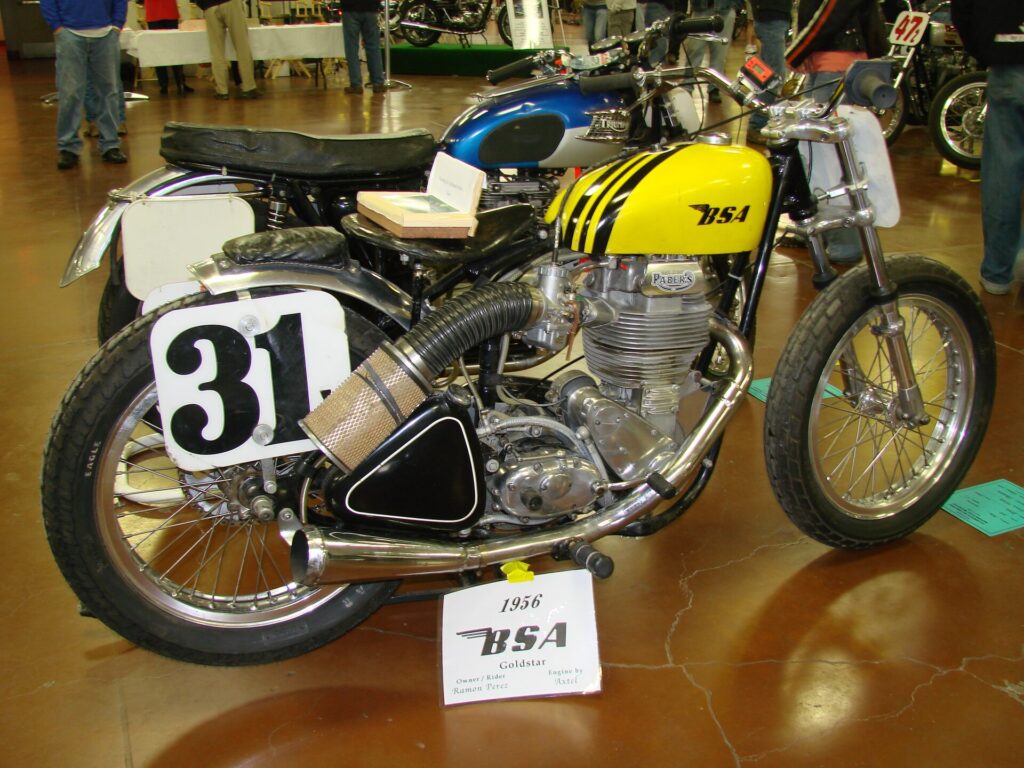
Photo: Craig Howell from San Carlos, CA, USA / Wikimedia Commons, CC BY 2.0
The same engine, in different tune, won scrambles, trials and American flat-track races. Few motorcycles in history have been so good at so many different things.
The end and its value today
Production ended in 1963. The single was expensive to build, twins were easier to ride and BSA wanted to concentrate on them. Today a genuine DBD34 Clubman’s is one of the most sought-after British classics. But because many Gold Stars have been converted to Clubman spec from humbler versions, checking the numbers (the engine number should include the letters “GS”) is essential before you hand over any money.
P.Kefalas
Photo Credits: Tony Hisgett from Birmingham, UK (Wikimedia Commons, CC BY 2.0) · SG2012 (Wikimedia Commons, CC BY 2.0) · Craig Howell from San Carlos, CA, USA (Wikimedia Commons, CC BY 2.0)