
In October 1968, at the Tokyo Motor Show, Honda unveiled a motorcycle that made British manufacturers turn pale. It had four cylinders, four exhausts, a front disc brake, electric start and a top speed of 125 mph. And it did not leak oil. It was called the CB750 Four, and within a few years it changed the history of the motorcycle for ever.
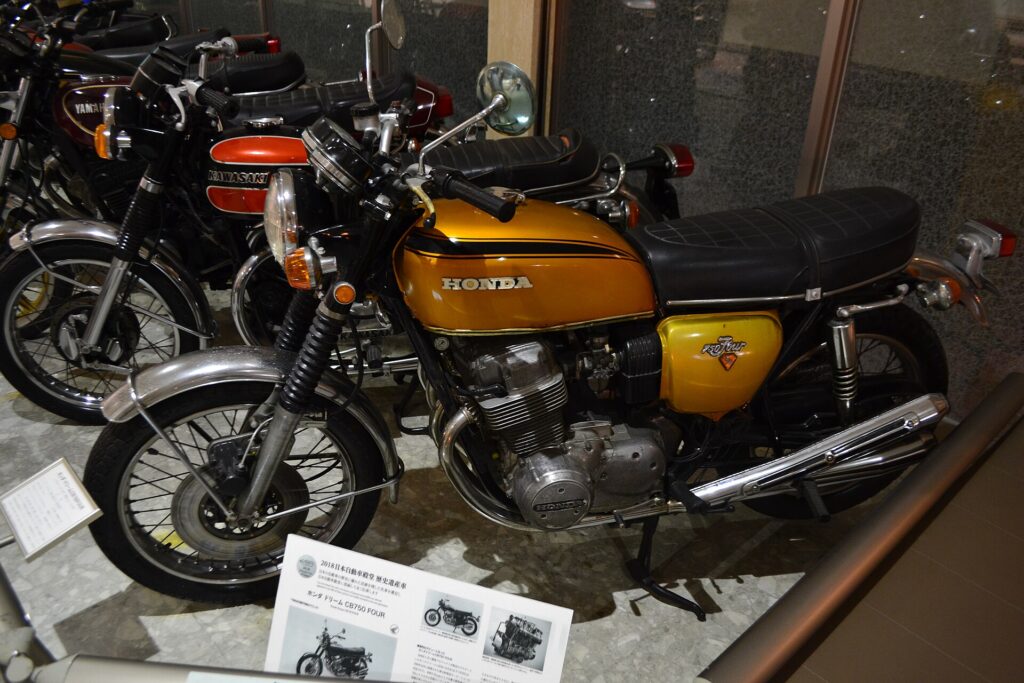
Photo: 先従隗始 / Wikimedia Commons, CC0
Soichiro Honda’s bet
By the 1960s Honda was already the largest motorcycle maker in the world, but mostly thanks to small machines such as the legendary Super Cub. Big bikes were ruled by the British and Harley-Davidson. Honda had won Grand Prix races with multi-cylinder engines, and Soichiro Honda wanted to bring that technology to the road.
Engineer Yoshiro Harada’s team had less than a year to build the new bike. The goal, aimed mainly at the American market, was simple: faster, more comfortable and more reliable than anything else, at a price an ordinary person could afford.
What it had that the others did not
The engine was a transverse inline four of 736 cc, with a single overhead camshaft and four carburettors. It produced 67 hp, far more than the British 650s of the day, and was as smooth as an electric motor. Oil was carried in a separate tank (dry sump), a solution taken from racing.
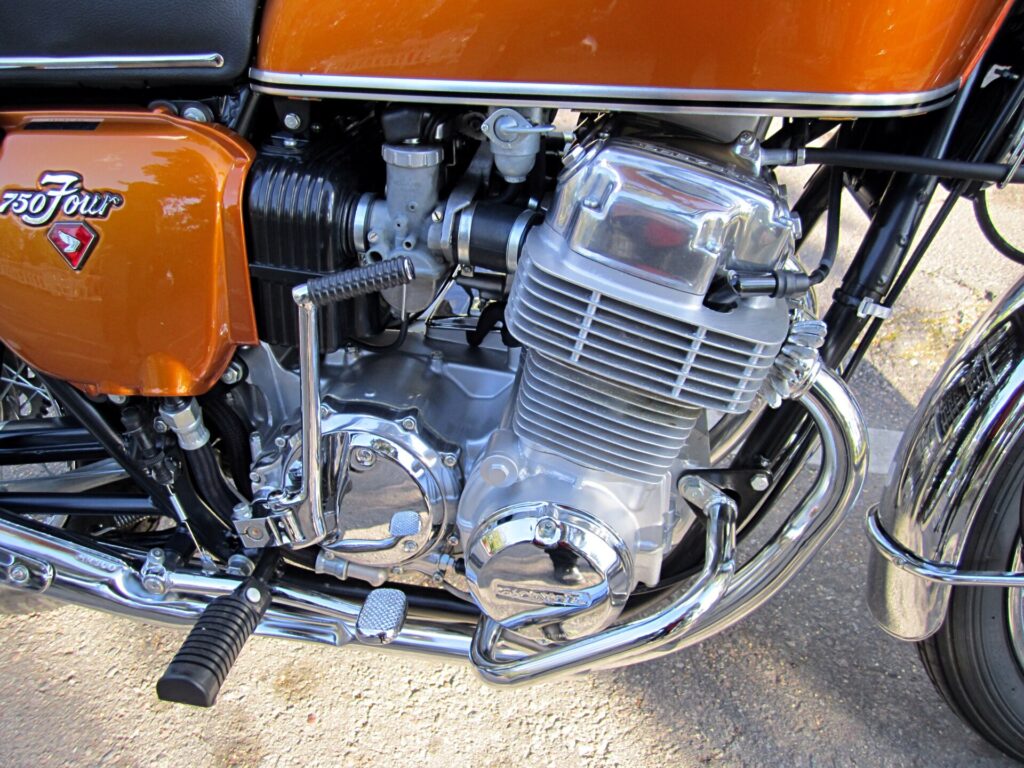
Photo: Khaosaming / Wikimedia Commons, CC BY-SA 3.0
The big news, though, was the hydraulic front disc brake. It was not the first on a motorcycle, but it was the first on a mass-production one. Together with electric start, indicators and reliable electrics, the CB750 made a big motorcycle something you could use every day without carrying tools in your pocket. Magazines of the time used a new word to describe it: “superbike”.
Wins, sales and the end of an era
In 1970 American rider Dick Mann won the famous Daytona 200 on a racing CB750. Sales took off. Honda built more than 400,000 CB750s with the original engine up to 1978. For the British industry it was the beginning of the end: within a decade most of the big British names had closed.
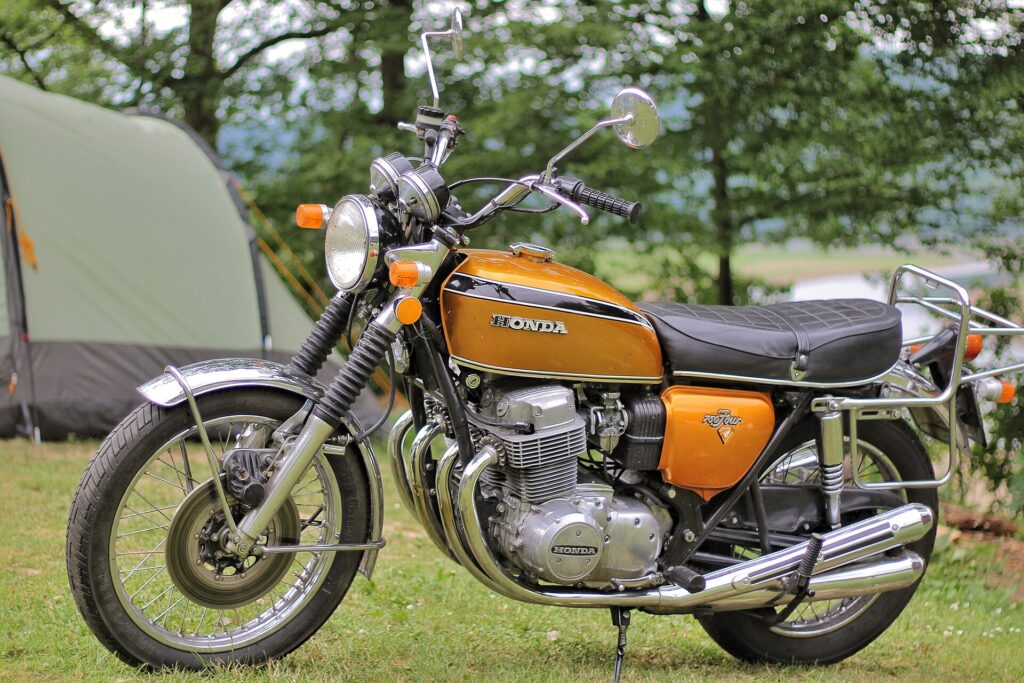
Photo: Ronoli / Wikimedia Commons, CC BY 2.0
Sandcast: the golden CB750s
The first CB750s had crankcases cast in sand moulds (“sandcast”), because Honda did not know how many it would sell and did not want to invest straight away in expensive steel dies. When demand exceeded every forecast, production switched to die-casting. Sandcast bikes number only a few thousand and are now the most valuable CB750s on the market. They can be recognised by the rougher surface of the aluminium and by the engine number.
Be careful, though: because of their value, there are plenty of “sandcasts” that are not. If you are looking for a CB750 to ride, a K1 or K2 from the early 1970s is a wonderful choice, with easy parts and a much more sensible price. And if anyone asks why you bought an old Honda, just tell them you ride the first superbike in history.
P.Kefalas
Photo Credits: 先従隗始 (Wikimedia Commons, CC0) · Khaosaming (Wikimedia Commons, CC BY-SA 3.0) · Ronoli (Wikimedia Commons, CC BY 2.0)