
Imagine working for years on a motorcycle that will change the world, and a few months before you launch it, your rival comes out with exactly the same idea. That is what happened to Kawasaki in 1968. Instead of giving up, it did something clever: it went back to the drawing board and built something bigger, faster and better. The result was the Z1.
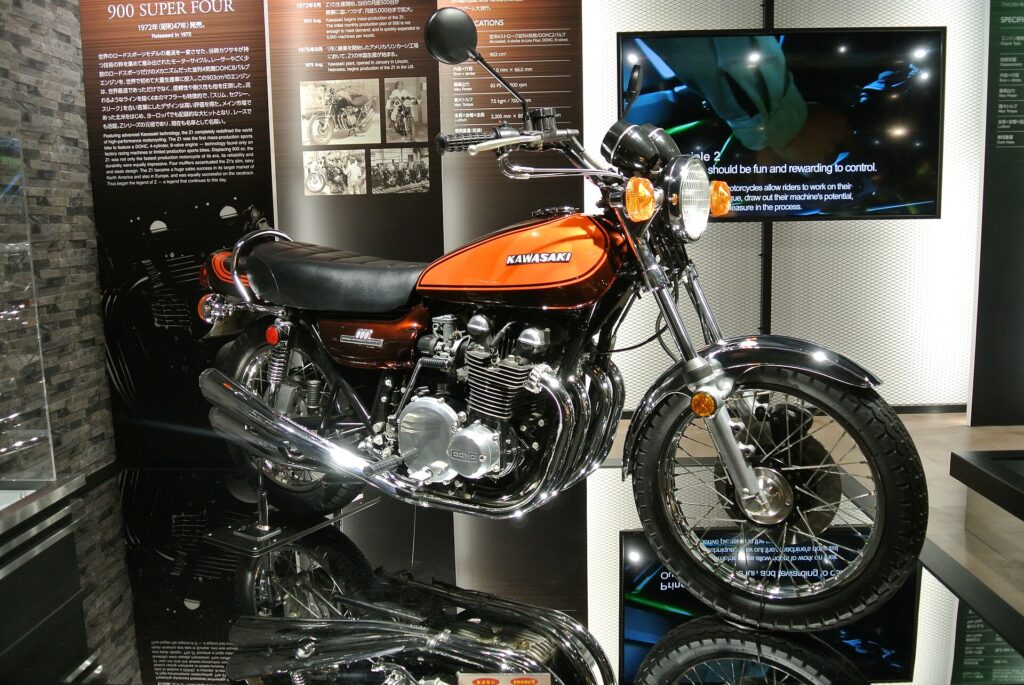
Photo: Rainmaker47 / Wikimedia Commons, CC BY-SA 4.0
Honda got there first
In the 1960s Kawasaki was known for two-strokes, fast and a little wild, like the 500 cc Mach III. But it knew the future in America lay in big four-stroke engines, and it was secretly working on a 750 cc four. In October 1968 Honda unveiled the CB750 Four. The advantage of being first was gone.
Kawasaki decided not to come second with the same product. It enlarged the engine to 903 cc and gave it double overhead camshafts (DOHC), technology you normally saw only on racing bikes and expensive sports cars. Inside the factory the project was codenamed “New York Steak”, because, so the story goes, it would be the tastiest item on America’s menu.
Testing with fake badges
To keep their plans secret, prototypes were tested on American roads in disguise, even wearing Honda badges. They were run on race tracks, in deserts and over endless miles of highway. When the Z1 was launched at the end of 1972, it was truly ready.
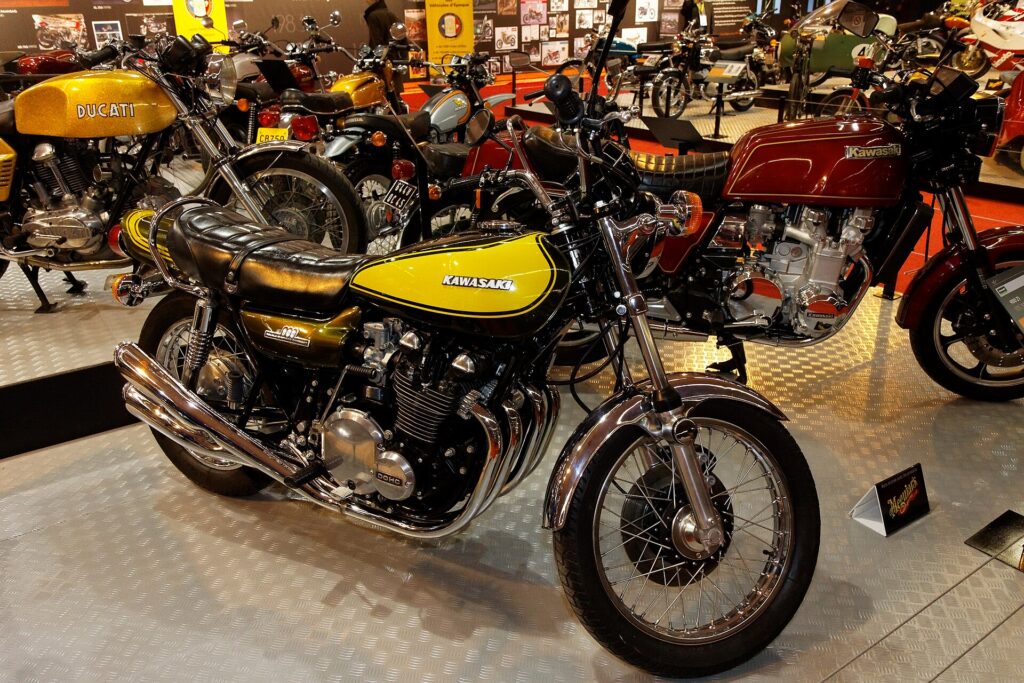
Photo: Thesupermat / Wikimedia Commons, CC BY-SA 3.0
The numbers
82 hp, a top speed of around 130 mph and acceleration that left almost everything on the road behind, on two wheels or four. The Z1 was the fastest production motorcycle in the world. Most impressive of all, the engine was nearly unbreakable. Many racers used it in endurance and drag racing, tuning it for much more power without it failing.
The frame was not as good. At very high speeds and in fast corners the Z1 would weave, and many owners fitted better shocks or braced the frame. But nobody bought it for its manners on twisty roads. They bought it for the power.
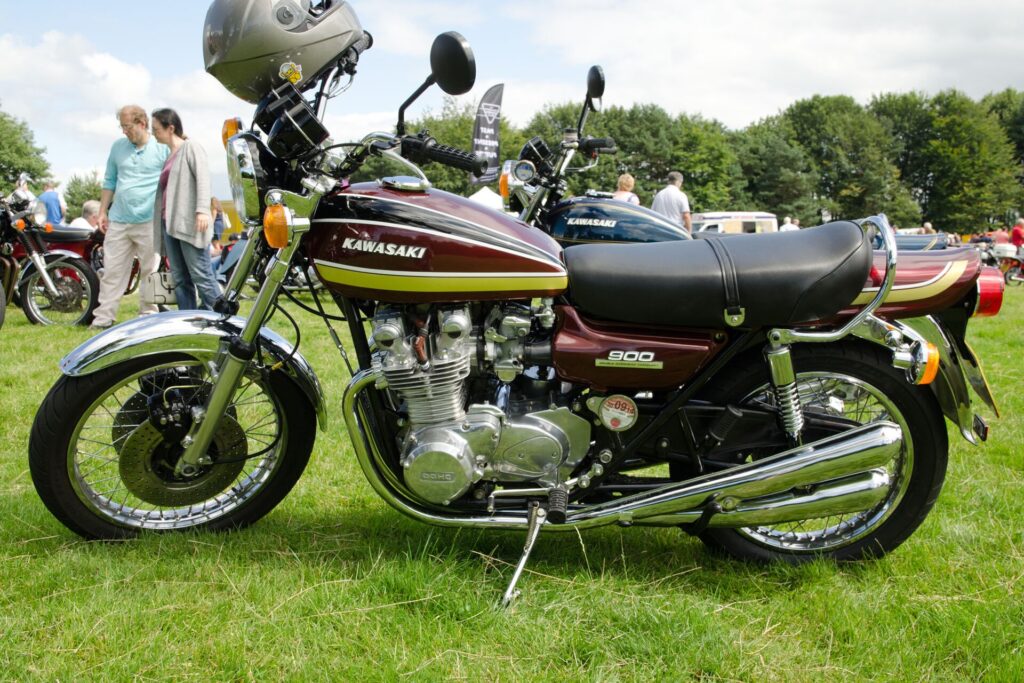
Photo: SG2012 / Wikimedia Commons, CC BY 2.0
From Z1 to Z900RS
The Z1 became the Z900 in 1976 and the Z1000 in 1977, and Kawasaki’s entire “Z” family descends from it. In 2017 Kawasaki launched the Z900RS, a modern motorcycle styled directly after the Z1, with the same colours and the same teardrop tank. Its success shows how alive the legend still is.
If you are looking for an original Z1, the earliest years (1972 and 1973) are the most valuable, especially in the classic “candy brown” and orange paint. Check the numbers, the condition of the exhausts (originals are very expensive) and whether the engine has been modified. A correct Z1 is today one of the best investments in the world of Japanese classics.
P.Kefalas
Photo Credits: Rainmaker47 (Wikimedia Commons, CC BY-SA 4.0) · Thesupermat (Wikimedia Commons, CC BY-SA 3.0) · SG2012 (Wikimedia Commons, CC BY 2.0)