
Some cars we remember because they were fast. Others because they were beautiful. We remember the Renault 4 because it was everywhere. In the village, at the post office, on the farm, at the beach, in the university car park. From 1961 to 1992 more than 8 million were built. It is one of the best-selling cars in history, and hardly anyone calls it “beautiful”. But everyone talks about it with affection.
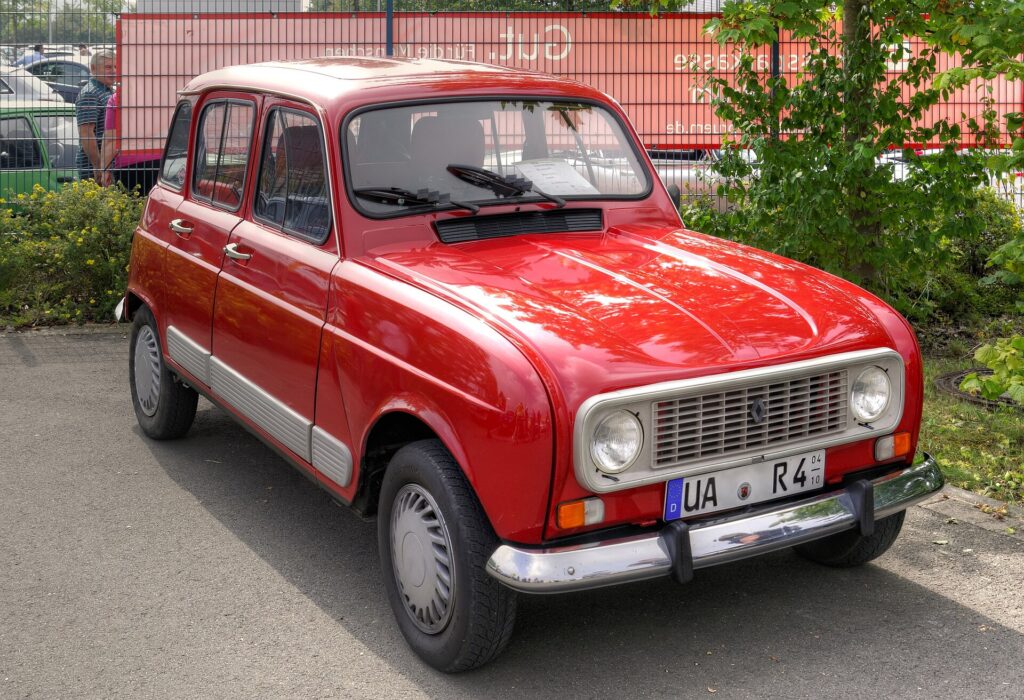
Photo: Berthold Werner / Wikimedia Commons, CC BY-SA 3.0
A pair of jeans on wheels
In the late 1950s Renault was selling the 4CV, a small rear-engined car. The company’s president, Pierre Dreyfus, wanted something different: a car for everyone, for town and for the fields, for the farmer and for the doctor’s wife. He described it in a phrase that stuck: he wanted a car like “blue jeans”. Cheap, tough, suitable for everyone and not something you’d be ashamed to get dirty.
The big rival was the Citroën 2CV. But Renault did something the 2CV didn’t have: it put a door at the back that opened together with the rear window. Today we call it a hatchback. In 1961 it was an almost strange idea for a small car. The rear seats came out and the R4 turned into a little van.
The quirks that made it unique
The Renault 4 had front-wheel drive, which was far from obvious at the time. The suspension used torsion bars, with long travel and a very soft ride. The car leaned in corners like a boat, but it crossed dirt roads that other cars would not dare to try.
And a detail few people know: the wheelbase was different on the left and the right. The rear torsion bars were mounted one behind the other, so one rear wheel sat a few centimetres further back than the other. Nobody ever noticed while driving.
The gear lever came out of the dashboard, like an umbrella handle. You pushed it, pulled it and twisted it. At first it looks funny. After ten minutes you don’t want any other kind.
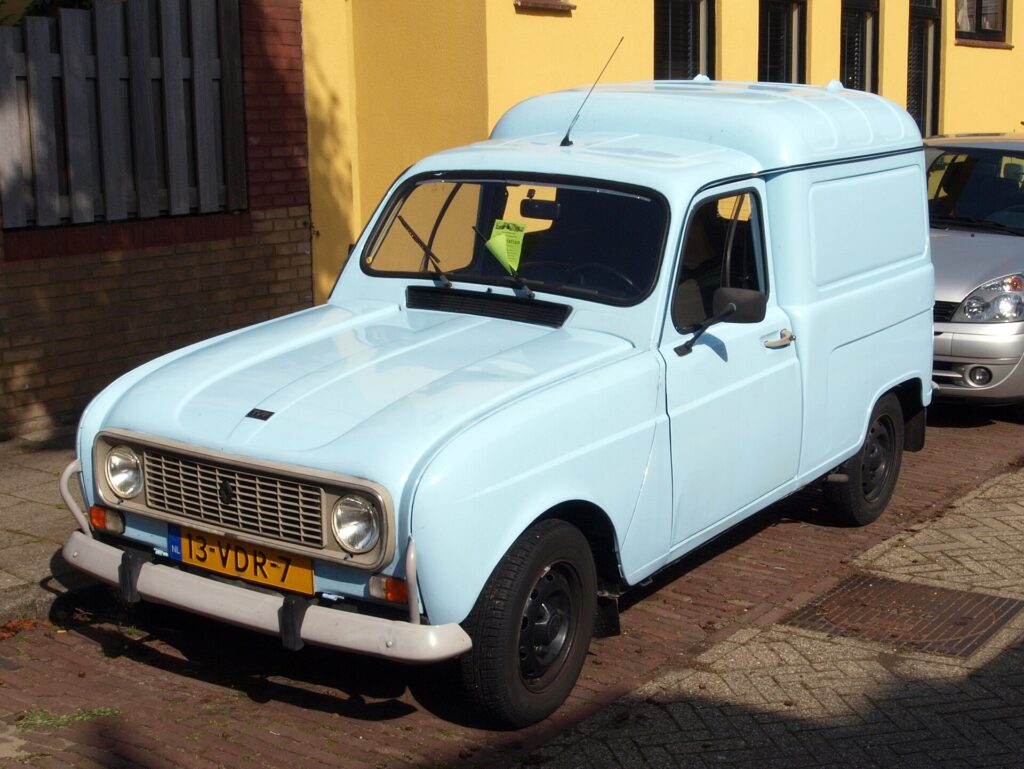
Photo: AlfvanBeem / Wikimedia Commons, CC0
Engines for every pocket
The engines were small water-cooled four-cylinders, from 603 cc in the basic R3 of the early years to 1,108 cc in the GTL of the 1980s. It was not fast, but it always started and any mechanic with a few spanners could fix it.
There was a version for everything. The Fourgonnette, the little high-roof van, became the car of the French post office, the electricity company and thousands of tradesmen. The 1968 Plein Air was an R4 with no doors and no roof, for the beach. There was even a four-wheel-drive version, by the company Sinpar, for those who really wanted to climb a mountain.
A car of the world
The Renault 4 was not only French. It was built or assembled in dozens of countries, from Spain and Italy to Argentina, Colombia, Morocco and Yugoslavia. The last production ended in Novo Mesto, Slovenia, in December 1992. In France it was affectionately called the “Quatrelle” or the “4L”.
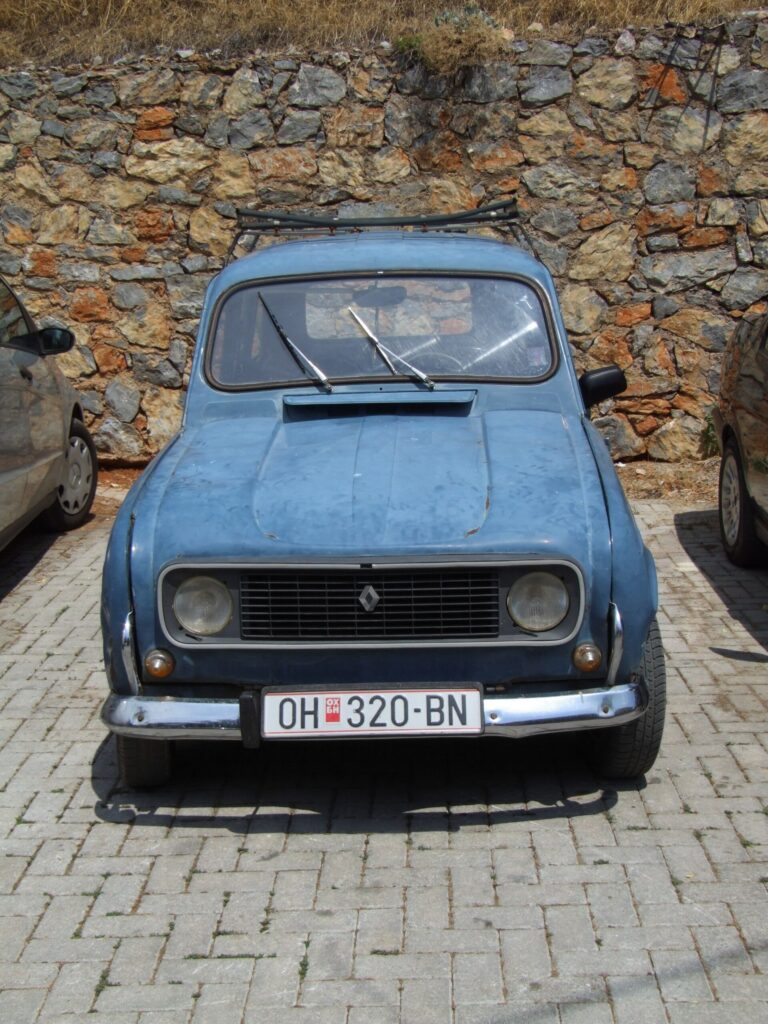
Photo: Pudelek (Marcin Szala) / Wikimedia Commons, CC BY-SA 3.0
Why we still love it
Today a good R4 is one of the friendliest classics to start with. It is simple, cheap to maintain, parts are easy to find and the community is huge. Rust is its biggest enemy, especially in the floor and the chassis, so look underneath before you pay.
The Renault 4 did not become a legend because it was perfect. It became a legend because it was honest. It did exactly what it promised, for thirty years, all over the world. Like a good pair of jeans.
P.Kefalas