
If you have ever seen a postman on a step-through, you have seen the work of Soichiro Honda. This man never properly finished school, never studied engineering, and started out after the war fitting small engines to bicycles. When he died, the company bearing his name was the largest motorcycle maker in the world and was winning races in Formula 1.
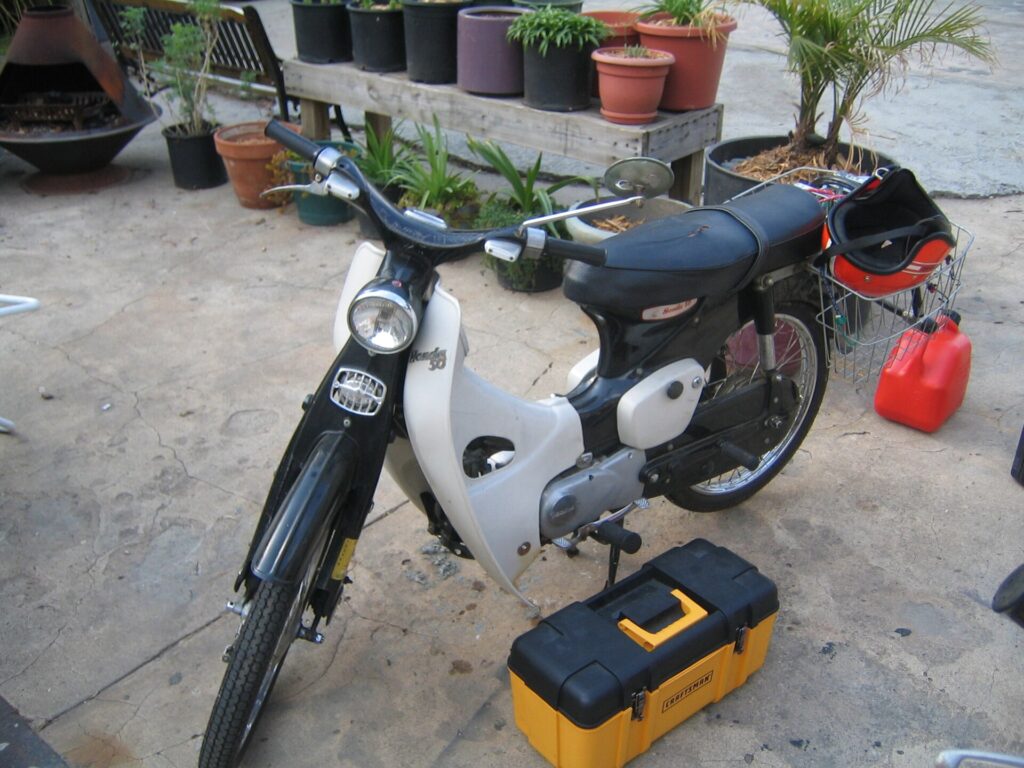
Photo: John Goetzinger / Wikimedia Commons, CC BY-SA 2.0
A boy who smelled of oil
Soichiro Honda was born in 1906 in a village near Hamamatsu, Japan. His father was a blacksmith who repaired bicycles. Young Soichiro spent his days in the workshop. He later said that when he first saw a car in his village, he ran after it and smelled the oil dripping on the road. From then on he knew what he wanted to do.
At 15 he went to Tokyo and got a job as an apprentice in a car repair shop. At first they had him babysit the boss’s child. But he soon showed he had the hands and mind of a mechanic. Later he opened his own garage in Hamamatsu and a small company making piston rings.
Engines on bicycles
Post-war Japan was in ruins. There was no fuel, there were no cars, people went everywhere on foot or by bicycle. Honda found some small surplus army engines that had been used to power radios. He adapted them to bicycles. They all sold at once.
In 1948 he founded the Honda Motor Company. Soon after he met Takeo Fujisawa, a sharp businessman. Honda was the engineer, the dreamer, the man of the workshop. Fujisawa took care of the money, sales and the banks. Without one, the other would not have succeeded. In 1949 the Dream D-Type appeared, Honda’s first real motorcycle.
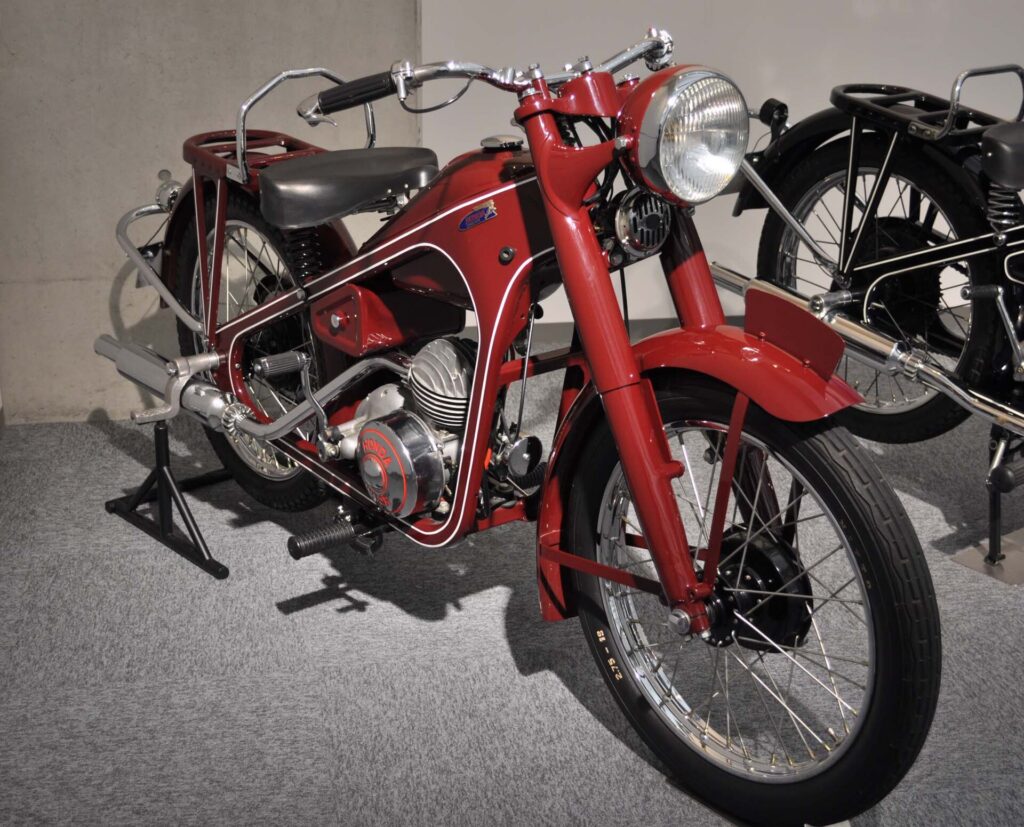
Photo: Rikita / Wikimedia Commons, CC BY-SA 3.0
Super Cub: “You meet the nicest people on a Honda”
In 1958 Honda introduced the Super Cub. It was a small, simple machine with a four-stroke 50 cc engine, an automatic clutch and a plastic front mudguard that kept off the dirt. You could ride it with one hand while holding a tray of food in the other. That was exactly the goal: they wanted a noodle delivery boy to be able to use it.
In America at that time motorcycles had a bad reputation. They suggested gangs and leather jackets. Honda ran an advertising campaign with the slogan “You meet the nicest people on a Honda”, showing housewives, students and families on Super Cubs. It changed the image of motorcycling for ever. By 2017 more than 100 million Super Cubs and their derivatives had been built. No other motor vehicle has come close.
Isle of Man and Formula 1
In 1954 Honda wrote a public declaration: his company would win the toughest motorcycle race in the world, the Isle of Man TT. Many laughed. In 1959 Honda went for the first time. In 1961 it won the 125 cc and 250 cc classes, with a young Mike Hailwood, and took the first five places in both.
Then came Formula 1. In 1965, only in its second season, Honda won the Mexican Grand Prix with Richie Ginther. It was the first Formula 1 win for a Japanese car.
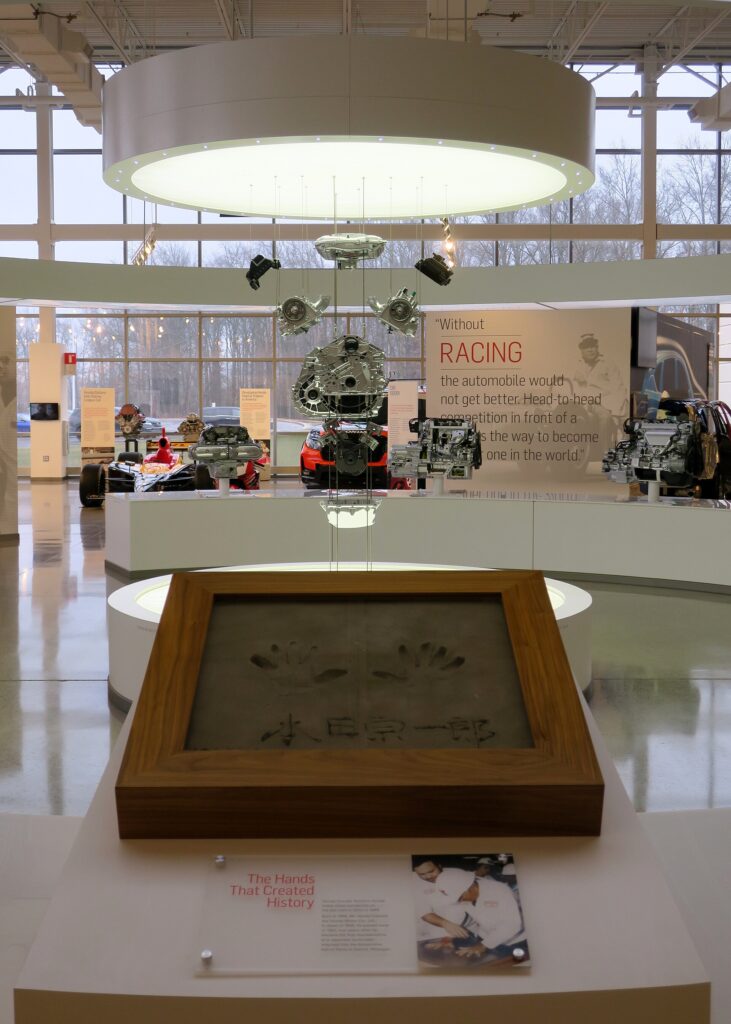
Photo: Nheyob / Wikimedia Commons, CC BY-SA 4.0
“Success is 1% of your work”
Honda often said that success is only 1% of your work, and that it comes after the 99% that is called failure. He was not afraid to make mistakes. He was afraid of not trying. He never wanted his children to work in the company, because he believed it belonged to the people who worked there.
He retired in 1973, together with Fujisawa, on the same day. In 1989 he became the first Japanese person inducted into the US Automotive Hall of Fame. He died in 1991. It is said he asked for no big funeral, because it would cause traffic jams, and that was the last thing a man who devoted his life to keeping the world moving wanted to do.
P.Kefalas