
It is hard to believe that one of the most successful competition cars of all time started life as a quiet family hatchback. Yet the Lancia Delta won six consecutive World Rally Championship manufacturers’ titles, from 1987 to 1992. No other car has ever done it.
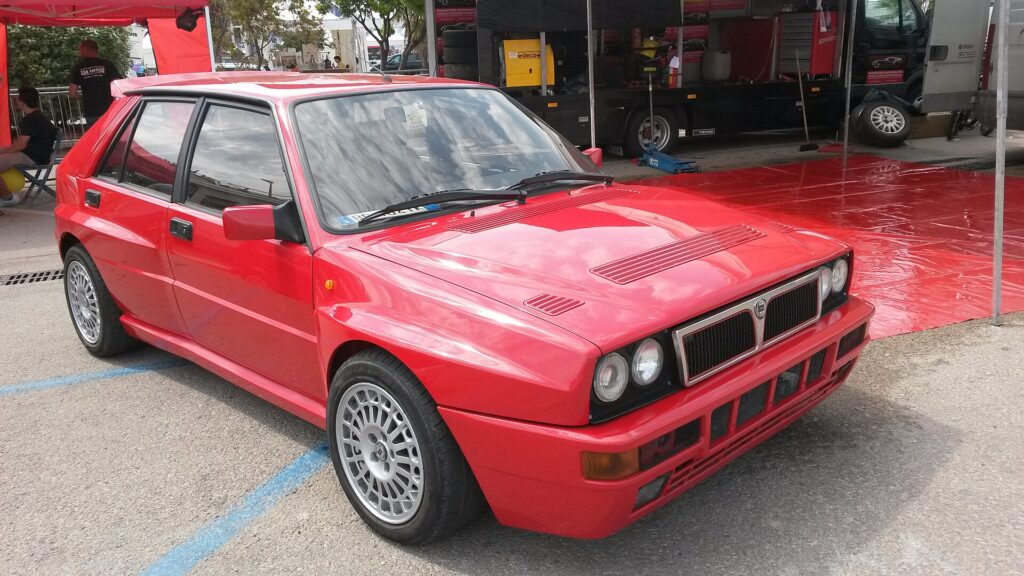
Photo: Salexx156 / Wikimedia Commons, CC BY-SA 4.0
A simple Giugiaro hatchback
The Delta was launched in 1979. It was designed by Giorgetto Giugiaro and was an elegant, practical compact car. It was even voted European Car of the Year for 1980. Nobody imagined it on a special stage back then.
Everything changed in 1986. After serious accidents, the FIA banned the ultra-powerful Group B cars, such as the Lancia Delta S4. From 1987 the world championship would be run with Group A cars, which had to be based on production models built in at least 5,000 units. Lancia already had the Delta HF 4WD ready, with four-wheel drive and a 2.0 turbo engine. It was the right car at the right time.
From HF 4WD to Evoluzione
The Delta won the 1987 championship straight away. To stay ahead of its rivals, Lancia developed it constantly, and every new competition version needed a matching road version. So came the Integrale with wider wings in 1987, the Integrale 16V in 1989, the Evoluzione in 1991 and the Evoluzione II in 1993. Each time the wings flared a little more and the power grew. The final Evo II had about 215 horsepower in road form.
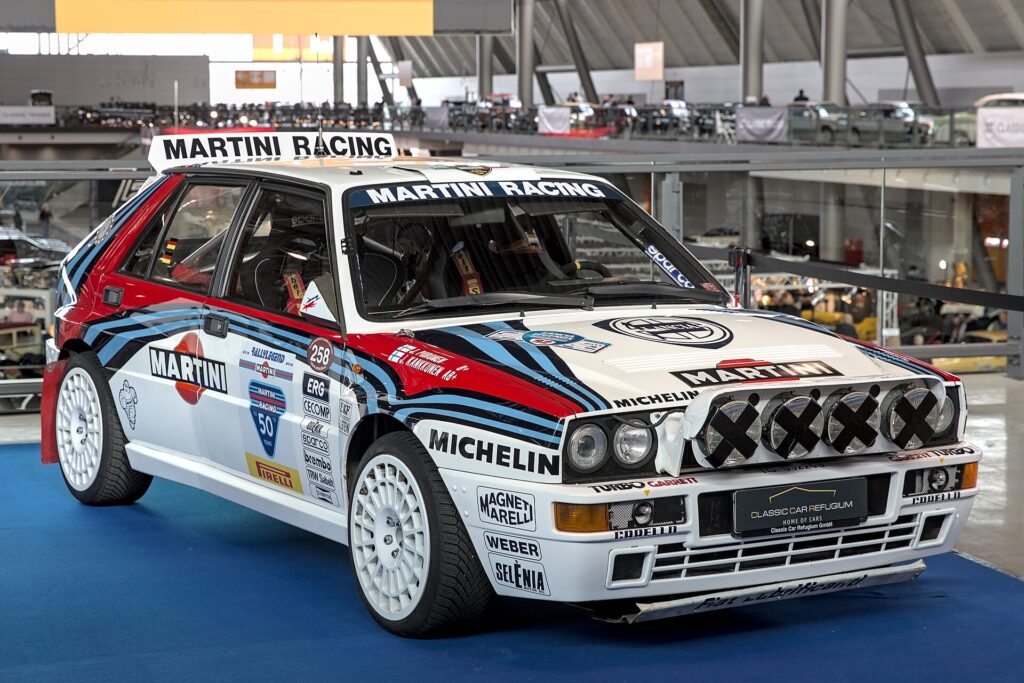
Photo: Alexander-93 / Wikimedia Commons, CC BY-SA 4.0
The drivers and the Martini colours
Driving the Delta, the Finn Juha Kankkunen won the drivers’ title in 1987 and 1991, and the Italian Miki Biasion in 1988 and 1989. The white cars with Martini’s red and blue stripes became one of the most recognisable sights in rallying, from the snows of Sweden to the dust of the Acropolis.
By 1992 Lancia had effectively withdrawn as a works team, and the cars were run by the private Jolly Club team. Even so, the Delta won the manufacturers’ title again, the sixth in a row.
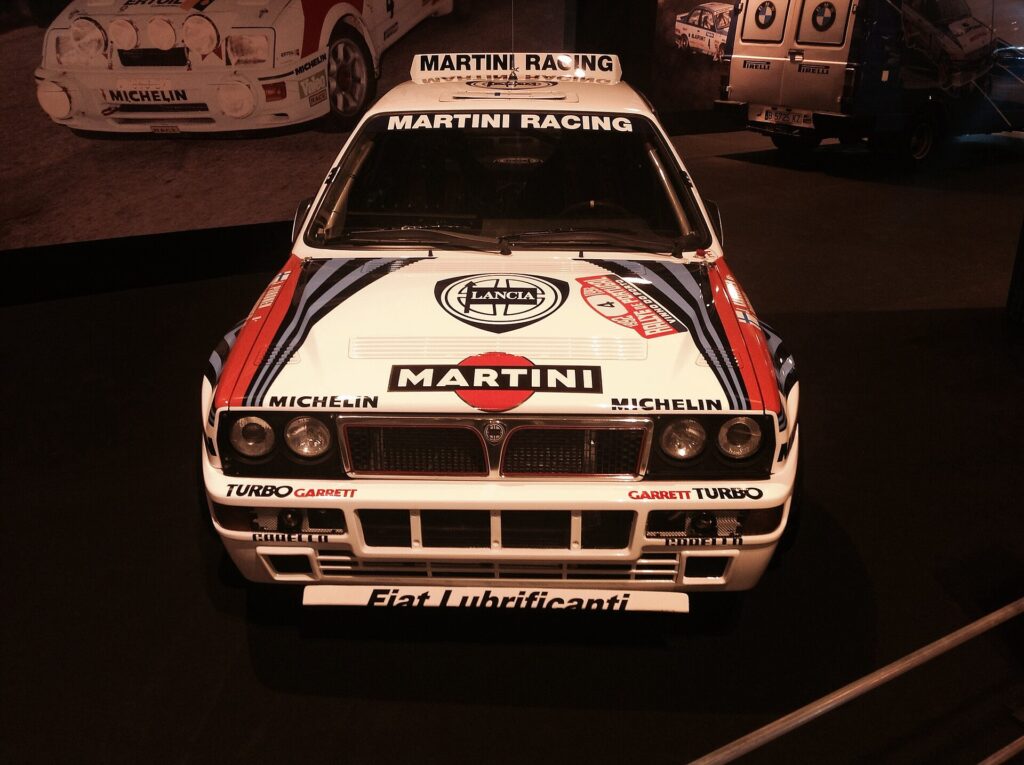
Photo: RoadOver / Wikimedia Commons, CC BY 2.0
The end and today’s prices
Integrale production ended in 1994. The last editions, such as the yellow “Giallo Ginestra” and the “Dealers Collection”, are now among the most expensive. In general Integrale prices have risen a lot, as the childhood heroes of the ’80s and ’90s became today’s collectors.
If you are looking for one, know that the Integrale is a demanding car. It needs a good mechanic who knows it, attention to rust and patience with parts. But when the turbo spins up and the four-wheel drive fires it out of a corner, you understand why it became a legend.
P.Kefalas