
Lancia was always an engineers’ brand. Where others looked for the simple solution, Lancia’s engineers looked for the clever one, even if it cost more. The Fulvia is perhaps the best example. Small, elegant, with an unusual V4 engine, it became one of the best-loved Italian cars of the 1960s. And in its most competitive form, the 1.6 HF “Fanalone”, it won the most famous rally in the world.
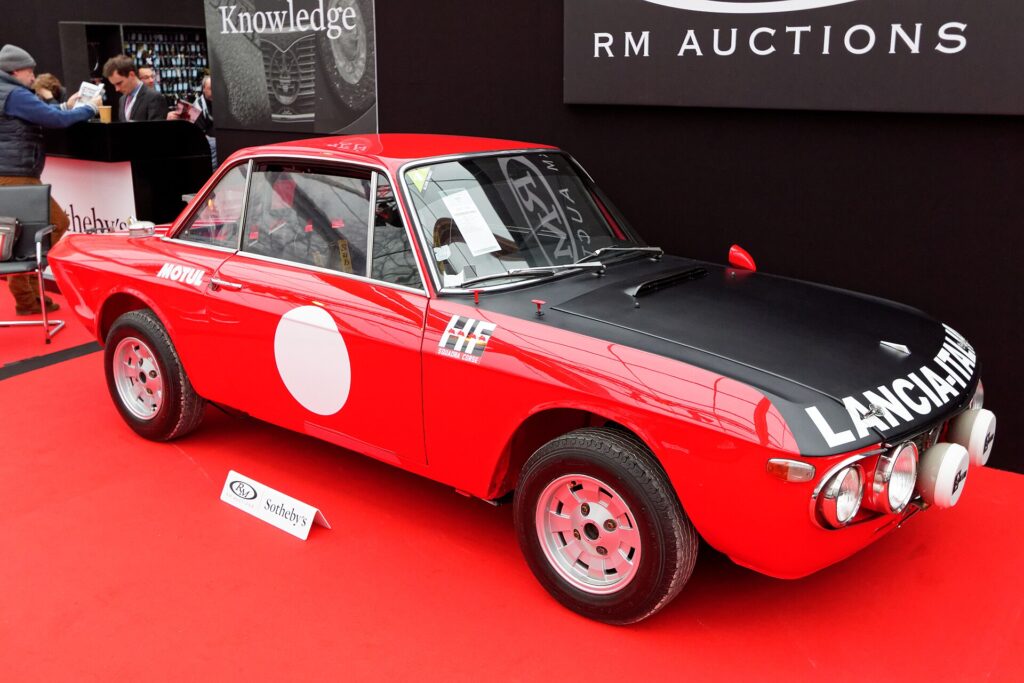
Photo: Thesupermat / Wikimedia Commons, CC BY-SA 4.0
An almost straight V4
The Fulvia was introduced in 1963 as a four-door saloon, and in 1965 the coupé arrived, designed by Piero Castagnero in Lancia’s own studio. It had clean, delicate lines, large glass areas and a shape that never ages.
Under the bonnet was a V4 engine with an angle of just 13 degrees between the cylinders. It was so narrow that a single cylinder head covered all the cylinders. It was small, light and mounted at the front, driving the front wheels, something few sports cars had then. The Fulvia also had disc brakes on all four wheels.
What HF means
The letters HF stand for “High Fidelity”. It was the name of a club of loyal Lancia customers who had bought many of the brand’s cars, and it became the name of Lancia’s competition team. Its badge, an elephant, still appears on sporting Lancias.
The HF versions were lighter, with aluminium doors and bonnet and more powerful engines. The top model was the 1969 1.6 HF, with about 115 horsepower for the road and much more in race trim. It had larger inner headlights than standard, and the Italians nicknamed it “Fanalone”, the big headlight.
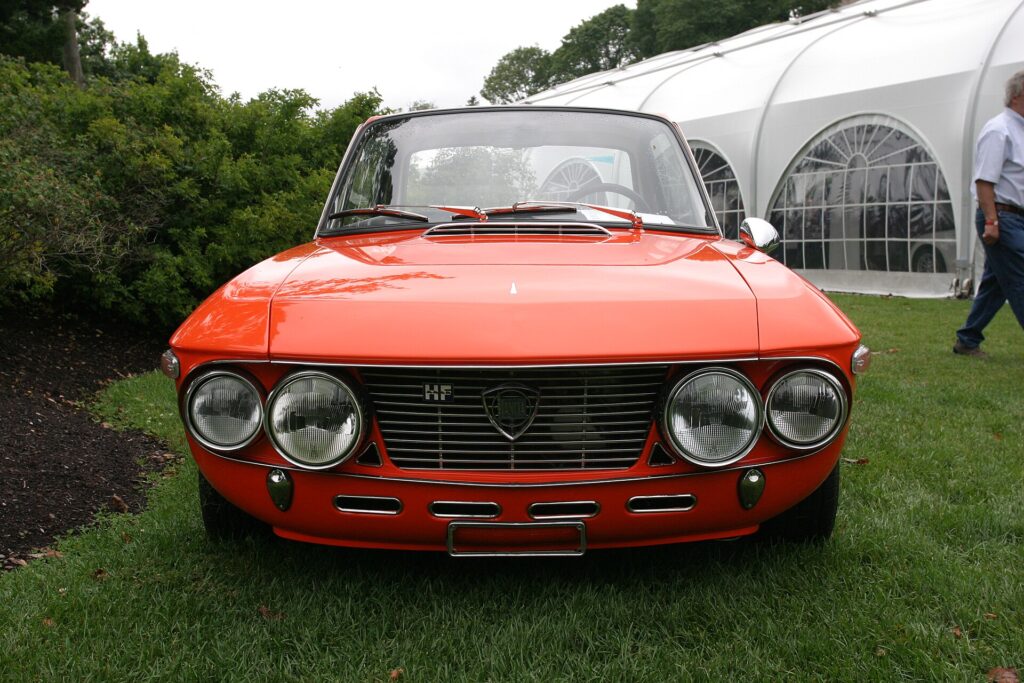
Photo: ColinMB / Wikimedia Commons, CC BY-SA 3.0
Monte Carlo 1972
The Fulvia rallied all over Europe, often against much more powerful cars. Front-wheel drive, low weight and balance made it excellent on narrow, mountainous and snowy roads.
Its greatest moment came in January 1972. The Italian Sandro Munari, with co-driver Mario Mannucci, won the Monte Carlo Rally in a Fulvia 1.6 HF, beating Porsches, Alpines and Fords with far more horsepower. The same year Lancia won the International Championship for Manufacturers, the forerunner of today’s WRC.
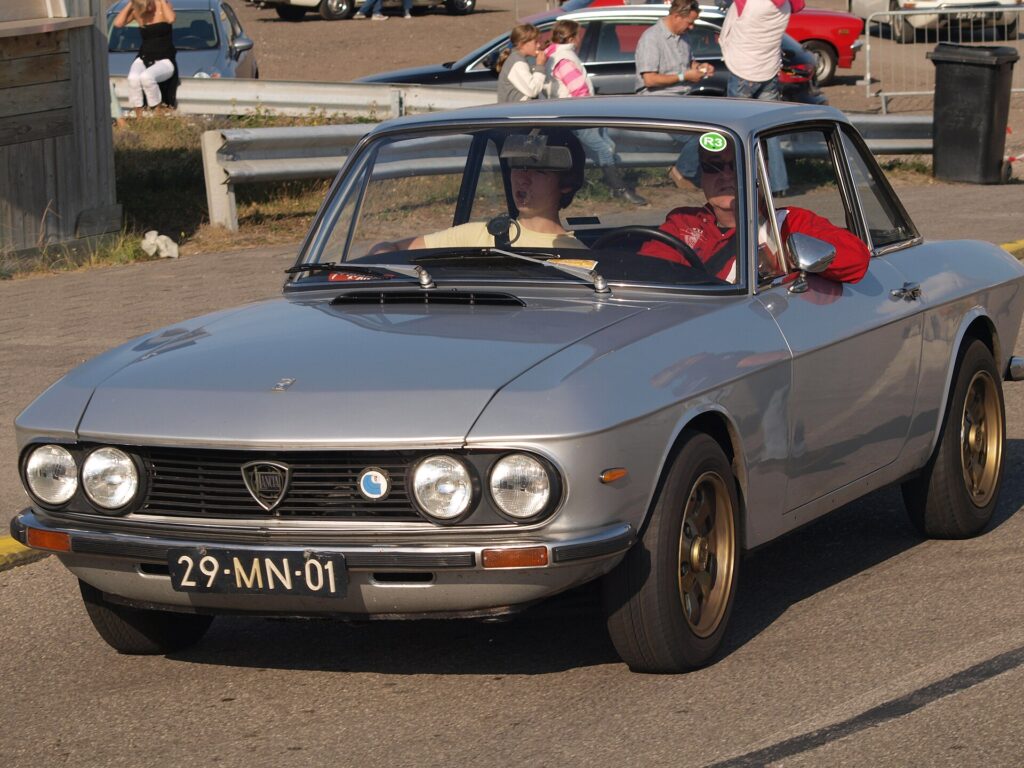
Photo: AlfvanBeem / Wikimedia Commons, CC0
The end of independent Lancia
The Fulvia was also the last car Lancia designed as an independent company. In 1969 Lancia, which was in financial trouble, was bought by Fiat. The coupé continued in production until 1976, and the next competition Lancia was the legendary Stratos.
Today the Fulvia Coupé is one of the smartest Italian classics to buy: beautiful, fun and with an active community. Genuine 1.6 HFs are rare and expensive, and there are many copies, so always check the history and chassis numbers before you buy.
P.Kefalas