
If you have noticed the myClassicCar logo, you have already seen this car. The Mercedes-Benz 300 SL, with doors that open like a gull’s wings, is for us, and for many people around the world, the most recognisable classic car there is. Americans called it the “Gullwing”, Germans the “Flügeltürer”. And its story begins on the race track.
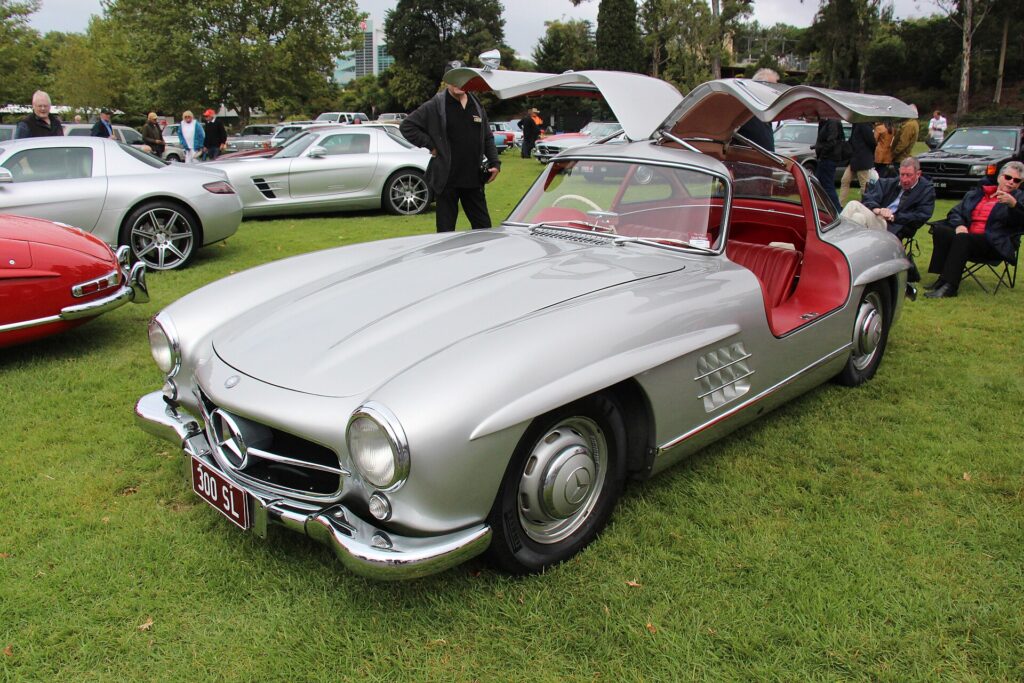
Photo: Sicnag / Wikimedia Commons, CC BY 2.0
From racing to the road
In 1952 Mercedes-Benz returned to racing after the war with a new race car, the W194 300 SL. It did not have the most powerful engine, but it was light and very aerodynamic. It finished first and second at the Le Mans 24 Hours and won the gruelling Carrera Panamericana in Mexico.
Mercedes had no plans for a road version. Max Hoffman, the New York importer of European cars, convinced the company that wealthy Americans would buy it, and ordered hundreds himself. The road-going 300 SL was unveiled at the New York show in February 1954, not in Germany. That says a lot about who its customers were.
Why the doors open upwards
The gullwing doors were not just a styling choice. The car had a light tubular frame, a skeleton of thin tubes, which had to run high along the sides to be stiff enough. With sills that high, normal doors were impossible. The solution was doors that opened upwards, from the roof.
To make getting in easier, the steering wheel tilted down. Even so, getting in and out took some practice, and some elegance.
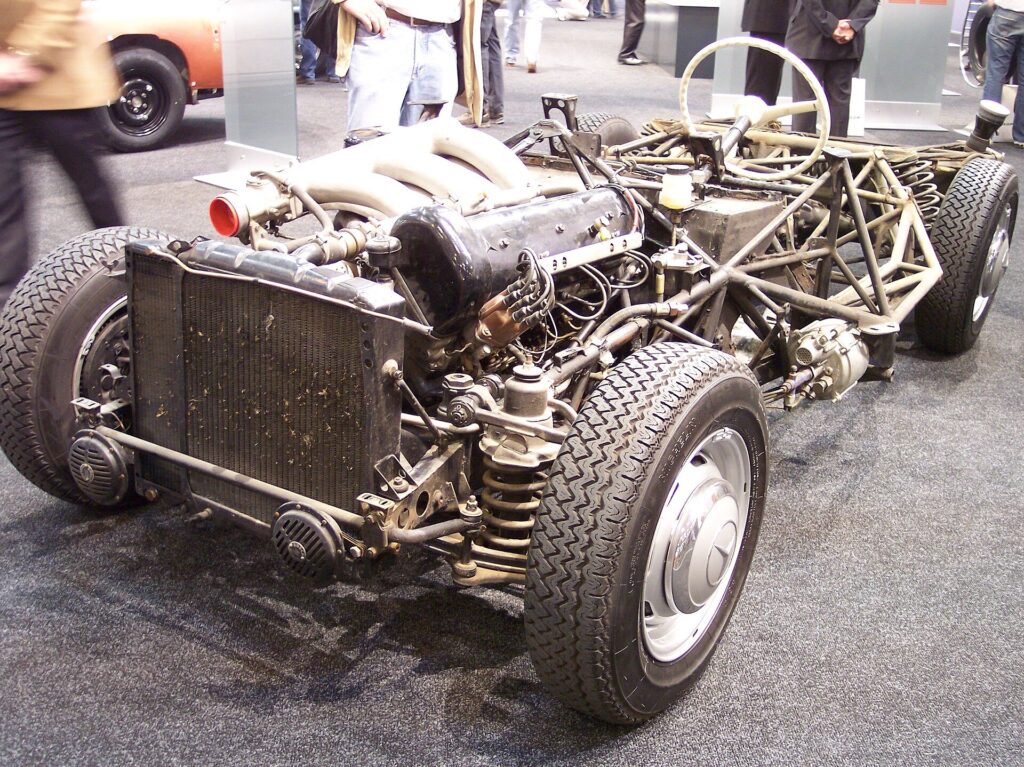
Photo: Stahlkocher / Wikimedia Commons, CC BY-SA 3.0
The first fuel injection
The 300 SL was the first production car with a four-stroke petrol engine and direct fuel injection, a Bosch system derived from aircraft engines. The 3-litre six produced 215 horsepower and was tilted 50 degrees to the side to fit under the low bonnet. Depending on the axle ratio, top speed reached 260 km/h. In the mid-1950s it was the fastest production car in the world.
It had one weakness, though. The swing-axle rear suspension could make the car unpredictable at the limit. The 300 SL demanded respect from its driver.
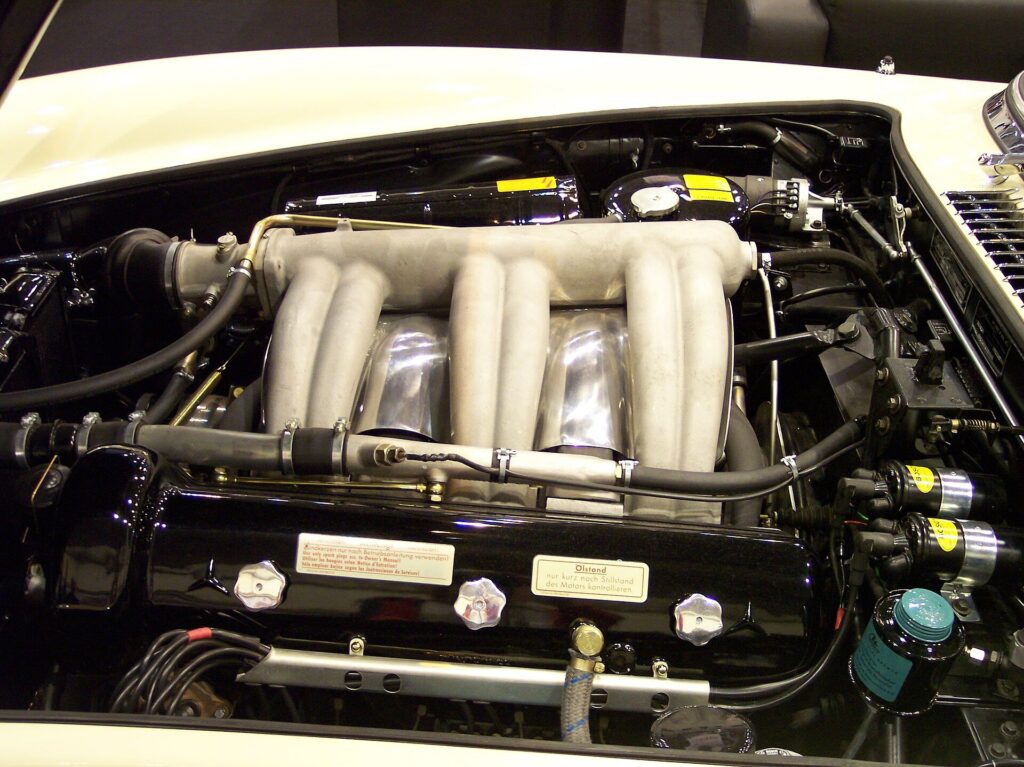
Photo: Unknown photographer / Wikimedia Commons, CC BY-SA 3.0
1,400 Gullwings
By 1957 about 1,400 Gullwing coupés had been built. It was succeeded by the 300 SL Roadster, with conventional doors, improved suspension and an open top, built until 1963. Many consider the Roadster the better car to drive. But the Gullwing is the one that won the hearts and the posters.
Today a good 300 SL Gullwing costs many millions. Few of us will ever drive one. But we can admire it, in museums, at events and, in our case, in the site’s logo every time you visit. Because for us, this is what a classic car looks like.
P.Kefalas