
Thousands of drivers have raced in Formula 1. But few have earned as much respect from their own rivals as a short, quiet Argentine with a soft voice and the big hands of a mechanic. They called him “El Maestro”, the Master. Juan Manuel Fangio won five world championships in the 1950s, with four different teams, in an era when drivers wore no seatbelts and the tracks had no barriers.
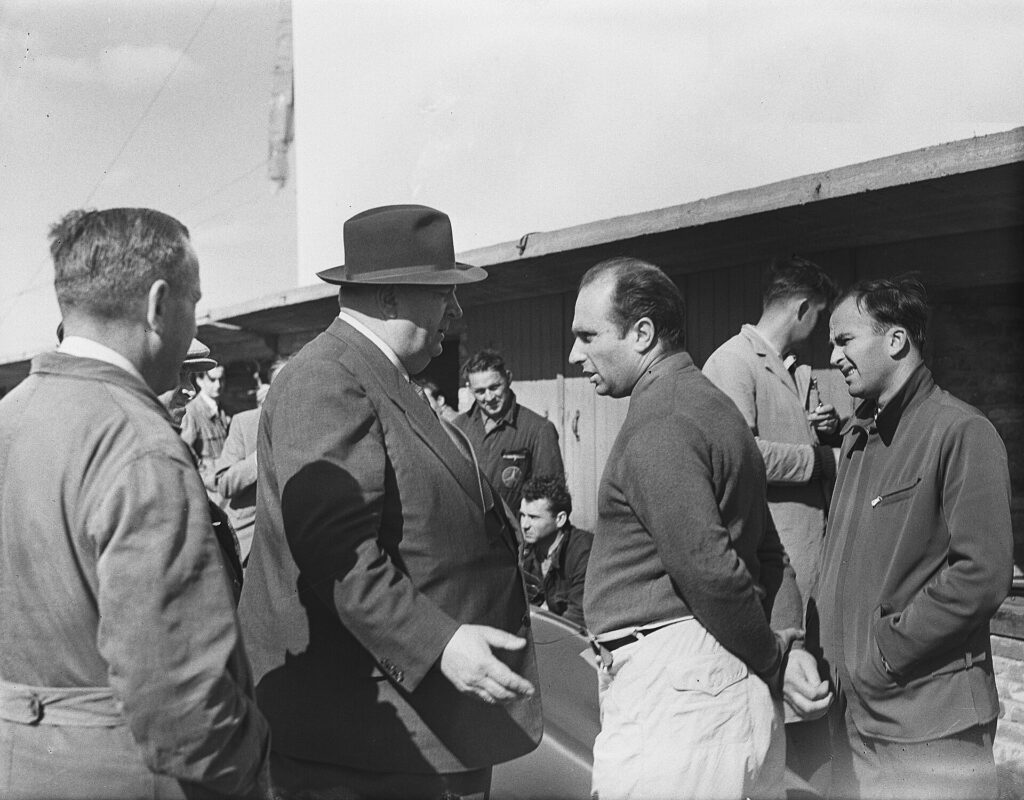
Photo: Joop van Bilsen for Anefo / Wikimedia Commons, CC0
A mechanic from Balcarce
Fangio was born in 1911 in Balcarce, a small town in Argentina, to a family of Italian immigrants. He left school early and worked in garages. There he learned cars from the inside, screw by screw. That would help him all his life: he always knew how hard he could push a car without breaking it.
In Argentina he became famous in the great road races, driving modified Chevrolets. These were races of thousands of kilometres, over mountains and dirt roads, lasting for days. In 1940 he won the Buenos Aires-Lima-Buenos Aires race, nearly 10,000 kilometres through the Andes.
Europe at 38
When Fangio came to Europe at the end of the 1940s, he was already almost 38. At an age when most drivers today have retired, he was just getting started. In the first Formula 1 World Championship, in 1950, he finished second with Alfa Romeo. In 1951 he won his first title.
In 1952 he had a serious crash at Monza and broke his neck. He was out for months. Many believed his career was over. He came back, and the following years were his best.
Four teams, five titles
In 1954 he started the season with Maserati and finished it with Mercedes, which was returning to racing with the stunning W196. He took his second title. In 1955 he won the third with Mercedes. In 1956 he moved to Ferrari and won again. In 1957 he returned to Maserati and took the fifth.
In total he started 51 World Championship Grands Prix and won 24 of them. Almost one race in two. No other driver in history has such a winning percentage.
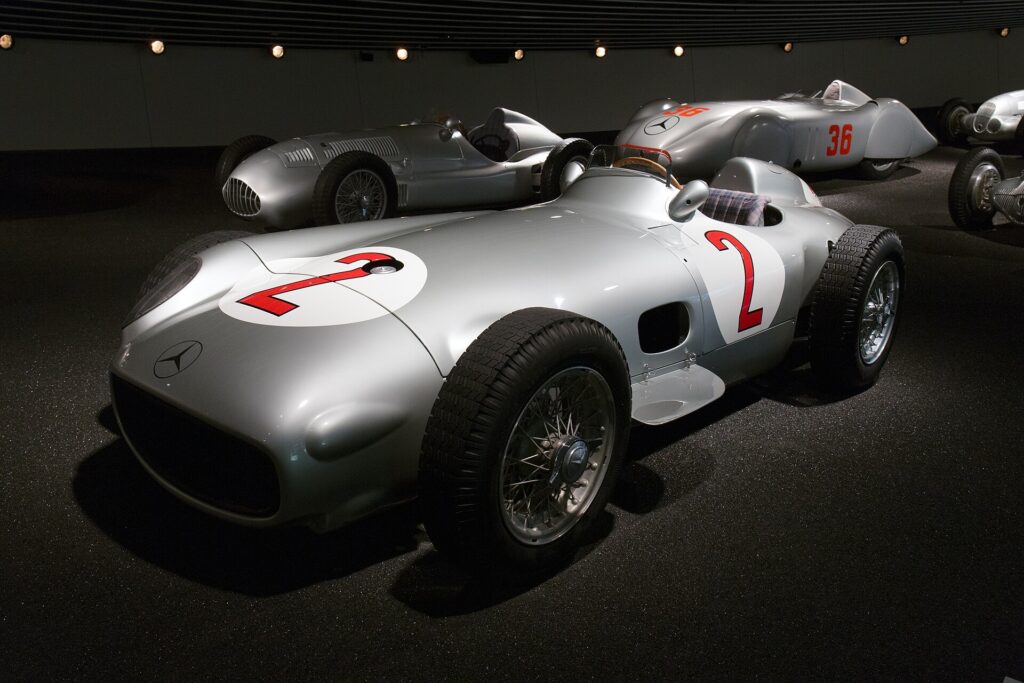
Photo: Morio / Wikimedia Commons, CC BY-SA 3.0
Nürburgring 1957: the race of his life
Fangio’s most famous race took place at the Nürburgring, the hardest track in the world, in August 1957. Maserati decided to start with a half-full tank, to keep the car light, and stop for fuel. But the pit stop went badly and Fangio rejoined almost a minute behind the two Ferraris of Mike Hawthorn and Peter Collins.
What followed is one of the greatest drives in history. Fangio, aged 46, broke the lap record again and again. He passed Collins and, on the penultimate lap, passed Hawthorn too. He won the race and his fifth title. Later he said that on that day he went to limits he had never reached before, and that he never wanted to drive like that again.
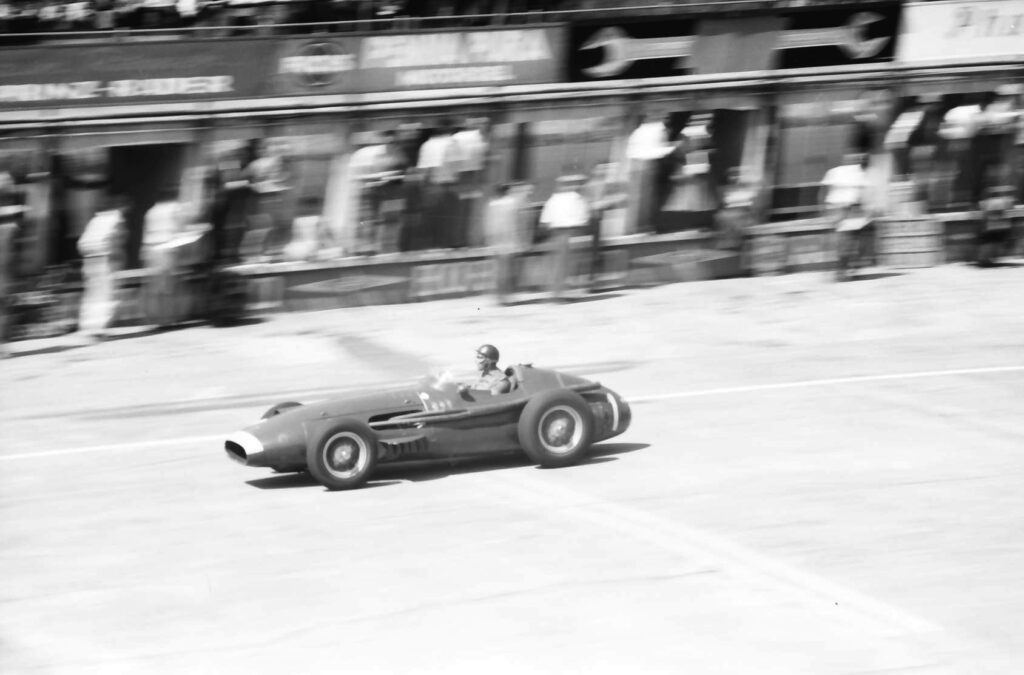
Photo: Willy Pragher / Wikimedia Commons, CC BY 3.0
Kidnapped in Havana, and retirement
In 1958 Fangio was in Cuba for a race. Fidel Castro’s rebels kidnapped him from his hotel to draw the world’s attention. They treated him very politely and released him after about a day. Fangio stayed friends with some of them for years.
A few months later, after the 1958 French Grand Prix, he retired. He went back to Argentina, became president of Mercedes-Benz there and founded a museum in Balcarce. He died in 1995, aged 84.
Today there are statues of Fangio at the Mercedes museum in Stuttgart and at race tracks around the world. Many say there have been faster drivers. Very few say there has been a better one.
P.Kefalas