
In 1987 Ferrari turned 40. Enzo Ferrari was 89 and knew he did not have much time left. He asked his engineers for a car to celebrate the anniversary, and told them something simple: it should be the best Ferrari ever built. The result was the F40, the last car unveiled while Enzo was alive.
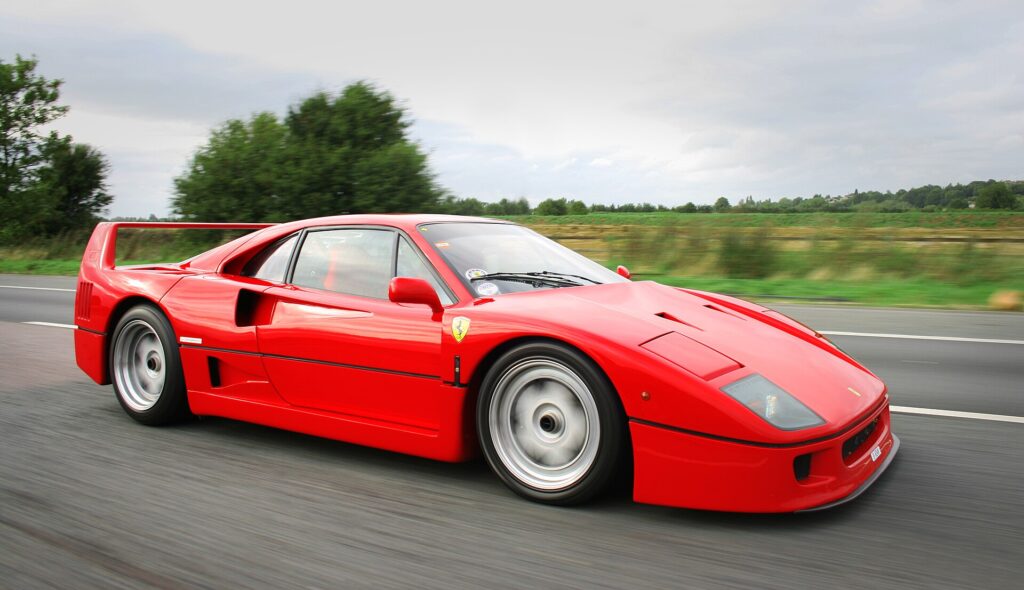
Photo: Will ainsworth / Wikimedia Commons, CC BY-SA 3.0
A race car with number plates
The F40 drew on the experience of the 288 GTO Evoluzione, a race car being prepared for Group B. The engine was a 2.9-litre twin-turbo V8 producing 478 horsepower. For 1987 that was an enormous figure. Ferrari quoted a top speed of 324 km/h, making the F40 the first production car to exceed 200 miles per hour.
Even more impressive was the weight. The body was made of composite materials, Kevlar and carbon fibre, while the side and rear windows were Perspex, with small sliding panels instead of electric windows. Inside there were no carpets, no radio and no door handles. The doors were opened from inside by pulling a cable. The F40 weighed about 1,100 kilos.
A design without compromise
The design was done at Pininfarina, led by Leonardo Fioravanti. Every line had a purpose: the ducts for the brakes and engine, the low nose and the huge rear wing that was part of the body. The F40 was not “beautiful” in the classic sense. It was angry, and that made it unforgettable.
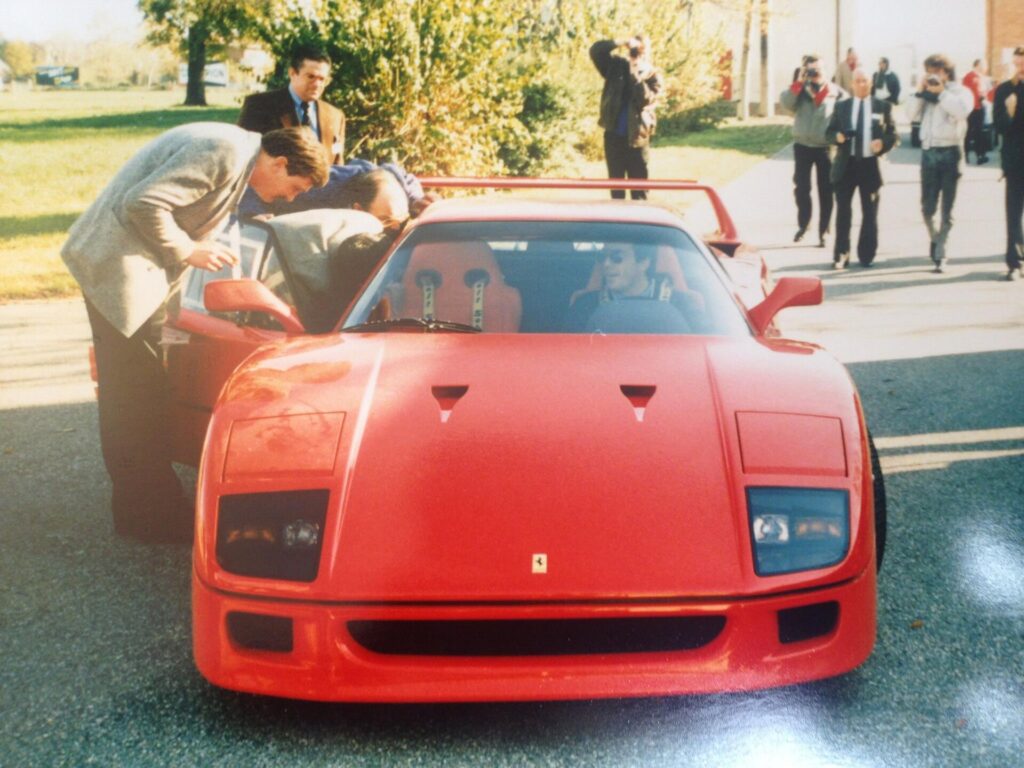
Photo: Unknown photographer / Wikimedia Commons, Public domain
Enzo’s last approval
The F40 was unveiled at Maranello in July 1987. Enzo Ferrari died a year later, in August 1988. For Ferrari fans, the F40 is the last car to carry his personal seal, and that gives it a special place in history.
Ferrari originally planned to build about 400. But demand was such that production continued until 1992 and reached about 1,300 cars. There was also a racing version, the F40 LM, which competed in GT racing in America and Europe.
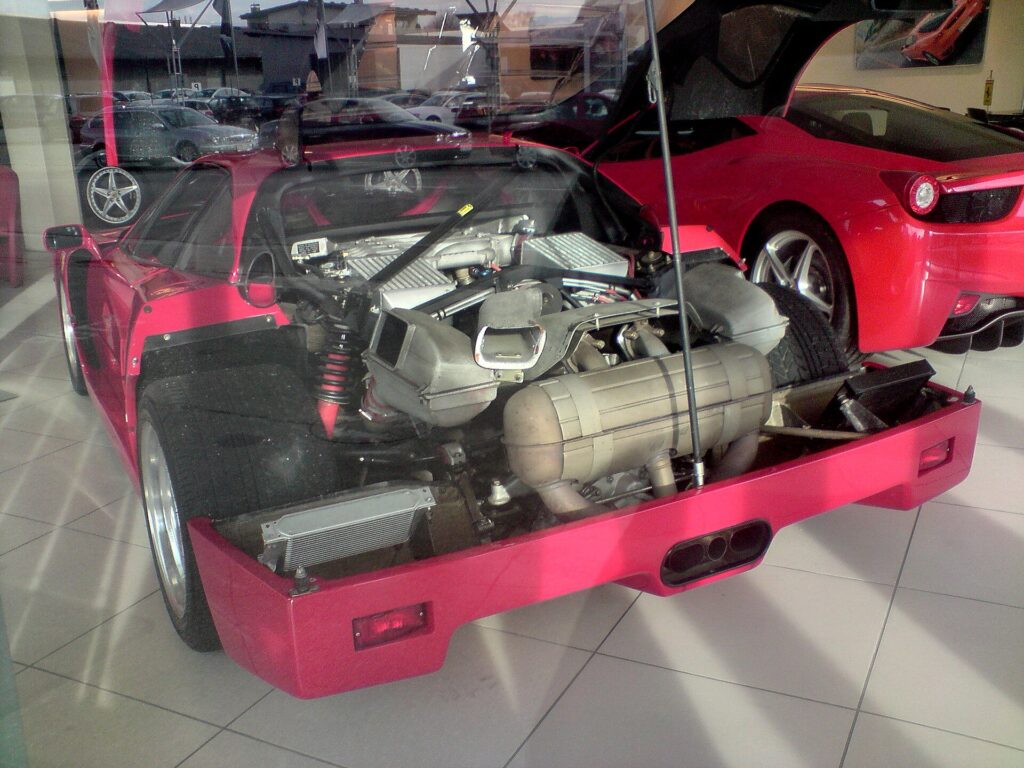
Photo: Pitak / Wikimedia Commons, CC BY-SA 3.0
What it is like to drive
Those who have driven an F40 talk about a raw, demanding car. The turbos of the time did not deliver power smoothly. Below 3,500 rpm it was almost calm, and then the power arrived all at once. There was no ABS, no brake assistance and no traction control. Just the driver, the steering wheel and the pedals.
Today the F40 is one of the most sought-after Ferraris of all time, and its prices have passed two million euros many times. For many it remains the ultimate supercar: the last one before electronics, built to celebrate the man who started it all.
P.Kefalas