
In April 1972 Italy watched a race created to be “Europe’s Daytona”. On the grid of the Imola 200 were the best riders and fastest factories in the world: MV Agusta, Honda, Triumph, BSA, Norton, Moto Guzzi. And a small company from Bologna, best known until then for small single-cylinder bikes. At the finish, first and second places went to two Ducatis.
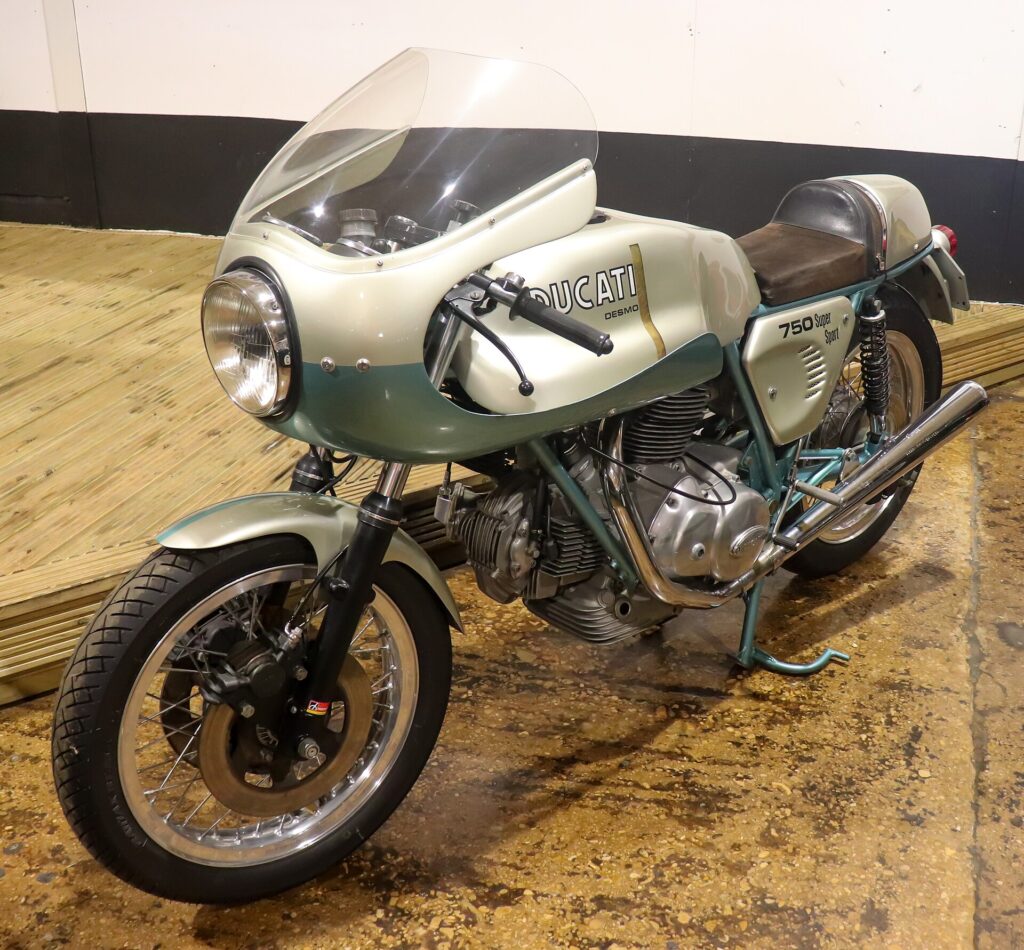
Photo: Vauxford / Wikimedia Commons, CC BY-SA 4.0
The desmo man
Behind that victory was engineer Fabio Taglioni. Since the 1950s he had had an obsession: desmodromic valve operation. In a normal engine the valves are opened by the camshaft and closed by springs. At high revs the springs cannot keep up and the valves “float”. Taglioni designed a mechanism that closes the valves the same way it opens them, without springs. The system was called “desmo” and it remains Ducati’s trademark to this day.
In the late 1960s Taglioni designed a 90-degree V-twin. One cylinder was almost horizontal, the other almost upright, and from the side the engine looked like the letter L. This layout is naturally very well balanced and needs no balance shafts. The camshafts were driven by shafts and bevel gears, a complicated but beautiful solution.
Imola 1972
For the race Ducati prepared a small batch of machines with 750 cc desmo engines. British rider Paul Smart, who was not even the team’s first choice, won ahead of his Italian team-mate Bruno Spaggiari. The victory was a shock. A company with no tradition in big bikes had beaten all the giants.
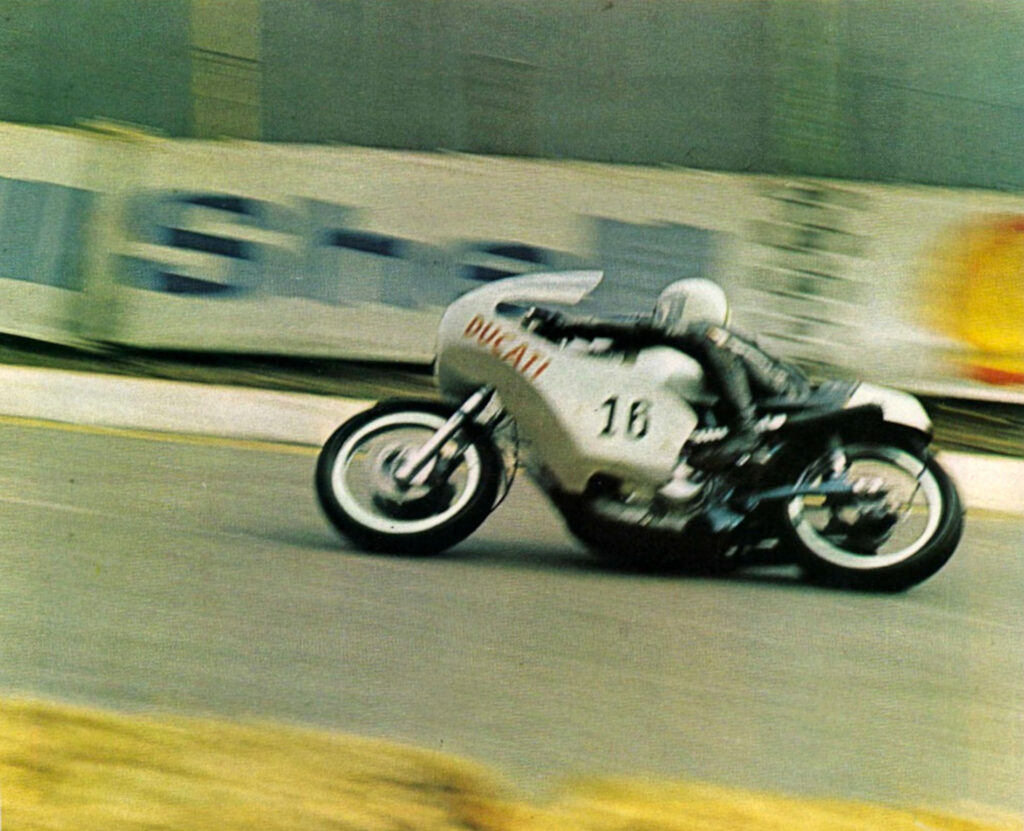
Photo: Unknown photographer / Wikimedia Commons, Public domain
The 750 Super Sport
To capitalise on the win, in 1974 Ducati built a road version of the Imola bike: the 750 Super Sport. It was essentially a racing machine with lights. A desmo engine, 40 mm Dell’Orto carburettors with no filters, a half fairing, a single seat and a fibreglass tank with a clear strip down the side so you could see how much fuel was left. It could exceed 125 mph.
The frame was painted Ducati’s light green, which gave it the nickname “Green Frame”. Only 401 were made, almost all by hand, in the factory’s racing department.
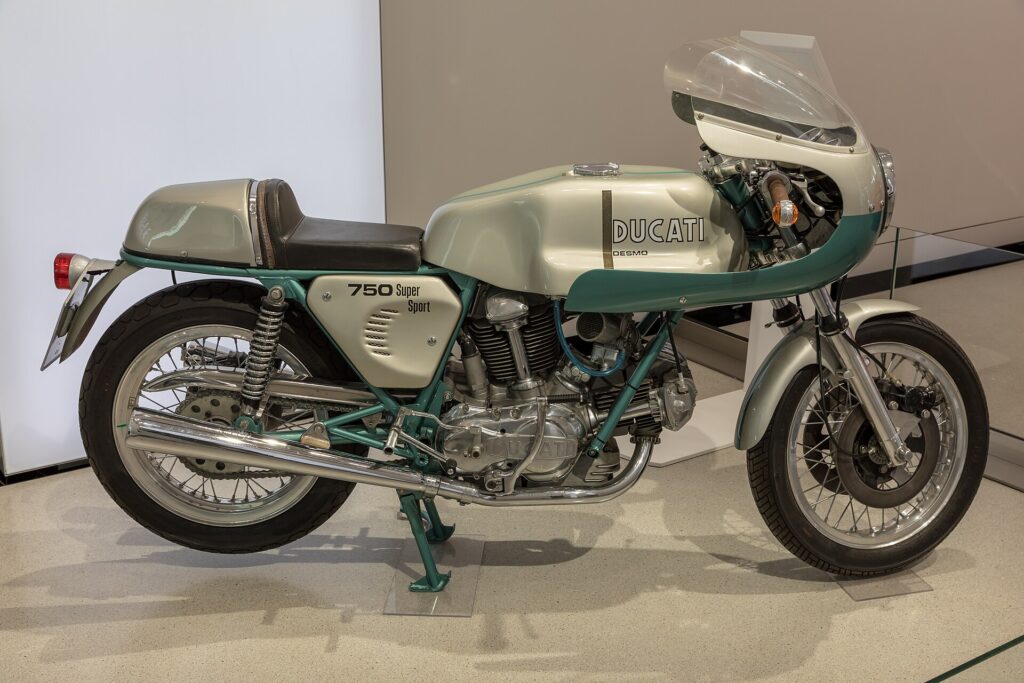
Photo: Matti Blume / Wikimedia Commons, CC BY-SA 4.0
Why it is worth what it is worth
The 1974 750 SS is now one of the most valuable Ducatis of all, and perhaps the most recognisable Italian classic. In 1975 came the new generation with “square case” engines, the 750 SS and 900 SS, which were built in far larger numbers. The 1974 “round case” bikes are the ones collectors want.
Because they are so valuable, many humbler 750 GTs and 750 Sports have been converted to look like an SS. Only the numbers and documentation checked by specialists can tell you whether you are looking at the real thing. In 2006 Ducati honoured the legend with the modern Paul Smart 1000 LE, proof that half a century later, Imola has not been forgotten.
P.Kefalas
Photo Credits: Vauxford (Wikimedia Commons, CC BY-SA 4.0) · Unknown photographer (Wikimedia Commons, Public domain) · Matti Blume (Wikimedia Commons, CC BY-SA 4.0)